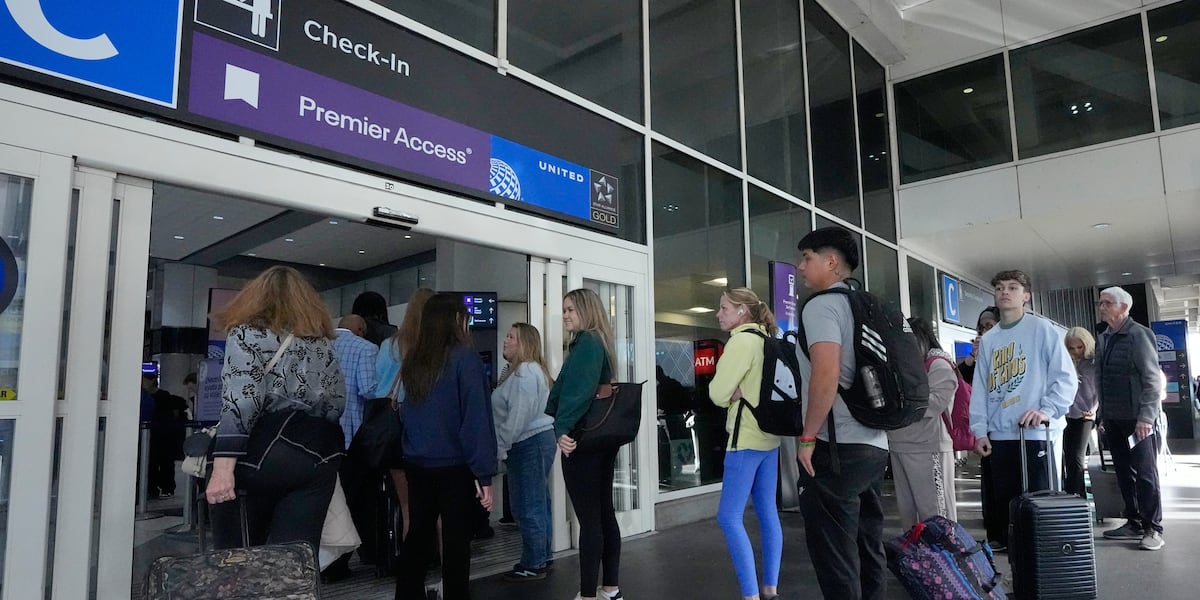
Airfares out of Nashville are up about 10% to 20% for both domestic and international flights as higher fuel costs and geopolitical uncertainty weigh on prices. Despite the increase, the article says bargains still exist, with some routes recently as low as $100 and a Hawaiian Airlines promotion offering 25% off. Travelers are advised to book within the next one to three months, stay flexible, and use price alerts, including AI-based alerts from Google.
Airfare inflation is a near-term tax on discretionary travel, but the more important market signal is that pricing power in aviation is proving elastic rather than linear. If demand softens even modestly, airlines with weaker load factors will compete on price faster than the headline fuel-cost narrative implies; that creates dispersion between carriers with premium international exposure and those relying on price-sensitive domestic leisure traffic. The second-order winner is not the airline complex as a whole, but distribution platforms that monetize search intent and fare comparison as consumers become more active shoppers.
For GOOGL, this is a small but real tailwind to travel-intent query volume and conversion value in Search, Maps, and AI-assisted price alert workflows. When fares are volatile, users search more frequently, compare more routes, and engage longer before booking, which is structurally better for Google's ad auction economics than a stable-price environment. The risk is that if global uncertainty meaningfully suppresses travel demand, clicks may rise while monetization per click weakens, so this is a low-beta support rather than a growth catalyst.
The contrarian view is that the market may be overestimating how much higher fuel prices translate into consumer pain in the next 1-2 quarters: airlines often hedge, and capacity discipline can offset some input cost pressure. The bigger swing factor is psychology — if travelers believe prices will keep rising, bookings get pulled forward, which can actually cushion near-term airline revenue while benefiting fare-discovery tools. Any de-escalation in geopolitical risk or oil retracement would quickly unwind the bullish case for fare inflation and reduce the urgency around booking behavior.
AI-powered research, real-time alerts, and portfolio analytics for institutional investors.
Request DemoOverall Sentiment
mildly negative
Sentiment Score
-0.15
Ticker Sentiment
