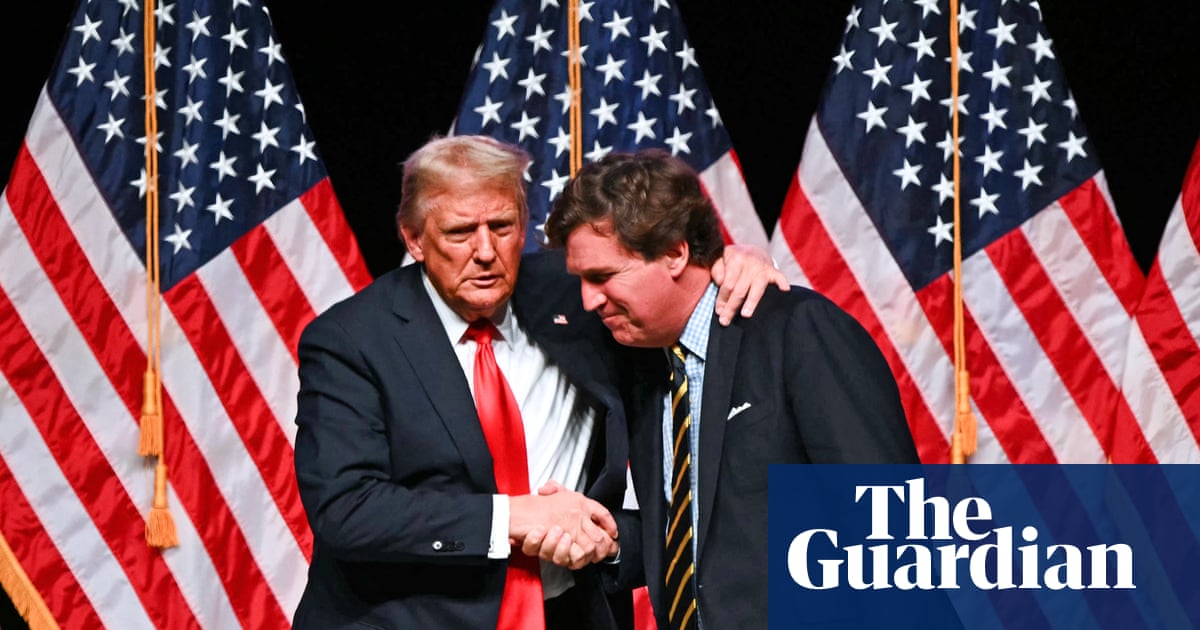
Tucker Carlson publicly distanced himself from Donald Trump after criticizing Trump’s Iran policy and alleging he was influenced by Benjamin Netanyahu. The article frames the shift as a possible precursor to Carlson’s own 2028 presidential ambitions, but no formal campaign announcement was made. This is largely political and media commentary with limited direct market impact.
This is less a personality story than an early read on the fragmentation of the MAGA coalition into two tradable blocs: personality-driven Trump loyalists versus ideology-first anti-interventionists. That matters because if Carlson can credibly reposition as the spokesman for the latter, he creates a competing claim on the right-wing attention economy that could siphon audience, donor, and influencer capital away from Trump-aligned media brands over the next 6-18 months.
The near-term market impact is not on politics per se, but on media distribution and engagement. Carlson’s incentive is to maximize differentiation, which raises the odds of more inflammatory, contrarian foreign-policy takes; that can improve short-cycle audience monetization while also increasing reputational and advertiser risk. The second-order effect is that any escalation in “America First vs. Trump” rhetoric could force other conservative personalities to choose sides, reducing the value of broad, noncommittal positioning and increasing volatility in politically exposed media assets.
The biggest underappreciated risk is that this is a setup for a 2028 launch or kingmaker role, not just a divorce. If Carlson starts testing a campaign-like infrastructure, the real asset is not a vote share but a list-building and fundraising machine that can be monetized well before any filing date. Conversely, consensus may be overestimating immediate electoral damage to Trump; most of the base likely stays sticky in the next 1-2 quarters, so the trade is not “Trump selloff” but rather a slower burn in right-wing media fragmentation and attention share.
AI-powered research, real-time alerts, and portfolio analytics for institutional investors.
Request TrialOverall Sentiment
neutral
Sentiment Score
-0.05
Ticker Sentiment
