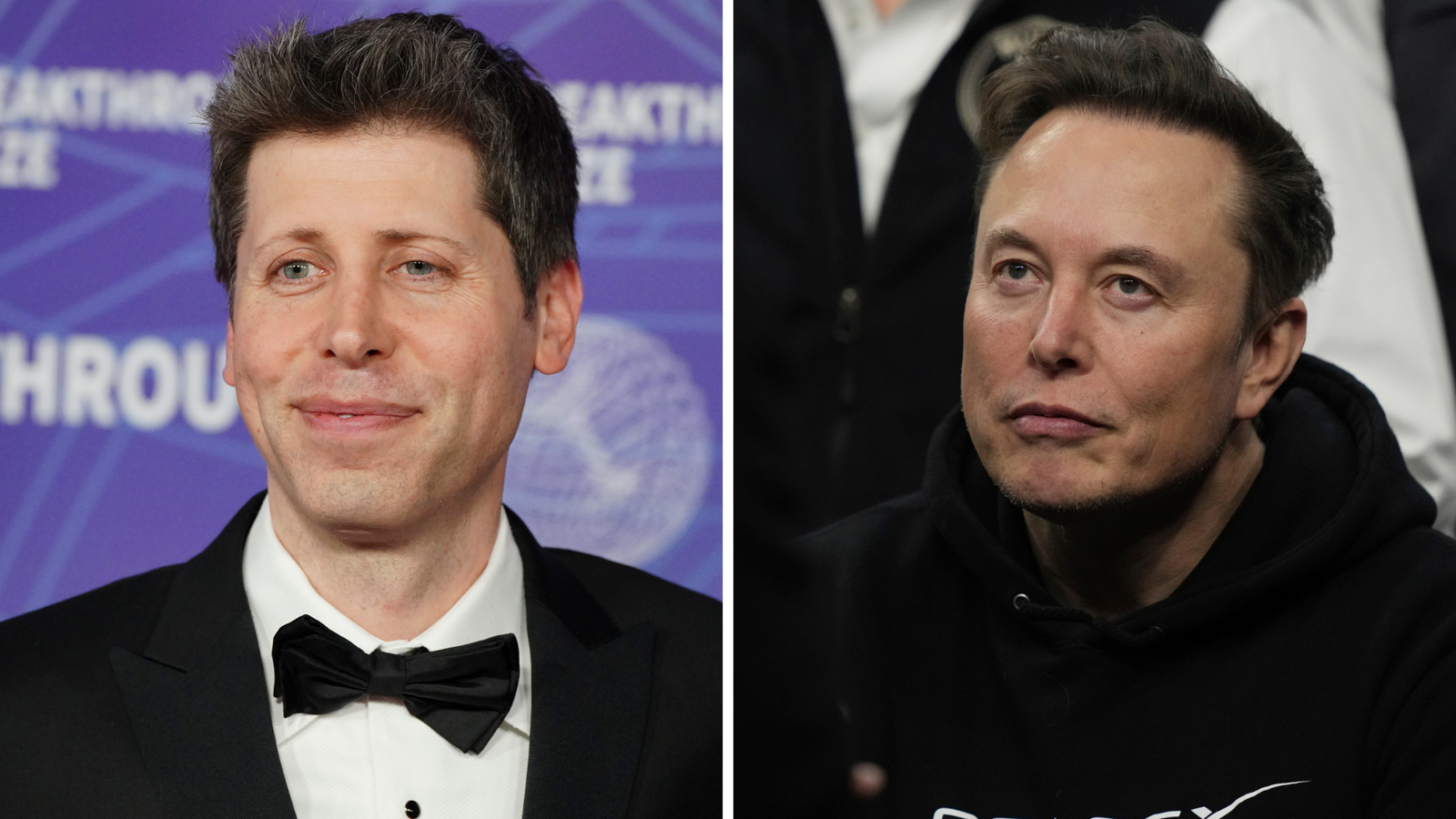
A jury trial begins Monday over Elon Musk’s 2015 role in founding OpenAI, with Musk alleging Sam Altman and Greg Brockman abandoned the nonprofit mission and seeking funding for OpenAI’s charitable arm rather than personal damages. The case could affect OpenAI’s governance and the broader AI competitive landscape, especially given OpenAI’s $852 billion valuation and Musk’s competing xAI venture. Pre-trial rulings have already reduced Musk’s leverage, and the proceedings may also expose reputational risks for both founders.
The market implication is less about a binary courtroom outcome and more about governance overhang re-pricing across the AI stack. A trial that keeps spotlighting the alleged conflict between “mission” and monetization can widen the discount investors assign to AI platforms with founder-control, dual-class governance, or nonprofit-to-for-profit conversion risk. That is mildly negative for MSFT and GOOGL because both are exposed to the broader competitive narrative and the possibility that capital markets begin demanding clearer structural separation between model development, distribution, and monetization.
The most asymmetric second-order risk sits with TSLA, not because of direct legal exposure, but because this trial can re-anchor the market’s view of Musk as a distracted controller running multiple capital-intensive stories simultaneously. Any incremental credibility damage matters more now if SpaceX IPO timing stays on the calendar, because public-market investors will likely apply a higher governance discount to any Musk-linked issuance after another high-profile credibility event. That suggests the near-term issue is not fundamental earnings but multiple compression across the Musk complex if testimony produces unfavorable headlines.
The contrarian angle is that the event may ultimately be a net positive for incumbent megacap platforms and even for select private-market AI infrastructure names. If the trial slows narrative momentum around OpenAI or increases scrutiny on how frontier AI companies are structured, capital may rotate toward the less controversial beneficiaries of AI adoption: cloud, chips, and enterprise software. The key window is days to weeks around testimony and judge commentary, while the more durable impact is months-long if the case catalyzes regulatory or investor pushback on AI governance models.
AI-powered research, real-time alerts, and portfolio analytics for institutional investors.
Request DemoOverall Sentiment
mildly negative
Sentiment Score
-0.15
Ticker Sentiment
