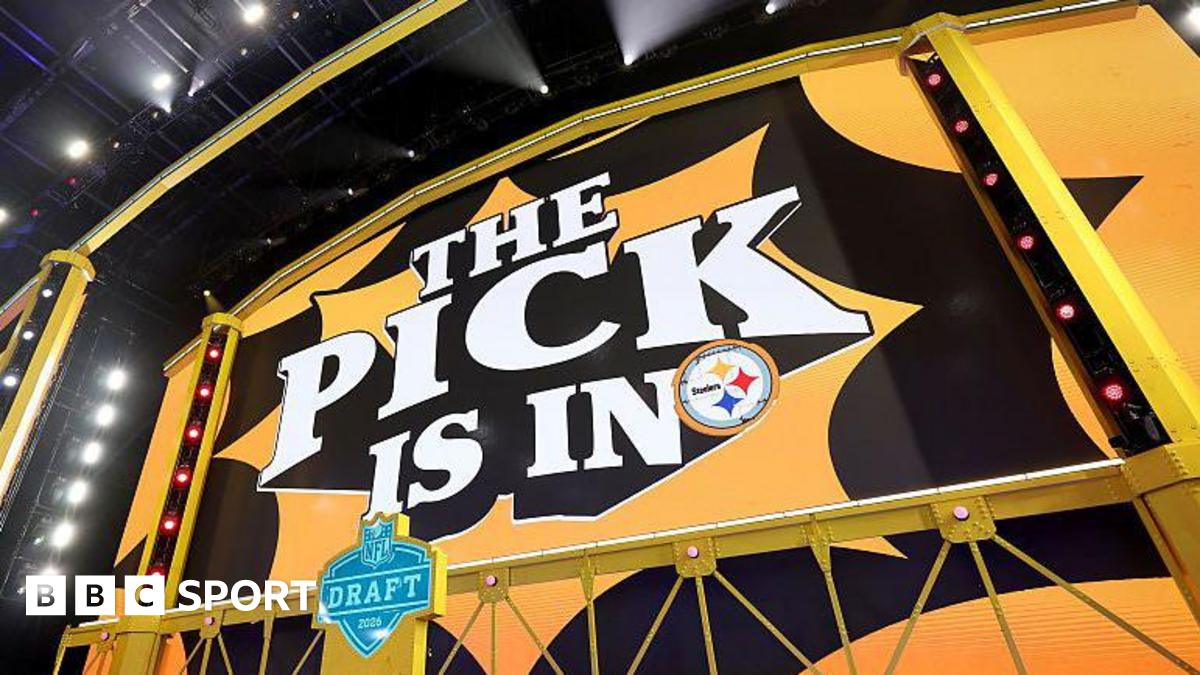
The Steelers selected quarterback Drew Allar with the 76th overall pick, earlier than projected, while Aaron Rodgers has still not confirmed whether he will return for a second season in Pittsburgh. The draft also saw the Steelers take wide receiver Germie Bernard in round two, adding to a quarterback room that already includes Mason Rudolph and Will Howard. The story is largely event-driven and team-specific, with limited broader market impact.
The market is treating this as a pure football story, but the investable angle is governance and optionality: Pittsburgh has effectively forced a quarterback realignment before resolving the veteran’s status. Drafting a younger passer earlier than expected lowers the probability of a clean continuation path for the incumbent, which matters because ambiguity usually depresses organizational efficiency and increases the chance of a messy transition rather than a binary “run it back” outcome.
Second-order effect: the move compresses the timeline on the veteran’s decision. If he returns, he is now walking into a room where the franchise has already allocated draft capital to his replacement, which typically raises the odds of midseason friction, reduced leash, or an accelerated handoff if the season starts slowly. If he does not return, the club has effectively pulled forward the development clock by 12 months, which should improve roster planning but increases short-term volatility at the most important position.
The contrarian read is that this may be more supportive than harmful to team performance over a 6-18 month horizon. A credible succession plan often stabilizes coaching and front-office behavior, and it can prevent overpaying for veteran certainty. The market consensus may be overestimating how much the decision changes on-field win probability this year and underestimating how much it reduces long-dated franchise risk if the younger player proves merely functional.
For media and engagement economics, uncertainty itself is an asset: the organization now has a built-in storyline for training camp, preseason, and early season coverage. That creates incremental attention even if the football outcome is neutral, and the biggest downside is reputational if the veteran leaves and the rookie is not ready, producing an extended period of weak quarterback play and fan backlash.
AI-powered research, real-time alerts, and portfolio analytics for institutional investors.
Request DemoOverall Sentiment
neutral
Sentiment Score
0.05
