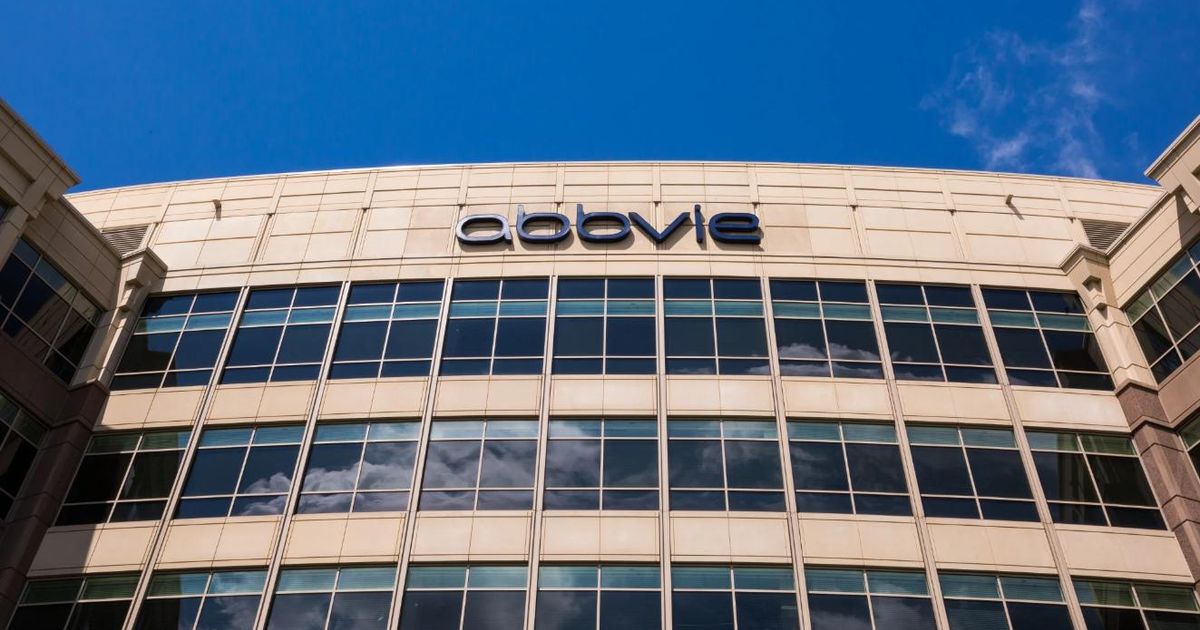
AbbVie plans a $1.4 billion manufacturing campus in Durham County that is expected to create up to 734 jobs, generate more than 2,000 construction jobs, and support up to $8.1 billion in economic growth over 12 years. The facility, scheduled to begin construction this year and open by the end of 2028, marks AbbVie’s first major investment in North Carolina and expands its U.S. manufacturing footprint. The project comes with up to $26 million in state incentives plus about $25 million in local incentives.
ABBV is effectively buying a long-duration option on U.S. biologics capacity in a region that already has the talent density and vendor ecosystem to compress ramp risk. The second-order winner is the local supply chain: single-use plastics, cold-chain logistics, lab automation, HVAC/clean utilities, and construction services should see multi-year demand rather than a one-time headline pop. For competitors, the real impact is not immediate volume displacement but tighter labor markets for experienced manufacturing operators and process engineers, which can raise wage inflation across the Southeast life-sciences corridor.
The market will likely underappreciate the timing mismatch: capital spend starts now, but meaningful operating leverage likely arrives closer to 2028-2031. That means the near-term equity read-through is more about optionality and resilience than EPS uplift, while the construction phase creates execution risk, permitting risk, and cost-overrun risk that can defer returns. If the company is prioritizing obesity, oncology, and neuroscience production, the strategic value is also defensive: it reduces dependence on external capacity at a moment when biologics demand remains structurally tight and onshoring has become a policy advantage.
The contrarian angle is that this is less a pure growth catalyst for ABBV than a capital-allocation signal: management is choosing to lock in manufacturing control in exchange for lower near-term free cash flow. If the project runs over budget or the hiring cadence lags, the market may eventually treat it as a drag on capital intensity rather than a moat expansion. For ABT, the direct read-through is limited; any sympathy move would be more about broad healthcare capex sentiment than fundamentals.
In the broader ecosystem, this should be bullish for North Carolina life-sciences tools and commercial real-estate beneficiaries, but also a warning that the talent premium in high-quality U.S. biologics hubs is likely to stay elevated for years. That supports pricing power for specialized contract manufacturers and automation vendors, while making smaller regional peers more vulnerable to poaching and wage compression.
AI-powered research, real-time alerts, and portfolio analytics for institutional investors.
Request TrialOverall Sentiment
moderately positive
Sentiment Score
0.62
Ticker Sentiment
