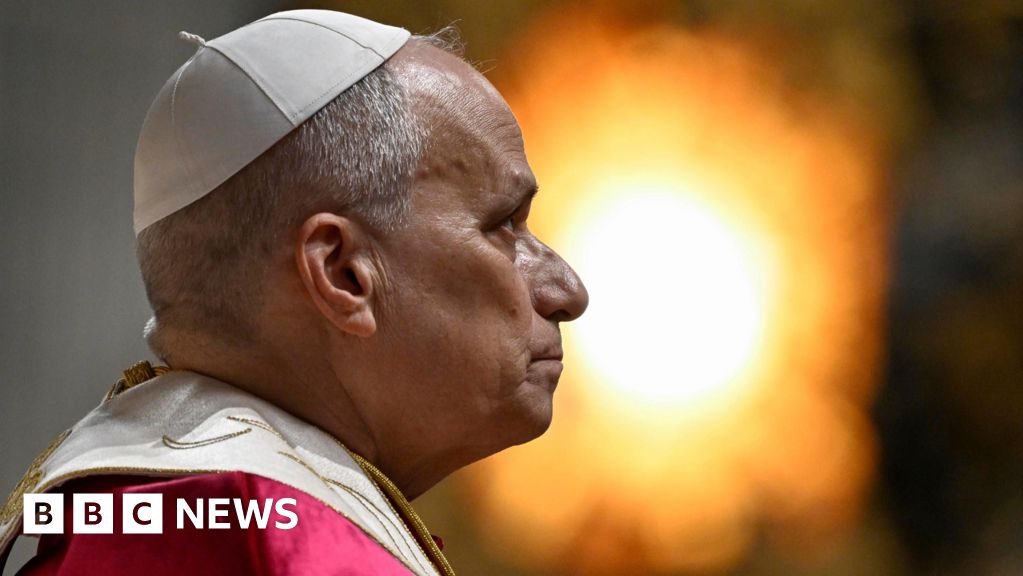
Trump publicly attacked Pope Leo over criticism of US immigration policy and the Iran war, escalating rhetoric around an already volatile geopolitical conflict. The article centers on US-Iran tensions, the Pope’s calls for de-escalation, and the political fallout from Trump’s comments, but it is unlikely to have direct market-moving implications beyond sentiment. No specific economic or financial figures were reported.
This is not a market-moving headline on its own, but it matters as a signal that the administration is willing to broaden the rhetoric war beyond institutional opponents into moral authorities. That usually raises the odds of more volatile policy communication around sanctions, immigration enforcement, and defense posture, which can widen risk premia in firms exposed to federal contracting, border security, and MENA geopolitics. The second-order effect is less about the Vatican and more about increased tail risk that diplomatic off-ramps get less credible, keeping defense and cyber budgets sticky even if near-term escalation probabilities fall. The most relevant beneficiaries are defense primes and select security/infrastructure names with any linkage to heightened domestic enforcement or Middle East tension. If the White House leans harder into confrontation, markets typically reprice for longer-duration procurement rather than immediate conflict revenue: munitions replenishment, air defense, ISR, and secure communications outperform first. Conversely, airlines, global shippers, and multinational consumer brands with exposure to Europe/Middle East demand can see a small but fast compression in multiples if rhetoric spills into travel or boycott risk. The contrarian read is that this may be mostly performative noise, and the market could overstate the odds of policy action. In that case, the best setup is not to chase defense beta outright but to use any knee-jerk bid in geopolitical hedges as an exit opportunity; the higher-probability trade is fading overreaction in the most risk-sensitive cyclicals after initial headlines fade over 1-3 sessions. The real catalyst to watch is whether the rhetoric is followed by sanctions, expanded budget requests, or changes to force posture within the next 2-6 weeks.
AI-powered research, real-time alerts, and portfolio analytics for institutional investors.
Request DemoOverall Sentiment
mildly negative
Sentiment Score
-0.20
