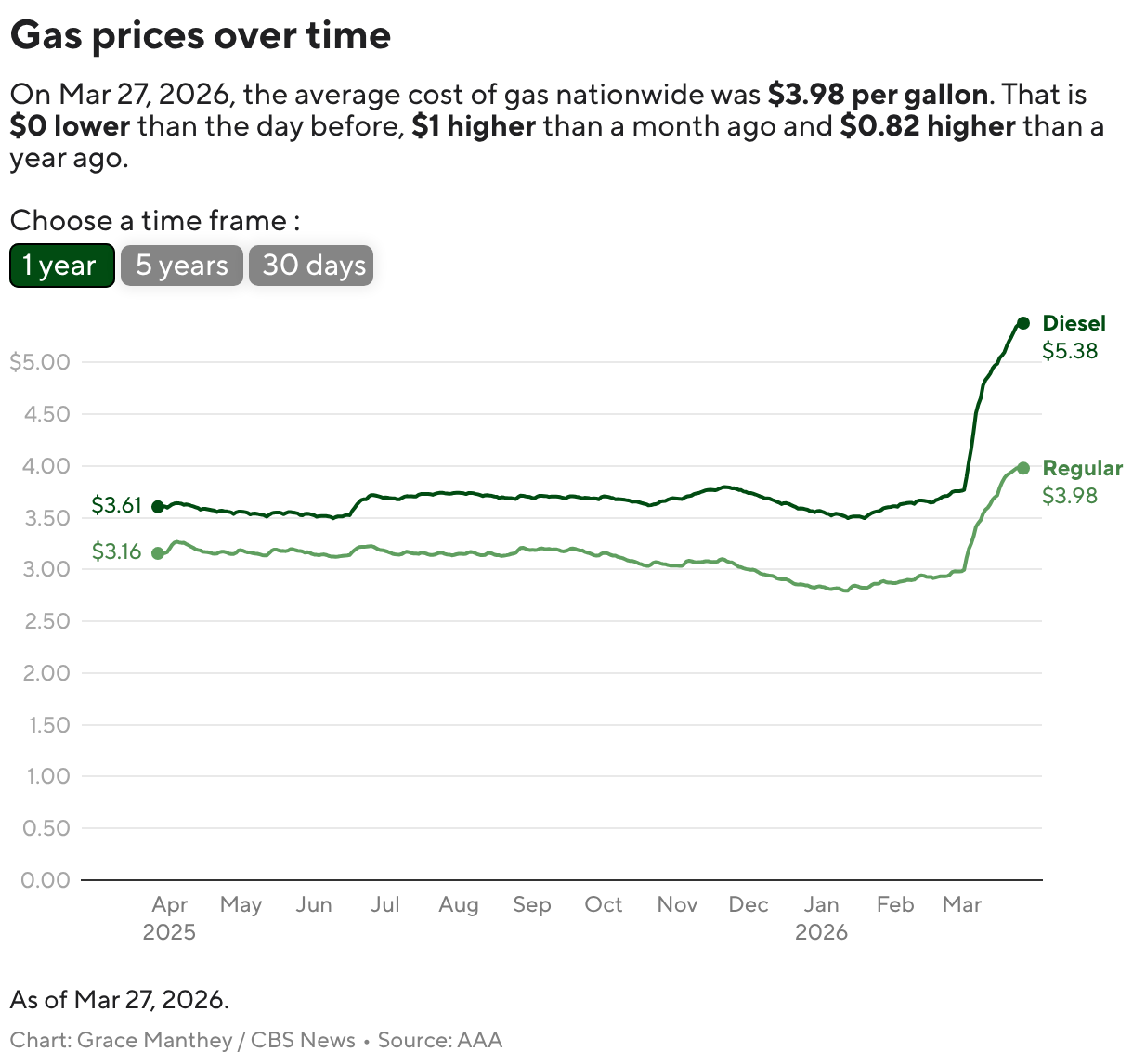
Chevron says Venezuelan crude imports are helping lower U.S. gasoline prices, with a 400,000-barrel tanker supplying the Pascagoula refinery for four days and broader imports supporting a planned 50% production increase in Venezuela over the next few years. The company is running the Mississippi refinery around the clock as war-related supply constraints in Iran push U.S. gas prices to $4.12 per gallon, up from $2.98 before the conflict. The article is modestly positive for Chevron and slightly supportive for U.S. fuel prices, but the bigger takeaway is sector-level supply relief amid geopolitical disruptions.
This is less about a single shipment and more about a policy-enabled marginal barrel re-entering a tight Atlantic Basin market. The second-order effect is that heavy sour supply from Venezuela displaces more expensive alternative barrels into the U.S. Gulf Coast system, which compresses regional crude differentials and can support refining economics for complex Gulf refiners like CVX even if headline gasoline prices drift lower. That makes CVX a relative winner versus pure upstream producers, because it can monetize feedstock flexibility rather than just absorb lower realized prices. The market is likely underestimating the geopolitical volatility embedded in this supply source. Venezuelan barrels are not a clean, durable supply increment; they are a sanctions-dependent flow that can be turned on or off by Washington in weeks, not years, so the price impact should be viewed as tactical rather than structural. That means the current disinflationary impulse in gasoline can reverse quickly if policy shifts, if logistical bottlenecks emerge, or if the broader Middle East supply shock intensifies faster than Venezuelan exports ramp. The real medium-term loser is not just foreign supply competition, but any U.S. producer exposed to Gulf Coast heavy crude discounts or to weaker product cracks if imports normalize across multiple refineries. However, if Chevron is serious about scaling production materially over the next few years, the equity should re-rate on improved reserve access and longer-dated downstream utilization, even if near-term headline margins soften. The contrarian read is that the bull case is not lower gas prices; it is Chevron gaining a strategic option on sanctioned-resource arbitrage that most peers cannot replicate.
AI-powered research, real-time alerts, and portfolio analytics for institutional investors.
Overall Sentiment
mildly positive
Sentiment Score
0.25
Ticker Sentiment
