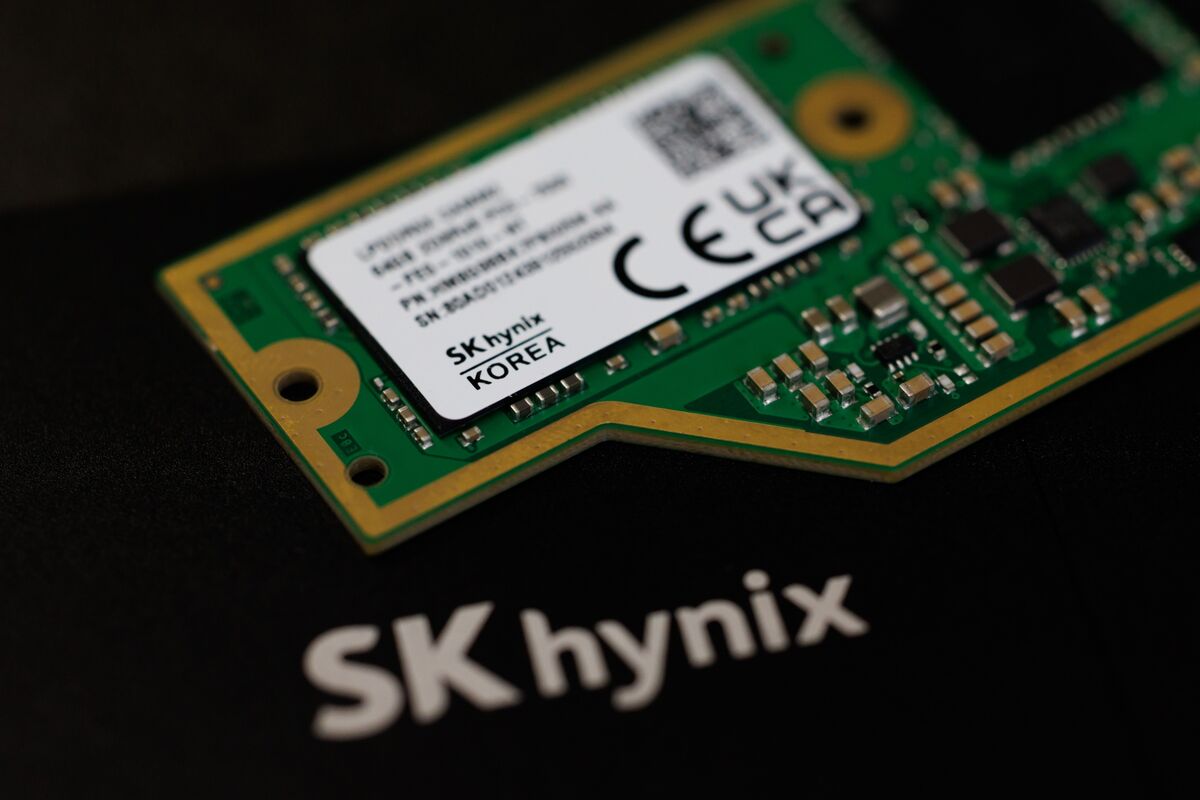
SK Hynix announced a $29 billion (40 trillion won) share buyback, planning to buy back and cancel up to 24 million treasury shares between Aug. 20 and Nov. 19. The move is aimed at calming investors amid concerns about the durability of AI spending. The stock had fallen 9.8% in regular trading but pared losses in post-market trading following the announcement.
The buyback is less about mechanical EPS accretion than about underwriting the equity in a tape that is questioning whether AI memory demand has already front-loaded. In a high-beta name like SK Hynix, a large cancellation program can stabilize positioning and force underweight managers to cover, so the first-order effect is likely a sentiment rebound rather than a fundamental reset. That said, the signal only works if investors believe management is not choosing capital returns because incremental reinvestment is running out of attractive IRRs.
Second-order, this is supportive for the entire HBM complex in the next 1-3 months: if the market reads the repurchase as confidence in AI server demand, peers and suppliers tied to advanced packaging and memory equipment can get a sympathy bid. But the same announcement can also be read as a peak-cycle tell, which would cap upside for semicap equipment and push the market back toward multiple compression on any sign of DRAM or HBM price normalization. The real catalyst path is the next set of pricing checks and guidance updates, not the buyback itself.
Over 6-18 months, the key risk is that capital returns and growth capex start competing for the same cash flow stream. If AI spend slows even modestly, high fixed-cost memory names de-rate quickly because the market stops paying up for "AI infrastructure" optionality and starts treating them as cyclical semis again. Contrarian view: the announcement may imply management sees the stock as cheaper than the market does, but it may also mean they expect more volatility in demand and want to preempt a drawdown before fundamentals prove it.
AI-powered research, real-time alerts, and portfolio analytics for institutional investors.
Overall Sentiment
mildly positive
Sentiment Score
0.25
Ticker Sentiment
