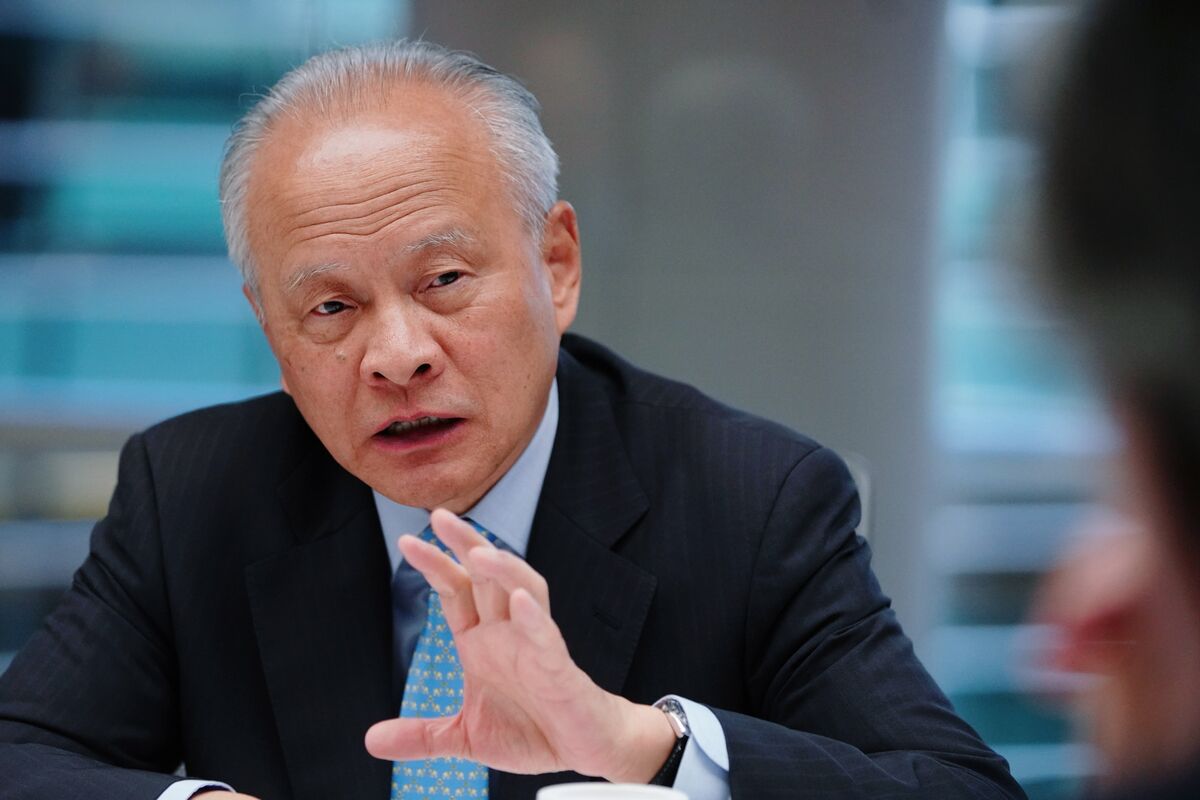
Chinese officials, including former Ambassador Cui Tiankai and ex-UN representative Geng Shuang, held low-key meetings with US experts to assess the Trump administration’s stance toward a fragile trade truce. The discussions also aimed to gauge how upcoming US elections could affect US-China ties. The news is largely informational, implying limited near-term direct market impact but elevated geopolitical/trade uncertainty.
This reads less like a directional policy change and more like both sides preserving optionality ahead of a regime shift. For markets, that usually means the immediate move is in implied volatility and China-beta multiples rather than fundamentals: companies with meaningfully exposed China revenue, sourcing, or end-demand remain capped by a standing tariff/controls risk premium.
The second-order effect is supply-chain repositioning. Even without fresh restrictions, large importers will keep paying for dual-sourcing, inventory buffers, and localization capex, which favors domestic industrial automation, logistics, and North American capex plays over globalized hardware margins. By contrast, semis, hardware, apparel, and autos face the most convex downside if election rhetoric turns trade hawkish; a few points of tariff probability can compress forward multiples before any earnings impact shows up.
Contrarianly, the market may be overreading the likelihood of an immediate escalation. Low-key backchannels usually mean both sides want to avoid a disorderly break before elections, so the near-term setup is range-bound but volatile rather than trendless. The key watch item is whether campaign language hardens: that would turn this from a diplomatic curiosity into a 1-3 month rerating event for FXI, KWEB, AAPL, NVDA, and China-exposed industrials.
AI-powered research, real-time alerts, and portfolio analytics for institutional investors.
Request DemoOverall Sentiment
neutral
Sentiment Score
-0.05
Ticker Sentiment
