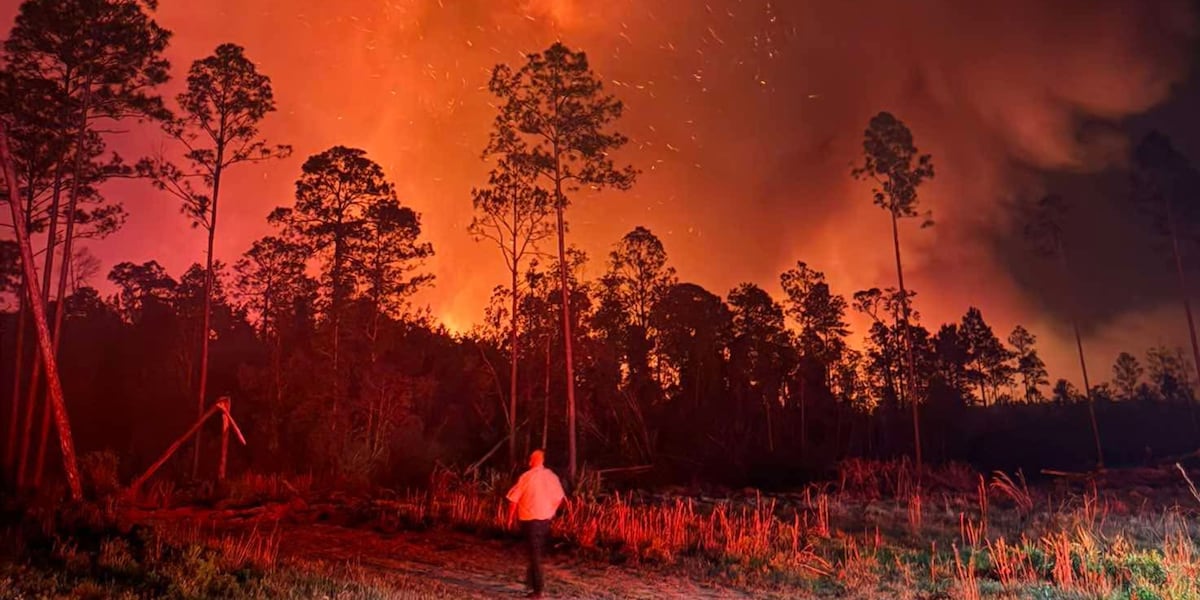
The Pineland Road Fire has burned 16,516 acres and is only 10% contained, with mandatory evacuations in Echols County and a Level 3 evacuation order in effect. The blaze is threatening 64 homes and 37 minor structures, disrupting local roads, smoke conditions, and timber-related assets including commercial timber resources, hunting camps, and bee operations. Firefighters are battling extreme drought-driven conditions, with containment not expected until May 31.
This is a localized but economically meaningful supply shock for regional timber and land-linked cash flows, not a macro event. The first-order damage is to standing timber, hunting lease income, bee operations, and rural transport corridors; the second-order effect is that firefighting traffic, smoke, and evacuation disruption can impair harvest timing and mill throughput even outside the burn perimeter. In a tight inventory environment for Southern pine, any forced salvage supply tends to pressure nearby stumpage pricing briefly while improving margins for nearby mills that can source distressed fiber at a discount.
The more interesting tradeable angle is the asymmetry between immediate destruction and delayed rebuilding. In the next 1-3 weeks, names tied to Southern U.S. lumber logistics, trucking access, and timberland exposure can see operating friction and higher insurance/security costs, but over 3-12 months the larger setup is incremental demand for road repair, utility restoration, and structure replacement materials. That tends to favor producers with flexible mill networks and downside-protected balance sheets while penalizing smaller regional operators with concentrated timberland exposure.
Contrarianly, the market may overestimate the permanence of the fire’s economic loss in timber if it assumes all acreage is write-off quality. Southern pine can often be salvaged selectively, and the real P&L hit is frequently the disruption window rather than the entire acreage burn. The bigger tail risk is weather: if humidity stays depressed and winds remain active, containment could slip by days to weeks, extending the operational shock and raising the odds of broader regional smoke/transport effects beyond the immediate fire zone.
AI-powered research, real-time alerts, and portfolio analytics for institutional investors.
Request TrialOverall Sentiment
strongly negative
Sentiment Score
-0.78
