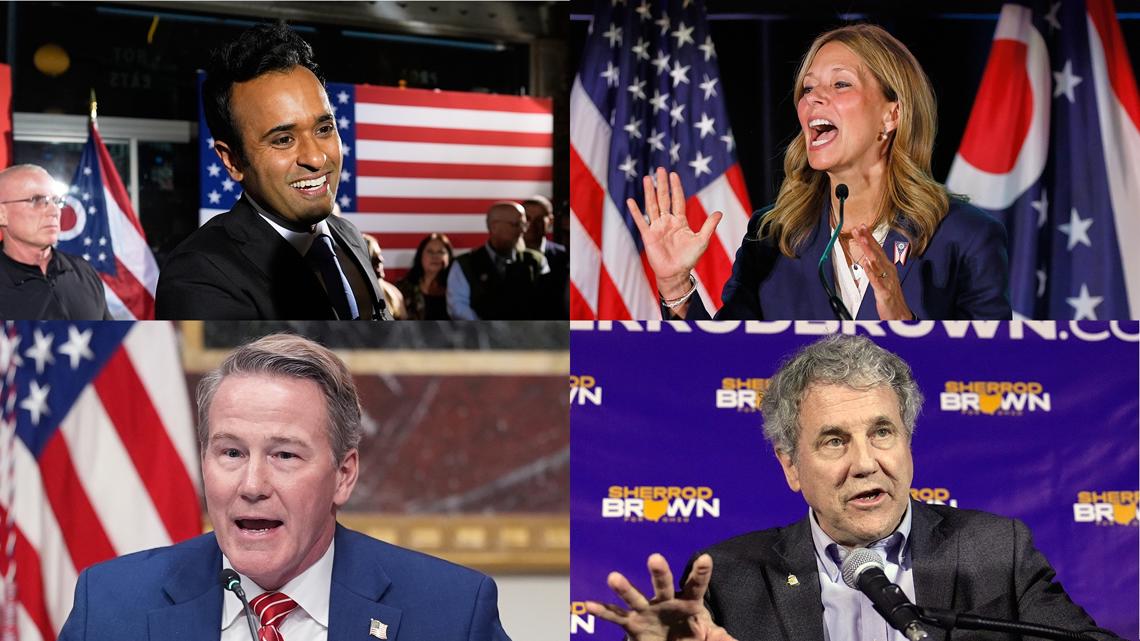
Ohio’s primary set up marquee November races for the U.S. Senate and governor’s office, with Sherrod Brown advancing to face Jon Husted and Vivek Ramaswamy winning the GOP governor nomination to face Amy Acton. The article highlights a $79 million Senate defense effort by the Senate Leadership Fund, Trump’s endorsement of Ramaswamy, and Democrats’ hopes that Acton’s pandemic-era profile and fundraising can help them flip the governor’s seat. The coverage is primarily political and has limited direct market impact, aside from modest implications for policy and sector sentiment.
Ohio is turning into a high-cost, high-salience proxy fight that likely helps political-advertising beneficiaries more than any direct policy winner. The Senate race alone is likely to absorb tens of millions in incremental spend over the next two quarters, and the governor’s contest adds a second, overlapping media buy that should keep Ohio broadcast inventory tight into November. That is a subtle tailwind for local TV owners and radio groups with Ohio exposure, especially stations that can monetize both partisan campaigns and issue ads at premium CPMs.
The more interesting second-order effect is volatility in healthcare and education policy expectations rather than broad macro risk. A strong showing by a public-health-facing Democrat or a Trump-aligned outsider in a purple-but-right-leaning state can sharpen investor focus on Medicaid administration, hospital reimbursement, school funding, and post-pandemic regulatory posture; those are not binary election risks, but they can move sentiment in managed-care, hospital, and for-profit education names with Ohio-heavy revenue footprints over the next 6-12 months. The market is probably underpricing how much candidate identity matters in down-ballot copycat races elsewhere in the Midwest.
Contrarian view: the consensus is likely overestimating the durability of national-brand advantages and underestimating fatigue with elite, highly visible candidates. That creates asymmetry for any Republican who can shift the race from personality to affordability, because inflation is still the dominant voting heuristic and can neutralize a well-known Democrat’s biography advantage. Conversely, if the public-health brand remains salient, it gives Democrats a cleaner path to mobilize suburban and older voters than the national environment would suggest, making the race more sensitive to one or two macro shocks than to steady polling drift.
AI-powered research, real-time alerts, and portfolio analytics for institutional investors.
Request DemoOverall Sentiment
neutral
Sentiment Score
0.00
