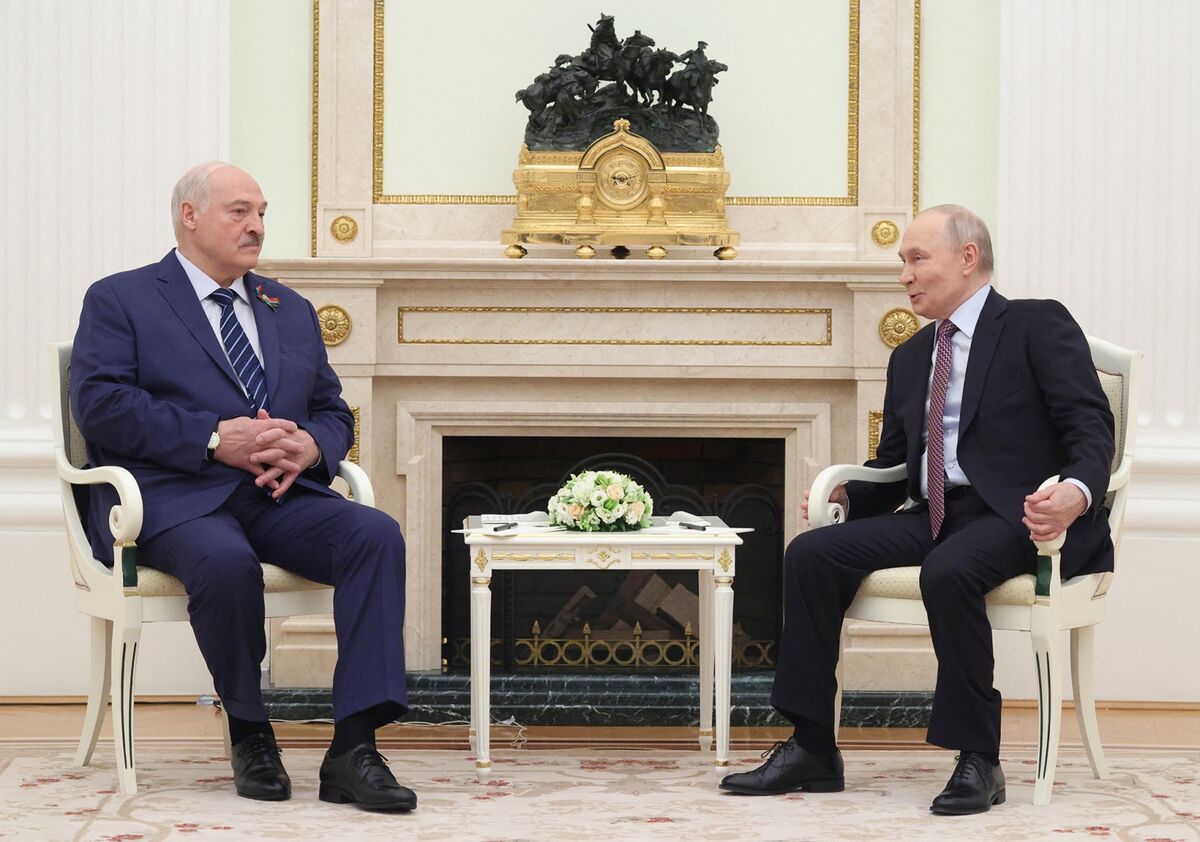
Putin and Lukashenko took part by videolink in major joint Russia-Belarus nuclear drills, highlighting elevated geopolitical and defense tensions in the region. Lukashenko said Belarus and Russia are ready to defend their shared homeland and posed no threat to others. The event is materially relevant for regional security and defense sentiment, though it does not include an immediate market-specific policy or sanctions action.
The immediate market impact is less about the drills themselves and more about the signal they send to European planners: a durable, low-probability/high-severity escalation path is being kept visibly alive. That tends to support a persistent risk premium in defense budgets, border security, electronic warfare, and counter-drone systems, while keeping long-duration assets in Central/Eastern Europe vulnerable to headline-driven de-risking. The second-order effect is budget reallocation: even absent kinetic escalation, ministries can justify faster procurement cycles, which is a multi-quarter tailwind for primes with missile defense, ISR, and munitions exposure.
The more interesting trade is in industrial capacity rather than geopolitics beta. Any sustained nuclear posturing strengthens the case for dispersed infrastructure, hardened energy assets, backup power, and logistics redundancy, which benefits firms tied to grid resilience, generators, secure comms, and civil defense infrastructure. In contrast, sectors reliant on cheap, frictionless cross-border transport in Europe—especially trucking, ports, and select cyclicals with Baltic/Polish exposure—face a small but rising probability of insurance, routing, and working-capital drag over the next 3-12 months.
Catalyst risk is asymmetric: the near-term move is usually muted unless there is a misread exercise, border incident, or force posture change, but the tail event would reprice risk across European credit and FX in hours. The consensus likely underestimates how quickly these drills can tighten financing conditions for frontier European issuers even without sanctions; higher CDS and wider funding spreads often appear before the equity market notices. Contrarian view: because this is a recurring signal, the headline may be over-traded, but the underappreciated edge is in buying the boring enablers of deterrence on pullbacks rather than chasing broad defense baskets after spikes.
AI-powered research, real-time alerts, and portfolio analytics for institutional investors.
Request DemoOverall Sentiment
mildly negative
Sentiment Score
-0.20
