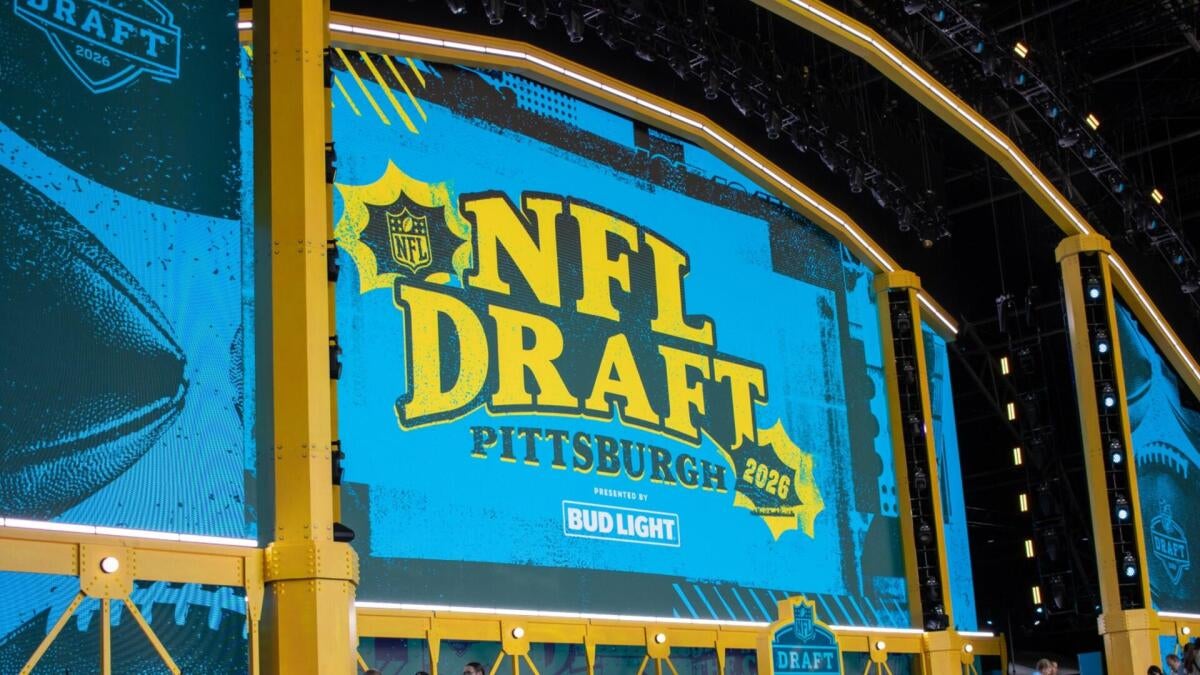
This is a final 2026 NFL mock draft, centered on expected Round 1 selections, trade scenarios, and rising player stock rather than corporate or macro news. The article highlights potential first-round names such as Jordyn Tyson, Ty Simpson, David Bailey, and Peter Woods, with multiple projected trades and significant uncertainty around picks 1-32. Market impact is minimal because the piece is sports commentary, not financial-market moving information.
This is less a clean “best player available” draft than a market-wide repricing of scarcity. The most important second-order effect is that the rumored concentration of offensive linemen and versatile defensive front players should compress the premium on teams chasing trench help in future trades; if the first round does indeed tilt toward OL, the expected cost to move up for left tackles in 2027 could reset materially higher. That matters for any club still building around a young quarterback: the draft is signaling that premium protection may remain the cheapest path to preserving franchise-QB value versus paying market rate in free agency.
The clearest competitive dynamic is that teams with established quarterback infrastructure can afford to spend on “non-flashy” positions earlier, while stressed rosters are being forced into positional detours. That typically creates a feedback loop where franchises with better coaching and fewer urgent holes extract more surplus from Day 1, while desperate teams overpay in trade markets or settle for second-tier fits. The real hidden winner is any organization positioned to trade back into the late first/early second: the board appears deep enough that a modest move down could still preserve access to starter-caliber talent at premium positions.
From a risk standpoint, the biggest catalyst is draft-night aggression at the top of Round 1. If one or two surprise trades pull the defensive and OL names up the board, the “depth” narrative can unravel quickly and expose weaker teams to grade collapse after the first 10 picks. Over the next 6-18 months, the more important tell will be which players actually become multi-position starters; the class looks built around floor and versatility, but the upside skew is probably concentrated in a few outlier athletes. That creates a classic overreaction setup: the market will initially reward perceived ‘safe’ picks, but the best long-term ROI may come from the picks seen as reaches on draft night.
Contrarian angle: the consensus may be overstating how much teams care about consensus big-board value versus fitting coach-specific developmental timelines. Several of these projected first-rounders are being discussed as scheme solves rather than top-end blue-chip assets, which usually means the hit rate is more sensitive to coaching stability than raw talent. In practical terms, draft-day losers may not be the teams passing on star power—they may be the teams taking players who need a very specific ecosystem to justify the pick.
AI-powered research, real-time alerts, and portfolio analytics for institutional investors.
Request TrialOverall Sentiment
neutral
Sentiment Score
0.05
