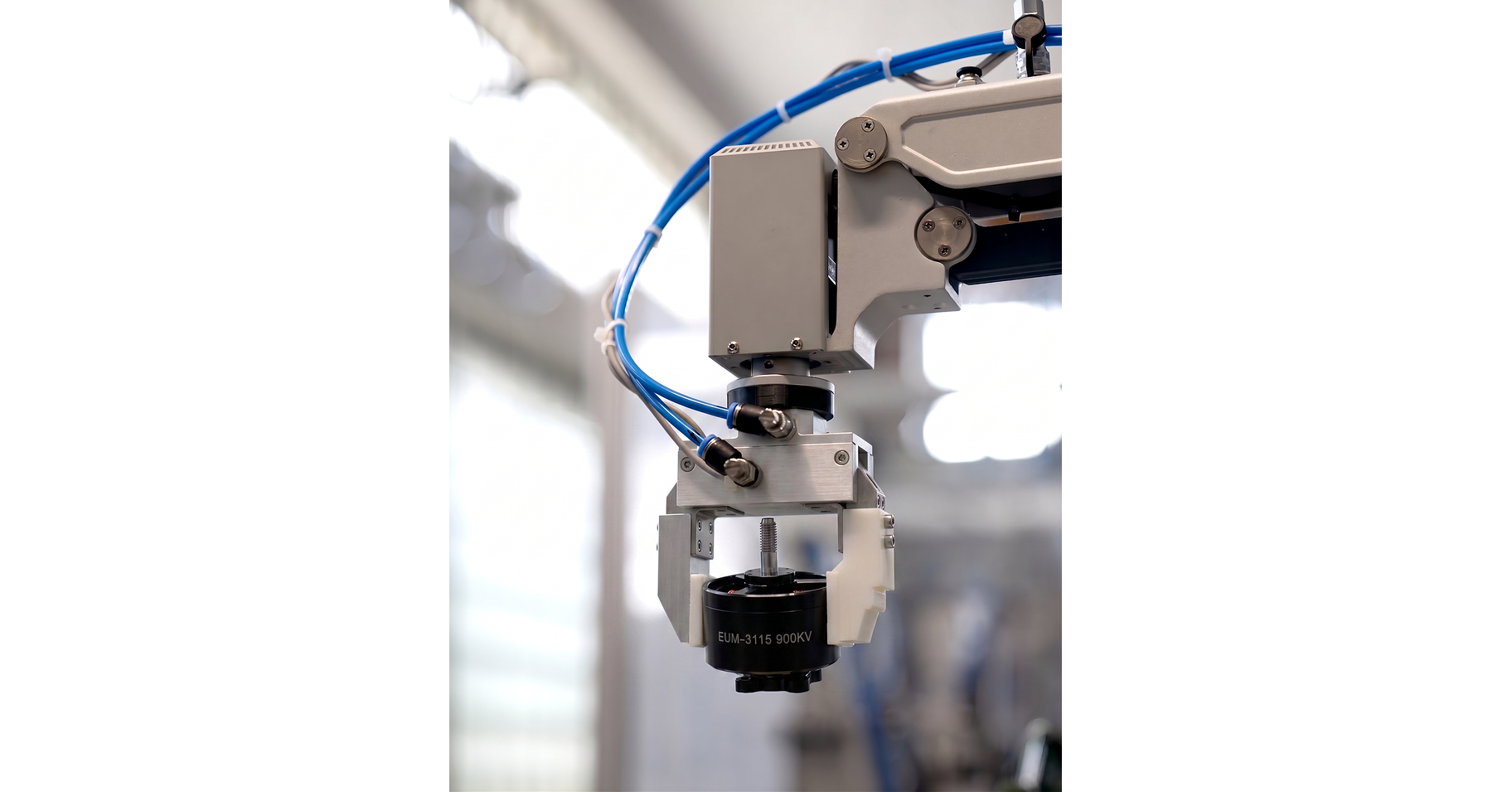
EU Motors plans to expand U.S. drone motor production with exclusive stator manufacturing and next-generation in-house robotic assembly lines at its Florida facility starting Q4 2026. The company targets 350,000+ motors in 2026, with a pipeline exceeding 1M units for 2027, supported by installed automated capacity of 100,000 motors/month and flexibility to double output. Management says the scale-up is enabled by proprietary motor IP and in-house stator production, and it expects to create advanced manufacturing jobs in South Florida.
This reads less like a single-company expansion and more like a signal that domestic UAV supply-chain qualification is moving from theory to capacity. If the capability is real, the economic moat is not the motor itself but the certification burden: once a U.S. drone program locks in a qualified propulsion stack, switching costs and schedule risk become material, which should favor the few scaled domestic component suppliers and the OEMs that can actually meet content requirements. The immediate market effect is likely small, but the medium-term effect is a higher probability of award wins for U.S.-centric drone programs versus import-dependent competitors.
The second-order winners are the public names that can monetize "American-made" procurement friction, especially AVAV, KTOS, and potentially RCAT if it can document supply-chain localization. Losers are low-margin drone assemblers and foreign motor vendors that compete primarily on cost; if domestic stator/motor capacity expands, pricing power migrates toward certified suppliers and away from commodity integrators. Over 6-18 months, the more important effect is not revenue from one facility, but whether this helps shorten bid cycles and reduce disqualification risk in defense sourcing.
The contrarian point: investors may be over-weighting capacity announcements and under-weighting qualification, yield, and customer concentration. Private-company pipeline claims do not equal public cash flow, and UAV demand can re-rate quickly if defense budgets slip or if commercial buyers revert to cheaper imported components. The thesis breaks if there is no visible order conversion in the next 1-2 earnings cycles for public drone beneficiaries, or if procurement data shows domestic content remains a nice-to-have rather than a gating item.
AI-powered research, real-time alerts, and portfolio analytics for institutional investors.
Request DemoOverall Sentiment
mildly positive
Sentiment Score
0.25
