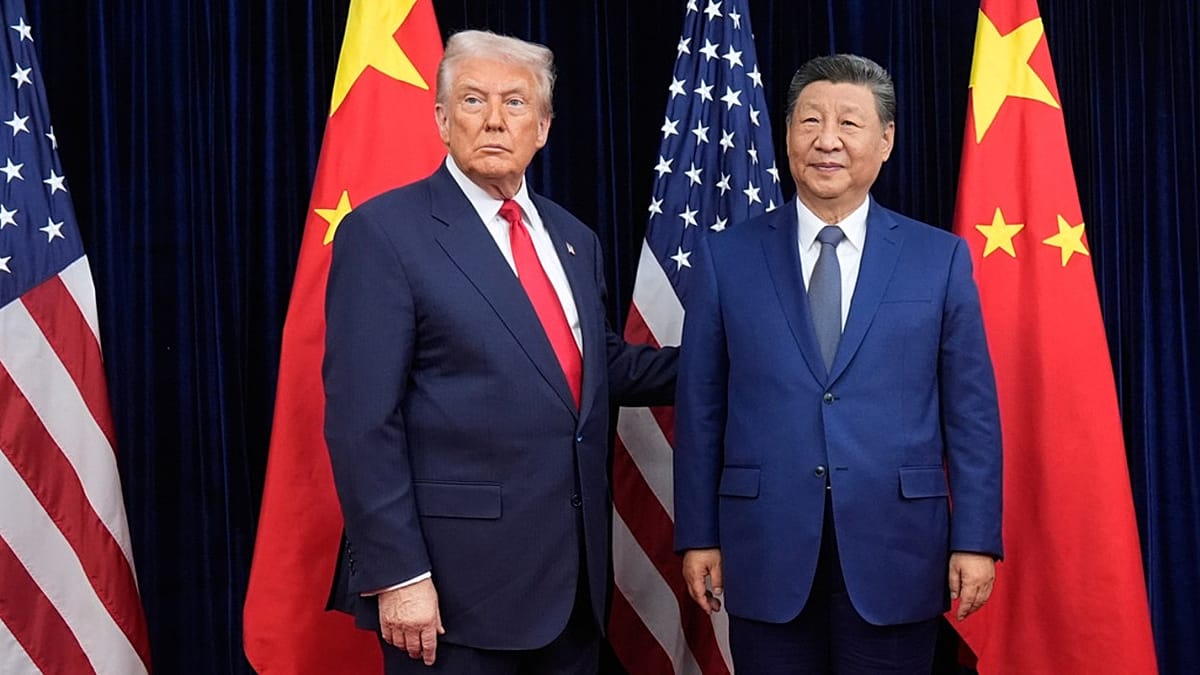
President Trump and Chinese President Xi held a wide-ranging call covering Iran, trade, Taiwan, Ukraine and a potential April visit, with Washington pressing Beijing to further isolate Tehran. Trump reiterated a planned 25% tariff on countries doing business with Iran even as Iran posted $125 billion of trade in 2024, including $32 billion with China; the conversation also touched on China buying U.S. oil and gas, easing purchases of U.S. agricultural products, deliveries of heavy machinery and a U.S. arms package to Taiwan valued at over $10 billion. The mix of tariff threats, continued Iran-China trade flows and defense/arms tensions creates policy uncertainty that could pressure energy and defense-related market flows while leaving a highly conditional near-term market impact.
Market structure: The phone call reduces immediate market panic but embeds asymmetric policy risk — winners include US defense contractors (pricing power on Taiwan-related sales) and global energy exporters if Iran is further isolated; losers are Iranian exporters, intermediating shipping/insurers and firms with direct Iran exposure. A credible US threat of a 25% tariff on countries trading with Iran would re-route trade, tighten seaborne crude supply and raise freight/insurance premia by an estimated 10-30% in stressed scenarios over 1-3 months.
Risk assessment: Tail risks are high-impact: (1) Taiwan escalation (weeks–years) that spikes defense spending and global supply-chain breaks; (2) extraterritorial US tariffs triggering WTO/legal counters and rapid de-risking of EM trade flows. Hidden dependencies include ship-to-ship crude transfers, use of third‑country intermediaries and CNY-denominated settlement that blunt sanctions; catalysts to watch in 30–90 days are Oman talks, any US tariff list publication and Trump’s April Beijing visit.
Trade implications: Near-term (days–8 weeks) favor tactical long energy (XLE) and 3–6 month call spreads on RTX/LMT to capture Taiwan/arms flow upside; medium-term (1–6 months) overweight ADM if China resumes soy purchases materially (>500k tonnes/month). Use volatility trades (buy protective puts or VIX calls sized 0.5–1% portfolio) to hedge geopolitical jumps.
Contrarian angles: Consensus assumes China will capitulate on Iran — history (2018 sanctions) shows buyers find workarounds, muting oil upside after initial spikes. That implies defense and insurance sectors may be underpriced for longer-term disruption while energy upside could be mean-reverting once covert flows persist; unintended consequence is faster CNY/invoicing de‑dollarization, pressuring USD FX positioning over years.
AI-powered research, real-time alerts, and portfolio analytics for institutional investors.
Request DemoOverall Sentiment
neutral
Sentiment Score
-0.15
