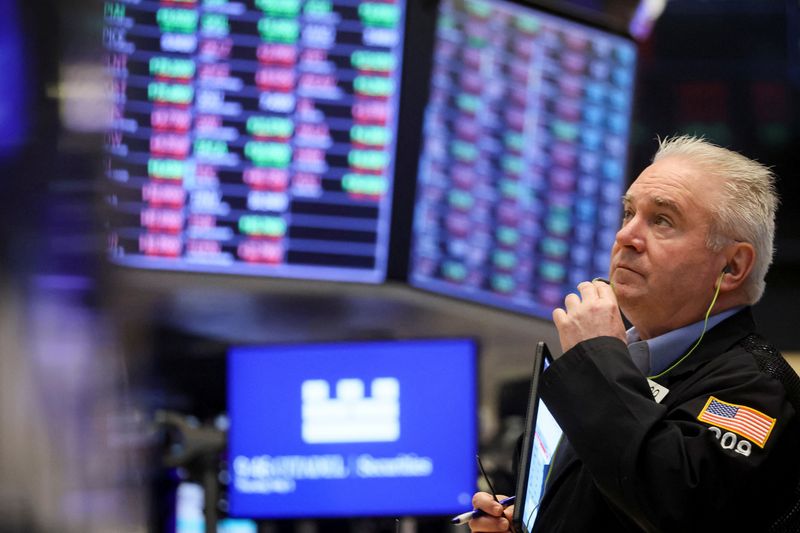
Hot April CPI, at its highest level since May 2023 and above expectations, pressured Wall Street and revived bets on later Fed rate hikes. The S&P 500 fell nearly 0.2% from a record high, the Nasdaq Composite dropped 0.7%, and the Philadelphia Semiconductor Index slid 3% as profit-taking hit chip stocks. Ongoing U.S.-Iran tensions and higher oil and gas prices added to the risk-off tone.
The immediate market damage is less about the headline CPI print itself and more about what it does to the distribution of policy outcomes. A hotter inflation path raises the odds of a later-year rate hike or at minimum delays easing, which is disproportionately painful for the market’s most crowded duration-sensitive exposures: high-multiple tech, unprofitable software, and semis that were already priced for flawless demand recovery. In other words, the index-level drawdown is modest, but the factor shock is larger than it looks because it hits crowded positioning on both the inflation and growth sides at once.
Semiconductors are the cleanest near-term loser because the sector had already run ahead of second-half fundamentals, so any macro scare can trigger de-grossing even without a fundamental inflection. That creates a second-order effect: capital rotates away from capex beneficiaries into cash-generative software, healthcare, and defensives, while foundry and equipment suppliers see the biggest multiple compression because their earnings sensitivity is still being extrapolated from peak-cycle demand. If energy prices remain elevated, margin pressure will also show up with a lag in transport, consumer discretionary, and industrials, which means the inflation shock can broaden from a “rates trade” into a real-earnings trade over the next 1-2 quarters.
Geopolitics is the key catalyst that can keep this risk-off regime alive for days to weeks, but it is also the most likely source of a sharp reversal. Any credible de-escalation or diplomatic breakthrough would likely compress oil risk premium quickly, and because CPI is being read through the lens of energy, that would hit the reversal button on both rates and equities. The market is currently assuming the conflict adds persistent inflation; the contrarian view is that a substantial portion of the macro damage is front-loaded and that positioning has already become one-sided enough for a relief rally if headline risk improves.
The bigger missed point is that the hotter print may strengthen the case for a more hawkish Fed transition, which is a slower-burn bearish catalyst for multiple expansion. That is particularly relevant for semis and AI beneficiaries, where investors are paying for long-duration growth while the discount rate is re-pricing upward. If inflation persists for another 1-2 releases, the market may stop treating this as a temporary geopolitical shock and start de-rating the entire growth complex.
AI-powered research, real-time alerts, and portfolio analytics for institutional investors.
Request DemoOverall Sentiment
mildly negative
Sentiment Score
-0.45
