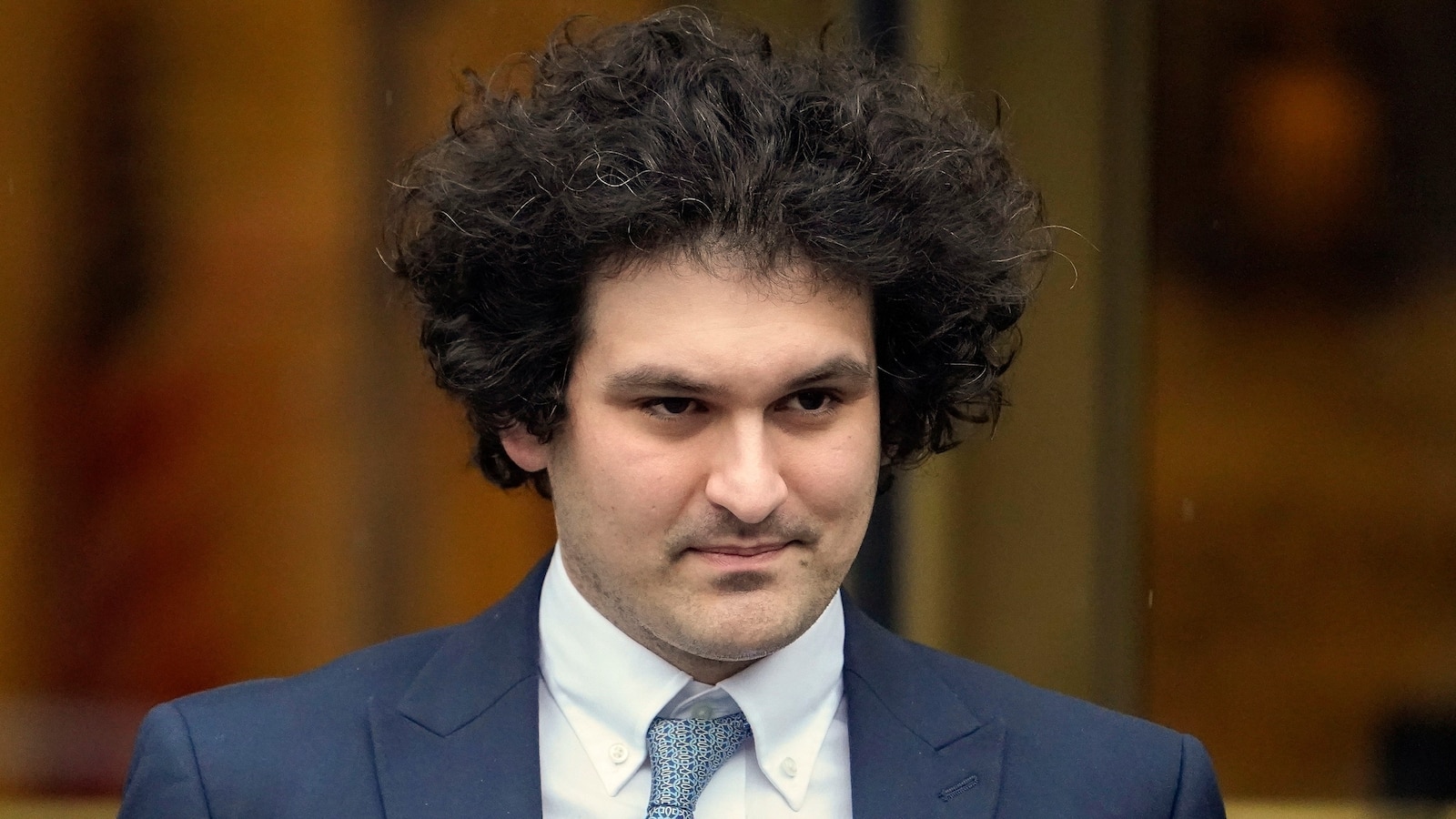
A federal appeals court upheld Sam Bankman-Fried's fraud conviction in the FTX case, leaving intact his 25-year prison sentence and $11 billion forfeiture order. The ruling is another legal setback for the FTX founder, who also submitted a request for a presidential pardon this week. The article is primarily a legal update and is unlikely to have broad market impact beyond crypto and related sentiment.
The near-term market impact is less about FTX legacy claims and more about whether this ruling closes another chapter that has kept institutional risk committees overly cautious around the broader crypto complex. A final appellate affirmation reduces the probability of a late-stage legal reset, which should modestly lower the “headline overhang” discount on exchange, custody, and broker adjacencies that still trade as if a fresh disclosure shock is possible. That said, the size of the effect is limited because the market already treats the case as fully priced in; the bigger issue is whether the pardon effort reintroduces political optionality and keeps the story alive for another few months.
Second-order, the ruling is incrementally constructive for clean-market-structure names because it reinforces the distinction between centralized fraud risk and the current spot-ETF / regulated-venue growth narrative. That matters most for platforms whose valuation depends on institutional adoption and compliance credibility, since every resolved enforcement milestone tends to compress the regulatory risk premium and can expand multiples even if near-term crypto prices are unchanged. The losers are any residual unsecured claim traders or litigation-sensitive counterparties still tied to estate recoveries, because the ruling makes a material reversal less likely and pushes settlement-value realization further into the long tail.
The main catalyst path is not this headline itself, but whether it combines with a broader crypto risk-on impulse over the next 1-3 months; in that case, the legal resolution can act as a secondary amplifier rather than a standalone driver. The contrarian view is that the “good news” is largely ceremonial: conviction finality does not change token fundamentals, liquidity, or leverage in the system, and any rally based on legal closure alone should fade unless matched by stronger ETF flows and funding-market leverage expansion. If pardon speculation becomes louder, expect short-lived volatility spikes rather than durable price discovery, because political intervention risk cuts both ways and usually benefits vol sellers more than directional longs.
AI-powered research, real-time alerts, and portfolio analytics for institutional investors.
Request DemoOverall Sentiment
strongly negative
Sentiment Score
-0.82
