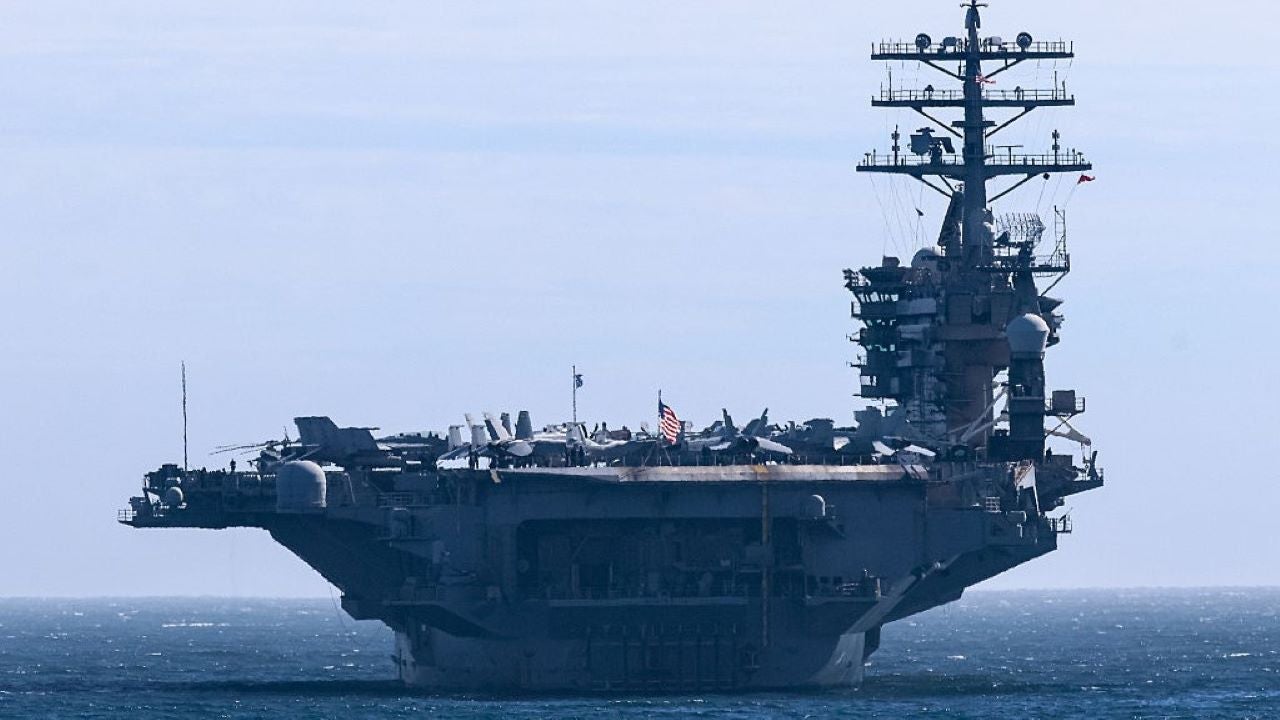
The U.S. and Iran are escalating around the Strait of Hormuz, with Iranian missiles, drones, and small boats targeting vessels while U.S. forces under 'Project Freedom' intercept attacks and escort shipping. U.S. officials said two U.S.-flagged merchant ships transited safely, but Iran has warned foreign military presence will be attacked, keeping a major global oil and shipping chokepoint under acute threat. The conflict risks higher energy prices, disrupted trade flows, and broad market risk-off sentiment.
The market is still underpricing how quickly this can shift from a headline risk to a logistics cost shock. Even without a formal widening of the conflict, the mere need to escort tankers through Hormuz raises effective transit friction: higher war-risk premiums, longer routing/holding times, and a greater probability of selective self-insurance withdrawal by non-Western carriers. That is a second-order inflation impulse through Asia-first supply chains, especially for refiners, LNG importers, and any manufacturer with just-in-time inventory exposed to Gulf-origin feedstock.
Energy is the obvious beneficiary, but the cleaner trade is not just crude beta — it is volatility and regional dispersion. The biggest winner is likely the shadow pricing of supply insecurity: tanker rates, marine insurance, jet fuel cracks, and upstream service names with Gulf exposure. The loser set is broader than airlines; it includes industrials and retailers with low inventory buffers, as well as import-heavy Asian currencies that sit on the wrong side of an energy terms-of-trade shock if this persists beyond days into weeks.
The key catalyst is whether this remains a contained escort operation or becomes a repeated-interdiction regime. If attacks continue at the current intensity for another 1-2 weeks, markets will stop treating this as a geopolitical headline and start repricing duration risk into forward curves, capex plans, and central bank rhetoric. Conversely, a credible back-channel de-escalation or a U.S. shift from escorting to active suppression would quickly compress the risk premium, so timing matters more than direction here.
Contrarian view: the most crowded reaction is to buy crude outright, but the better risk/reward may be in relative-value expressions that monetize dislocation without requiring a permanent supply outage. In particular, the market may be overestimating how much physical oil actually goes missing versus how much the system pays up to keep barrels moving. That argues for volatility and shipping over outright directional energy if the goal is to capture the next 2-6 weeks.
AI-powered research, real-time alerts, and portfolio analytics for institutional investors.
Request DemoOverall Sentiment
strongly negative
Sentiment Score
-0.80
