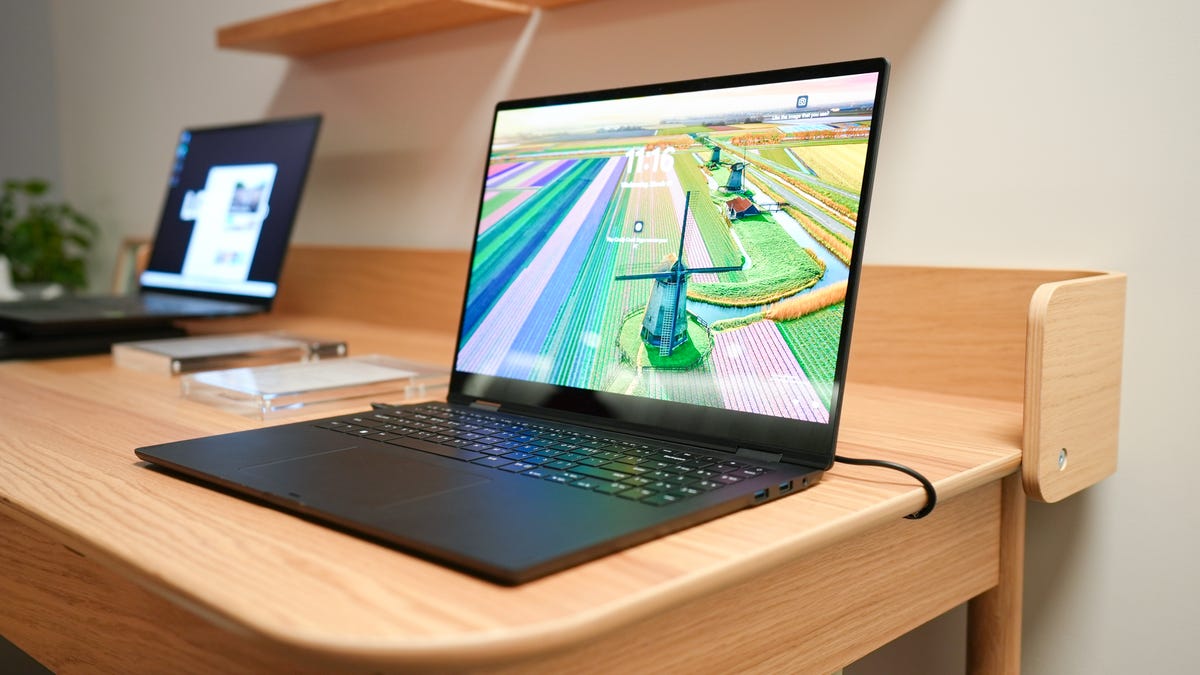
At CES 2026 LG introduced the Gram Pro 17 and Gram Pro 16, emphasizing a new in-house material called 'Aerominum' that promises lower weight and improved durability; LG claims the Gram Pro 17 will be "the world's lightest 17-inch RTX laptop" using an NVIDIA GeForce RTX 5050 GPU. Expected refinements include Intel Core Ultra processors, an upgraded AI assistant, LG Link file/screen sharing and a 16-inch OLED WQXGA+ (2880x1800) option versus a 17-inch WQXGA (2560x1600) LCD; LG has not disclosed pricing or launch dates. The announcement highlights potential competitive advantages in the ultraportable premium laptop segment but raises thermal concerns for a thin chassis packing an RTX-class GPU, leaving commercial impact and margins uncertain until specs, price and release timing are confirmed.
Market structure: LG’s Aerominum-based Gram Pro refresh is a targeted win for GPU (NVDA) and CPU (INTC) design-win narratives in the ultra-portable premium segment; expect modest share shifts from incumbent thin‑and‑light lines (Apple MacBook Air and generic Windows ultrabooks) — realistically a 1–3 percentage-point share reallocation in the premium 13–17" laptop market over 12–18 months if pricing stays >$1,299. OEMs and precision-material suppliers (light alloys, CNC chassis vendors) gain pricing power; commodity aluminum producers see little immediate impact. Risk assessment: Tail risks include thermal/recall events from packing RTX 5050 into thin chassis, IP/patent litigation over Aerominum, or supply bottlenecks for the new alloy; any of these can wipe out anticipated volume and swing supplier stocks ±20–40% within 1–3 months. Near term (days–weeks) sentiment will be driven by benchmarks and reviews; medium term (3–9 months) by pricing and shipments; long term (>12 months) by OEM licensing/adoption. Hidden dependency: success depends on Nvidia mobile driver stability and Intel power management firmware. Trade implications: Small, conviction‑weighted longs in NVDA and INTC make sense (see specifics below), sized to 1–3% each, with options spreads to cap risk ahead of review flurries. Pair trades: long NVDA vs. short generic PC OEM exposure if thermals/reviews are negative. Watch catalysts: LG price announcement, independent thermal and battery benchmarks (within 30–60 days), and Nvidia/Intel notebook revenue guidance. Contrarian view: Market may overestimate near‑term demand; historically, ultra‑thin devices packing high‑TDP GPUs (e.g., early Razer/Asus thin RTX models) faced thermal throttling and limited volumes — if Gram Pro shows sustained thermal throttling or pricing >$1,999, expect adoption to stall and suppliers’ re‑rating to reverse ~15–30% over 3–6 months.
AI-powered research, real-time alerts, and portfolio analytics for institutional investors.
Request DemoOverall Sentiment
mildly positive
Sentiment Score
0.25
Ticker Sentiment
