
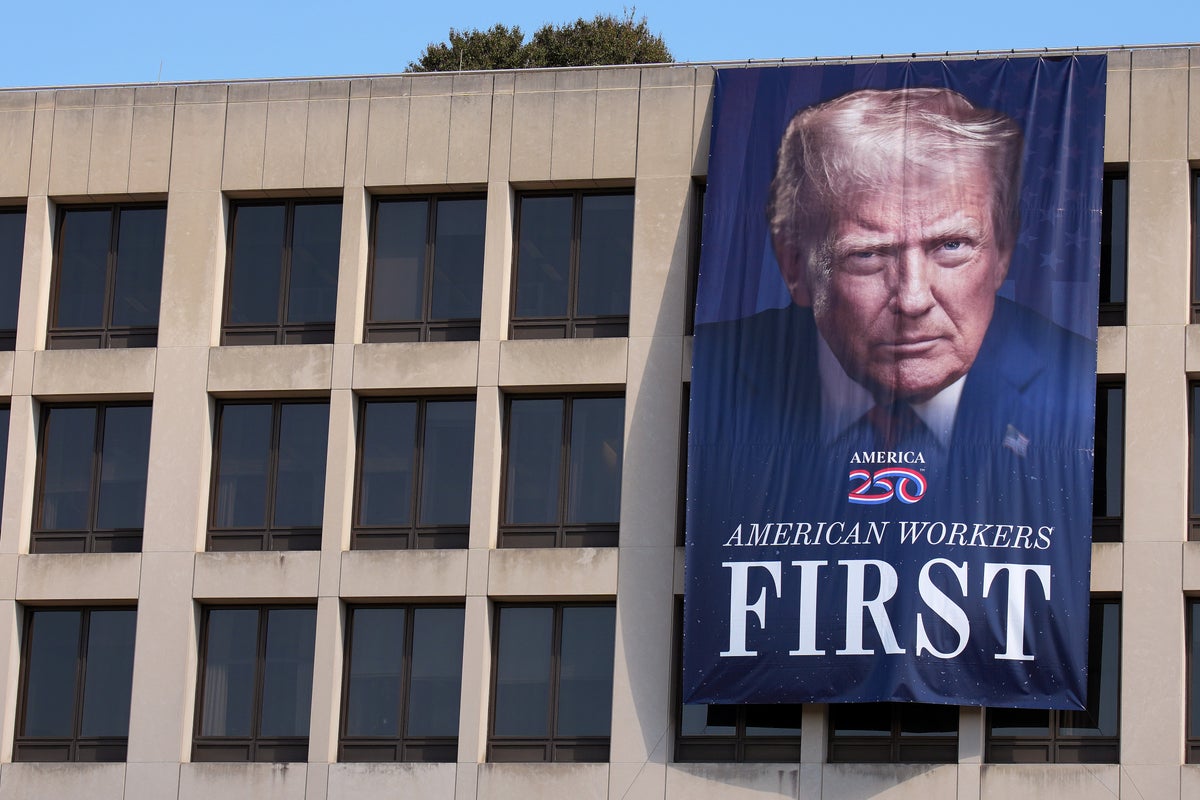
More than 10,000 lawyers have left the Trump administration, leaving federal agencies understaffed and reducing the civilian government attorney count by roughly 17% between end-2024 and March 2026. The Department of Education lost over 50% of its pre-inauguration lawyers, while the Justice Department's attorney count fell 21%; DHS was the only department to add lawyers amid higher immigration litigation. The report highlights hiring challenges, legal pressure on government attorneys, and ongoing efforts to staff up with signing bonuses and rehiring.
The first-order issue is not just understaffing; it is a higher-friction state apparatus that can no longer reliably execute policy at speed. In the near term, that raises the probability of procedural errors, missed deadlines, and court losses across agencies where legal review is now a bottleneck, which should slow implementation of contentious initiatives and increase headline volatility around rulemaking. Over a 3-12 month horizon, the bigger market effect is that policy risk becomes less deterministic: agencies may still announce aggressive measures, but the odds of injunctions, reversals, and delayed enforcement rise meaningfully.
The beneficiaries are less obvious than the losers. Outside-law firms, compliance consultancies, and litigation support vendors should see structurally higher demand as agencies outsource what they can no longer do in-house; the catch is that this tends to be lumpy and procurement-constrained, so revenue recognition can lag the political headlines. For regulated sectors, the win is short-duration uncertainty: banks, healthcare, education services, and federal contractors may get relief from slower enforcement, but they also face a larger tail risk that policy gets defended later in court with a more ad hoc, less predictable stance.
The most investable second-order effect is that the administration’s legal capacity constraint may cap the pace of “policy surprise,” even while rhetoric remains maximalist. That argues for fading knee-jerk downside in broad domestic-risk baskets on announcements that lack clear implementation machinery. Conversely, names exposed to immigration, education, and government litigation should trade with a persistent premium in risk discount until staffing normalizes or the courts force clearer boundaries.
Contrarianly, the market may be underpricing the durability of this problem because bad hiring dynamics reinforce themselves: reputational damage makes top legal talent harder to recruit, and a thin bench increases the chance of more mistakes, which drives still more attrition. That creates a feedback loop that can extend well beyond one administration cycle, especially if successors inherit a hollowed-out workforce and a backlog of unresolved actions.
AI-powered research, real-time alerts, and portfolio analytics for institutional investors.
Request TrialOverall Sentiment
moderately negative
Sentiment Score
-0.35
Ticker Sentiment
