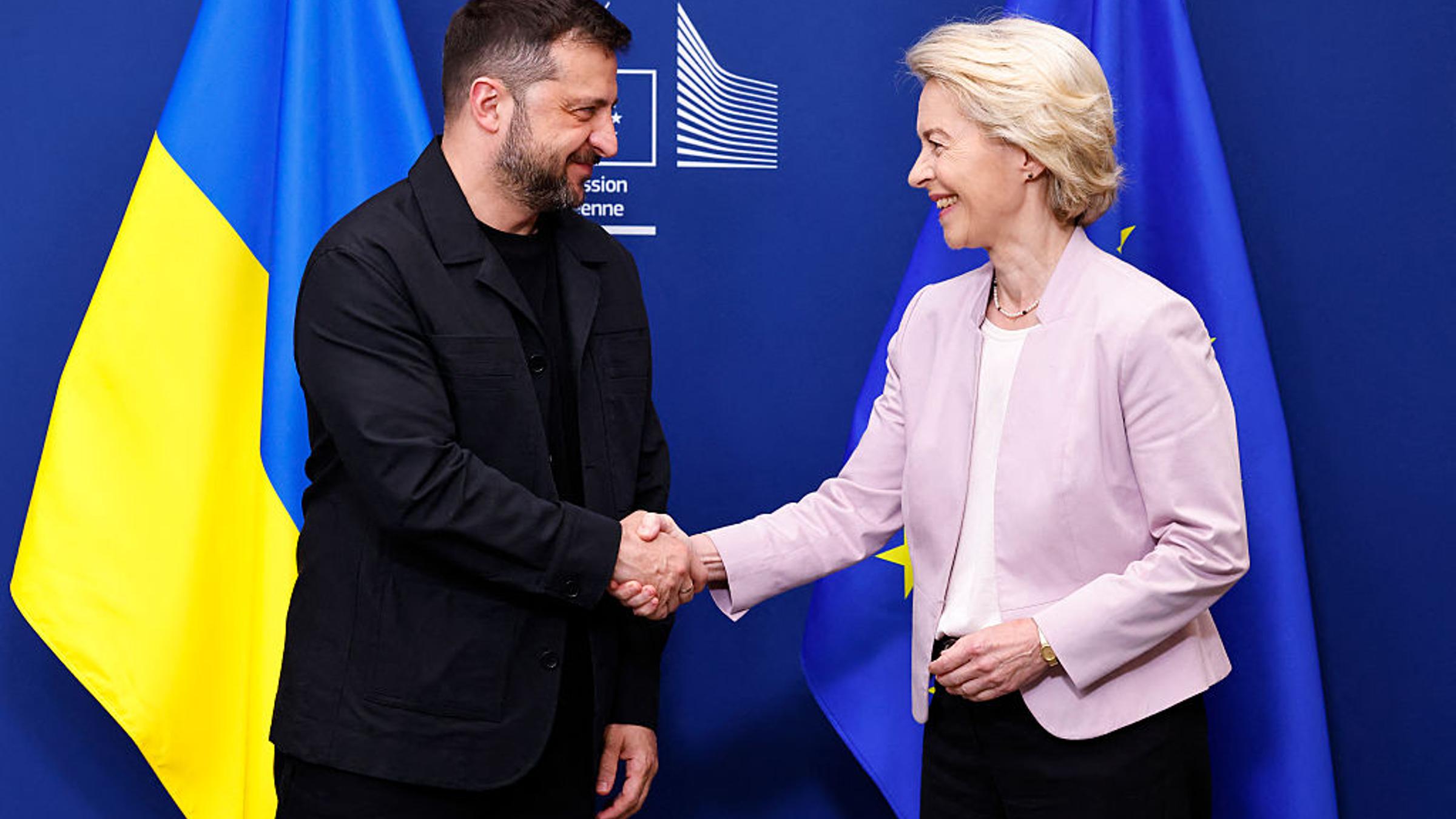
Ukraine and Moldova officially launched E.U. accession talks after all 27 member states agreed to open the first negotiating cluster, marking a significant political step toward eventual membership. Ukraine has completed key preparatory milestones, including its E.U. screening process, and claims roughly 84% implementation of required reforms since 2014, but unanimous approval is still required at every stage and a 2030 entry target remains uncertain. The article is primarily geopolitical and policy-driven, with limited direct near-term market impact.
The key market implication is not the ceremonial opening of talks, but the gradual re-pricing of a longer-dated European risk premium. A credible accession path lowers the terminal discount rate on Ukrainian and Moldovan assets, but only in the slow-moving parts of the capital stack: local sovereign paper, quasi-sovereigns, infrastructure contractors, and banks with regional exposure. The first-order equity beneficiaries are likely not in Ukraine itself, where governance and war risk still dominate, but in adjacent EU industrials, logistics, defense, and compliance-heavy service providers that monetize integration work before membership arrives.
The biggest second-order effect is on EU budget politics. If enlargement advances, capital likely rotates toward beneficiaries of cohesion/farm spending and away from net-contributor fiscal sensitivity trades, because the market will start discounting future transfer burdens well before accession. That creates a subtle headwind for long-duration euro assets if the accession narrative collides with already-fragile fiscal debates in core Europe. At the same time, the process strengthens the strategic case for European defense and reconstruction themes because every step toward accession increases the probability of multi-year procurement and infrastructure spending.
The main risk is that investors extrapolate a 2030-style headline path while the real bottleneck remains unanimous approvals and domestic veto politics. Any reversal in anti-corruption credibility, a renewed offensive by Russia, or a change in leadership in a key member state can delay the process by years, not quarters. The frontloading approach helps pull some demand forward, but it also means asset prices can run ahead of actual legal progress, creating a classic buy-the-narrative/sell-the-delay setup.
The contrarian view is that the market may be underestimating how much of the economic value is already captured by reforms rather than membership itself. Ukraine’s incremental alignment can unlock procurement, financing, and contracting flows long before formal accession, so the marginal upside from the next few negotiation milestones may be smaller than the political headlines imply. That argues for favoring earners from pre-accession capex over direct Ukraine beta, which remains hostage to security conditions.
AI-powered research, real-time alerts, and portfolio analytics for institutional investors.
Request DemoOverall Sentiment
mildly positive
Sentiment Score
0.20
