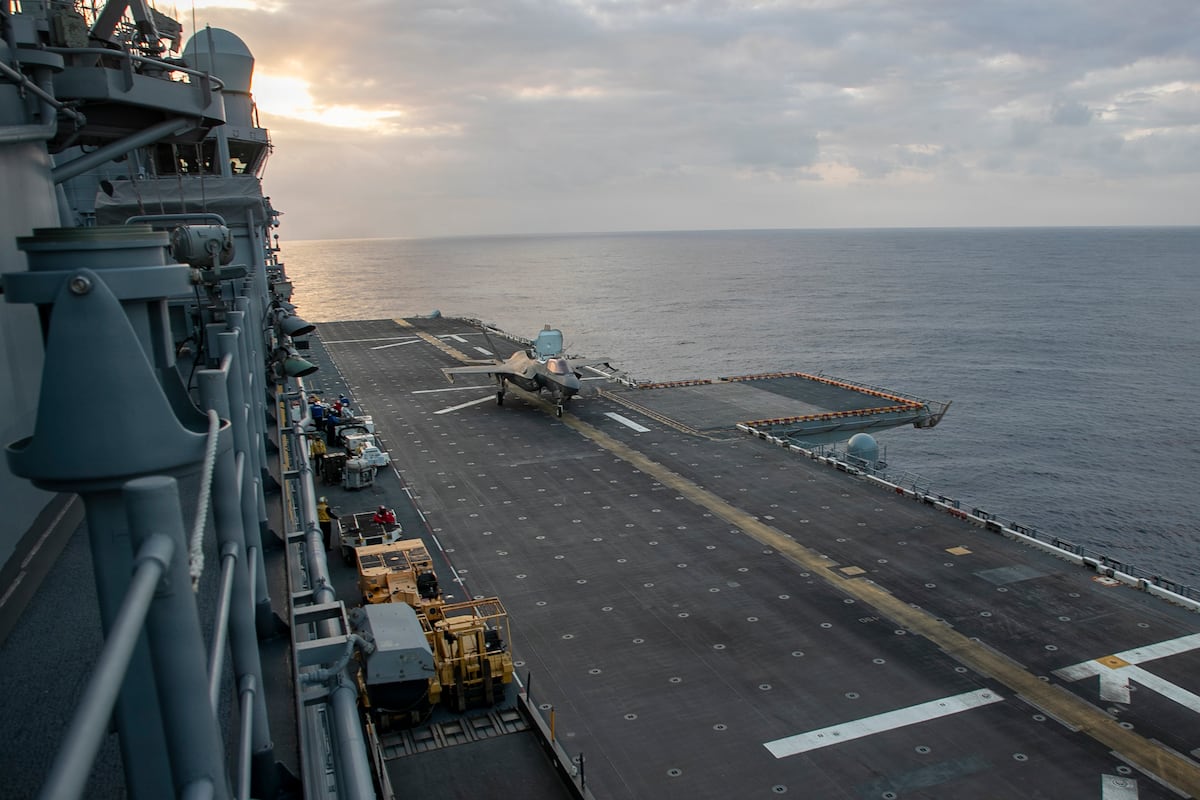
Up to 5,000 U.S. personnel and several warships, including the USS Tripoli Amphibious Ready Group, are being sent to the Middle East; CENTCOM reports roughly 6,000 strikes inside Iran and over 60 Iranian ships eliminated. Pentagon briefers estimate the first six days of Operation Epic Fury cost ~$11.3B, while U.S. combat deaths stand at 13 and ~140 wounded (six crew killed in a KC-135 crash). The escalation and added military deployments raise significant geopolitical risk, likely to drive risk-off flows and elevate energy and defense-sector volatility.
The U.S. operational uptick will act as a multi-channel revenue shock for defense contractors and shipyards over a 6–24 month horizon: near-term aftermarket, maintenance and surge logistics revenues (months) segue into multi-year procurement and new-build funding (12–24 months). Expect battalion-sized sustainment needs to push outsized demand into niche suppliers (marine auxiliary systems, expeditionary logistics, medevac kits) where single-vendor positions can meaningfully beat consensus margin expansion expectations.
Markets often underprice the insurance and freight-rate channel: higher war-risk premia lift tanker and dry-bulk timecharter rates and reroute patterns that persist for quarters, benefiting owners with modern double-hulled fleets and fixed-rate contracts. Conversely, passenger carriers with thin fuel hedges and concentrated Middle East routes will see margin compression and capacity reallocation costs that show up in quarterly guidance almost immediately.
Fiscal and liquidity second-order effects matter: sustained higher defense outlays will widen deficit forecasts and increase Treasury bill supply over the next 12 months, pressuring front-end yields and creating a tactical headwind for duration-sensitive equities. The counterbalance is that a drawn-out kinetic phase increases procurement certainty — a positive for long-cycle defense names but a negative for discretionary and travel sectors.
Key catalysts to watch: diplomatic de-escalation or a coordinated SPR release (weeks–months) that would quickly normalize oil and freight premia; a major strike on hydrocarbons or a catastrophic logistics incident could instead amplify a months-long shock. Position sizing should reflect a binary outcome path where either geopolitical risk premium fades (fast) or becomes a persistent structural input (months).
AI-powered research, real-time alerts, and portfolio analytics for institutional investors.
Request DemoOverall Sentiment
strongly negative
Sentiment Score
-0.70
