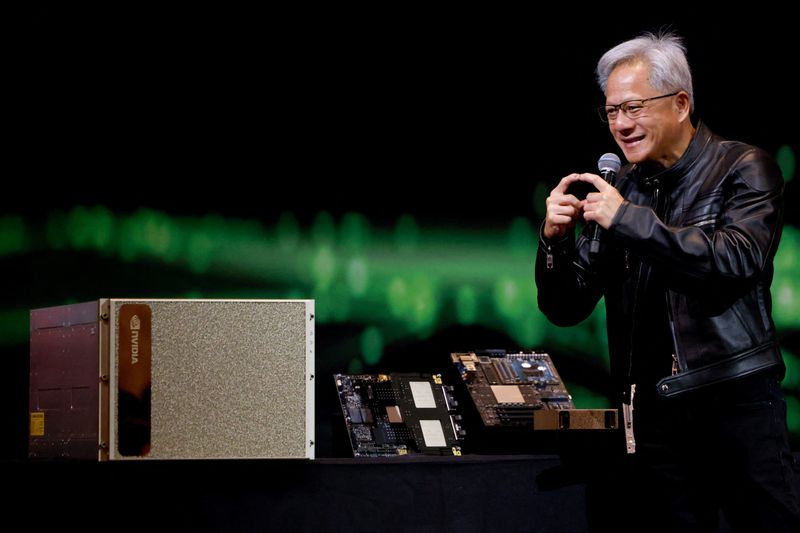
Nvidia unveiled RTX Spark processors for Windows PCs, plus a new Vera chip for AI agents and a Vera Rubin AI platform that is now in full production. The company said Vera can deliver 80% faster agentic task completion, and shipments of Vera Rubin are set to begin in the fall. The launches strengthen Nvidia’s push into PCs, enterprise AI, and data center hardware, while increasing competitive pressure on Intel, AMD, and Apple.
The most important read-through is not the product news itself, but the signal that Nvidia is trying to extend its operating system from training GPUs into the endpoints where inference economics actually compound. If local AI agents become a meaningful workload, the margin pool shifts from one-time model training demand to recurring device refresh and software-stack lock-in, which is a better long-duration story for NVDA and a more dangerous one for legacy CPU vendors. The second-order implication is that the PC market may bifurcate into commodity hardware and premium AI-capable devices, with the latter taking share even if unit growth stays flat.
Intel and AMD face a classic “good news on the benchmark, bad news on the narrative” setup: the issue is less one SKU than the risk that AI-native buyers standardize around Nvidia’s software stack and let x86 remain the fallback tier. That can pressure ASPs and gross margin mix over the next 2-4 quarters, especially if enterprise PC refresh cycles get pulled forward into 2025 around local-agent use cases. Apple is not immune either; if on-device AI becomes the headline feature buyers care about, the comparison shifts from battery life to developer ecosystem and model portability, where Windows/Nvidia could narrow the moat.
CME’s 24/7 crypto futures launch matters because it lowers the friction for institutional hedging and weekend risk transfer, which should reduce spot-derivative dislocations but also make crypto more financeable as a macro asset. That is mildly supportive for BTC on volatility normalization, but the bigger effect is more efficient downside hedging, so rallies may become less reflexive and more range-bound unless ETF inflows re-accelerate. The market is likely underestimating how quickly perpetual-style liquidity can compress intraday moves once traditional session constraints disappear.
The contrarian view is that the stock-market reaction may overstate near-term monetization. Agentic AI is still more narrative than budget line item, and enterprise buyers usually test local inference before committing, so the revenue inflection could lag by 6-9 months. If application developers do not optimize for Nvidia on Windows, or if Microsoft’s own silicon roadmap gains traction, the edge could fade faster than the headline suggests.
AI-powered research, real-time alerts, and portfolio analytics for institutional investors.
Request DemoOverall Sentiment
moderately positive
Sentiment Score
0.55
Ticker Sentiment
