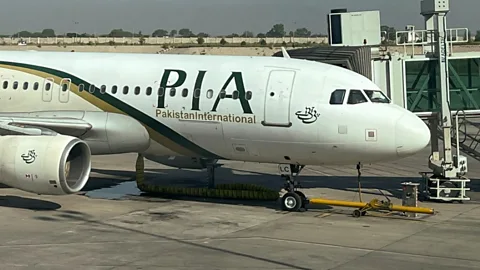
Pakistan sold its national carrier Pakistan International Airlines (PIA) in a live televised auction for $482 million, a privatisation overseen by adviser Muhammad Ali to Prime Minister Shehbaz Sharif. The transaction represents a government move to monetize a state asset and could modestly improve Pakistan’s fiscal receipts and reduce state sector liabilities, though details on buyer, transaction structure and post-sale operations will determine the longer-term economic and market implications.
Market structure: The televised $482m sale of PIA shifts asset ownership from sovereign to private operator and should benefit private aviation operators, airport management contractors, aircraft lessors and logistics vendors if the buyer upgrades routes or modernizes fleet. Losers include unions, politically connected suppliers and state-owned creditor claims; expect short-term capacity disruptions that could compress yields on Pakistan USD sovereigns by 25–150bp if proceeds are used to cut fiscal gap. Cross-asset: watch PKR (likely firmer 3–8% vs USD on positive sentiment), Pakistan sovereign CDS (tighten) and EM equity flows (small re-rating into Pakistan-specific instruments).
Risk assessment: Tail risks include buyer default, renewed political reversal or labor strikes (10–30% chance over 6 months) and safety/regulatory findings forcing recapitalisation (low probability, high cost). Immediate (days) risk is reputational/operational during transition; short-term (weeks–months) is regulatory/legal challenges; long-term (quarters–years) is execution risk and demand elasticity on routes. Hidden dependencies: sale proceeds usage (debt paydown vs general budget) dictates sovereign reaction; airline profitability depends on fuel hedges and route network choices. Catalysts: buyer disclosures in 30–90 days, IMF/fiscal announcements, and any labour court injunctions.
Trade implications: Direct plays favor small, tactical Pakistan exposure (MSCI Pakistan ETF PAK) and EM local bond instruments (EMLC) as play-to-fiscal improvement; overweight travel/logistics contractors in EM/APAC if fleet expansion announced. Relative value: long Pakistan vs short broad EM (PAK vs EEM) to capture idiosyncratic rerating; options: buy limited-cost call spreads to cap downside while keeping upside. Entry/exit: act within 5–30 days post-transparent buyer plan; set 3–12 month horizons with 10–25% profit targets and 8–12% stop losses.
Contrarian angles: Consensus treats sale as wholly positive — miss is structural demand risk if buyer cuts unprofitable routes, reducing domestic aviation volumes and airport fees (underappreciated downside). The market may underprice political reversal risk; a 90-day legal challenge could wipe short-term gains. Historical parallels: privatisations in Argentina and India show immediate sentiment gains but mixed operational outcomes over 12–36 months. Unintended consequence: if proceeds are absorbed for one-off fiscal fixes, the underlying macro risk remains and EM flows could reverse quickly on any negative external shock.
AI-powered research, real-time alerts, and portfolio analytics for institutional investors.
Request DemoOverall Sentiment
mildly positive
Sentiment Score
0.25
