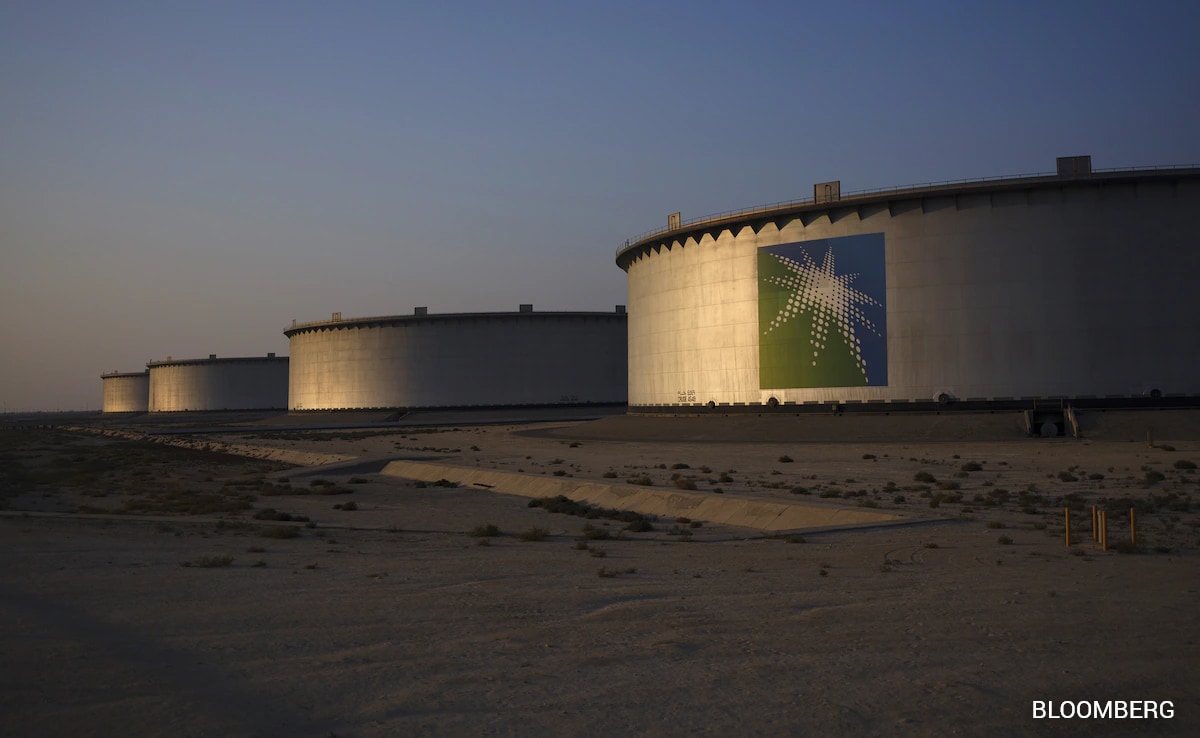
Saudi Arabia has started cutting oil production as the near-blockage of the Strait of Hormuz fills storage; Saudi produces ~10.0 million b/d and exports ~7.0 million b/d and is rerouting some shipments via Yanbu in the Red Sea but the pipeline lacks capacity to fully replace Hormuz flows. The UAE, Kuwait and Iraq have also reduced output to avoid overwhelming storage; Gulf producers collectively have roughly 100 million barrels of remaining capacity (~1/3), though effective usable capacity is lower and operational use rarely exceeds 80%. The export disruption has pushed oil above $100/barrel and risks a spike in global inflation, with JPMorgan estimating Saudi could exhaust storage in just over two months from the conflict's start.
The market is pricing a near-term supply inflexibility driven by storage and route capacity constraints rather than a pure production shock; that makes price moves steeper for a given disruption and increases realized volatility. When buffers are small, marginal supply elasticity approaches zero and even small additional bottlenecks cause outsized spot moves — expect realized volatility to remain elevated in the 30–60% annualized range until inventories are demonstrably rebuilt.
Rerouting crude flows amplifies second-order costs: longer voyages raise tanker time-charter rates and raise effective delivered cost for buyers, while limited alternate pipeline capacity creates grade-specific dislocations (light vs heavy differentials widening). This bifurcates winners — owners of long-haul tanker capacity and producers who can access alternate export corridors — from structural losers like freight-sensitive refiners and high fuel-intensity sectors.
Key near-term catalysts that will quickly reprice risk are (1) liquidity-driven SPR or strategic releases from OECD hands, (2) a diplomatic de-escalation that reopens blocked lanes, and (3) demand feedback via real-world inflation and macro tightening dampening fuel consumption. Each catalyst has a different horizon: releases/diplomacy can flip markets in weeks; demand destruction unfolds over quarters.
The consensus is focused on headline supply cuts; it underestimates the cumulative P&L impact of freight/insurance and refinery feedstock shifts which raise break-even delivered costs by mid-single-digit dollars per barrel. That gap makes certain transport and short-duration option plays asymmetric: big upside if chokepoints persist, limited carry if they don’t.
AI-powered research, real-time alerts, and portfolio analytics for institutional investors.
Request DemoOverall Sentiment
strongly negative
Sentiment Score
-0.60
Ticker Sentiment
