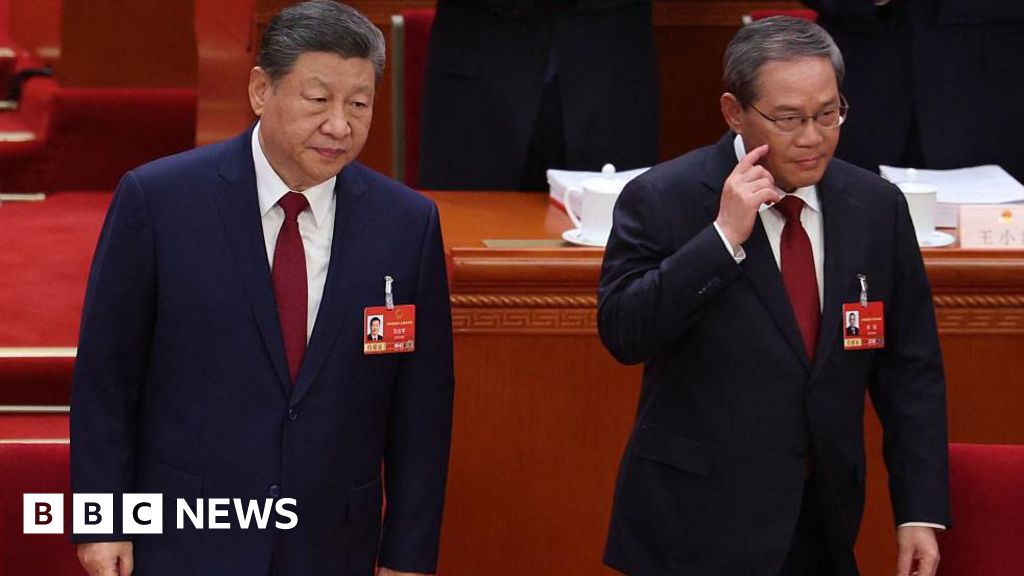
China set an annual GDP target of 4.5–5.0%, the lowest since 1991, alongside parts of its 15th Five Year Plan that pledge over 100 major projects to boost innovation, high‑tech manufacturing, scientific research and household consumption. The downshift reflects weak domestic spending, a shrinking population, a prolonged property crisis and external pressures including trade tensions and an energy squeeze related to the Iran conflict, even as China recorded a record $1.19tn trade surplus last year. Beijing’s pivot toward investment-led, green and tech-driven growth and widespread provincial downgrades of targets point to slower domestic momentum that could pressure consumer, property and commodity-exposed sectors.
Market structure: A 4.5–5% GDP target signals Beijing shifting from demand-driven recovery to state-led capex and industrial upgrading. Winners: renewable-energy equipment, advanced manufacturing, transportation and industrials tied to >100 planned projects; losers: residential developers, consumer discretionary, and regional banks exposed to property. Export-oriented manufacturers may stabilize near-term but lose pricing power if global demand softens.
Risk assessment: Tail risks include a sharper property-system shock (credit losses >5% of GDP equivalent locally), renewed US trade escalation, or a geo-energy shock that spikes oil >$120/bbl — each could trigger capital controls and ~10–20% equity downside in China. Near term (days–weeks) watch on policy signals and PBOC liquidity ops; medium (3–12 months) hinges on LGFV funding access and credit impulse; long term (2–5 years) is structural: aging population compresses consumption growth 1–2%pa below past trend.
Trade implications: Tilt portfolios to China-capex and green-energy supply chains via targeted ETFs/stocks and commodities (solar polysilicon, copper, lithium) while shorting high-beta property developers and discretionary names. Cross-asset: expect CNY mild depreciation (2–6% over 12 months) and compression in onshore yields if fiscal capex is funded via LGFVs — so buy duration selectively and hedge FX risk beyond a 2% move.
Contrarian angles: Consensus underestimates Beijing’s ability to engineer growth via targeted industrial projects — some A-share tech and machinery names are priced for stagnation and could re-rate 20–40% if policy execution proves effective. Conversely, stimulus without cleaning balance sheets risks a Japan-style lost decade; avoid one-way bets and prefer pairs/relative-value where execution risk is highest (property) vs where policy support is explicit (renewables, semicapex).
AI-powered research, real-time alerts, and portfolio analytics for institutional investors.
Request TrialOverall Sentiment
moderately negative
Sentiment Score
-0.40
