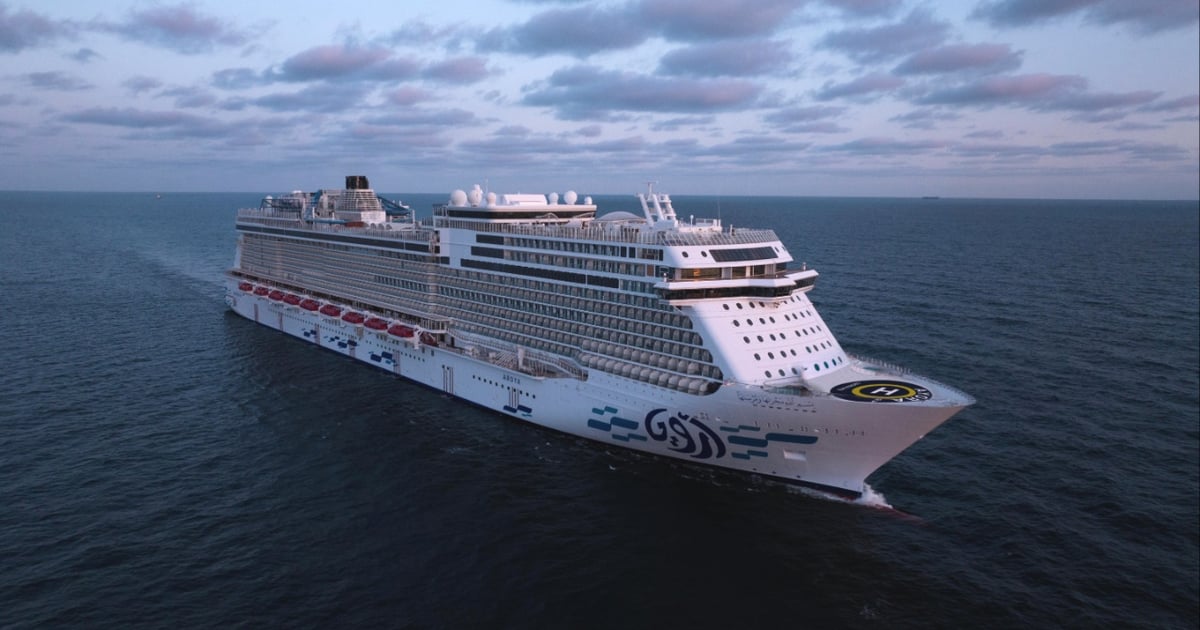
Aroya Cruises' Aroya became the last of six Arabian Gulf-stranded cruise ships to clear the Strait of Hormuz, reaching the Gulf of Oman and heading to Jeddah. The ship is expected to arrive in Jeddah on April 27 and resume scheduled Red Sea sailings on May 14. The article reflects a logistical normalization after the Iran war disrupted regional cruise operations, but it is largely factual and limited in immediate market impact.
The immediate market read is less about cruise demand and more about the resolution premium on regional logistics. Once a stranded asset clears the chokepoint, it signals the worst-case transit disruption is not fully priced into Red Sea-adjacent leisure operators; that supports a short-duration relief bid in marine insurers, port services, and regional tourism suppliers, but the move should fade fast if the conflict remains unresolved. The more durable winner is the operator mix that can re-anchor to a homeport outside the highest-risk corridor and redeploy capacity quickly, because utilization recovery matters more than headline passenger counts.
Second-order, the disruption likely inflicted hidden costs on rivals that had to absorb repositioning fuel burn, crew changes, and schedule integrity damage. Those costs tend to hit EBITDA disproportionately in leisure shipping because fixed costs are high and pricing power is weakest when itineraries are altered last-minute. The real loser set is not the stranded ships themselves, but the broader ecosystem of destination ports and local excursion vendors that lose repeat-booking momentum if consumers infer that itinerary reliability is compromised for an entire season.
The key catalyst window is the next 2-6 weeks: any follow-on disruptions in Hormuz or Red Sea transit would re-open the trade to geopolitical hedging, while a clean resumption of sailing schedules would collapse the risk premium. Consensus is likely underestimating how quickly booking curves can recover once a ship returns to service, but also overestimating the durability of that rebound if media coverage shifts back to security risk. In other words, the setup favors a tactical trade, not a structural one.
From a contrarian angle, this may be more bullish for the broader destination-leisure basket than for cruise operators themselves. If travelers see the region normalizing, the incremental spend can migrate into airlines, OTAs, and resort operators that benefit from itinerary rescheduling without bearing the same operational risk. The better long is selective reopening exposure, not the headline cruise names.
AI-powered research, real-time alerts, and portfolio analytics for institutional investors.
Request TrialOverall Sentiment
neutral
Sentiment Score
0.00
