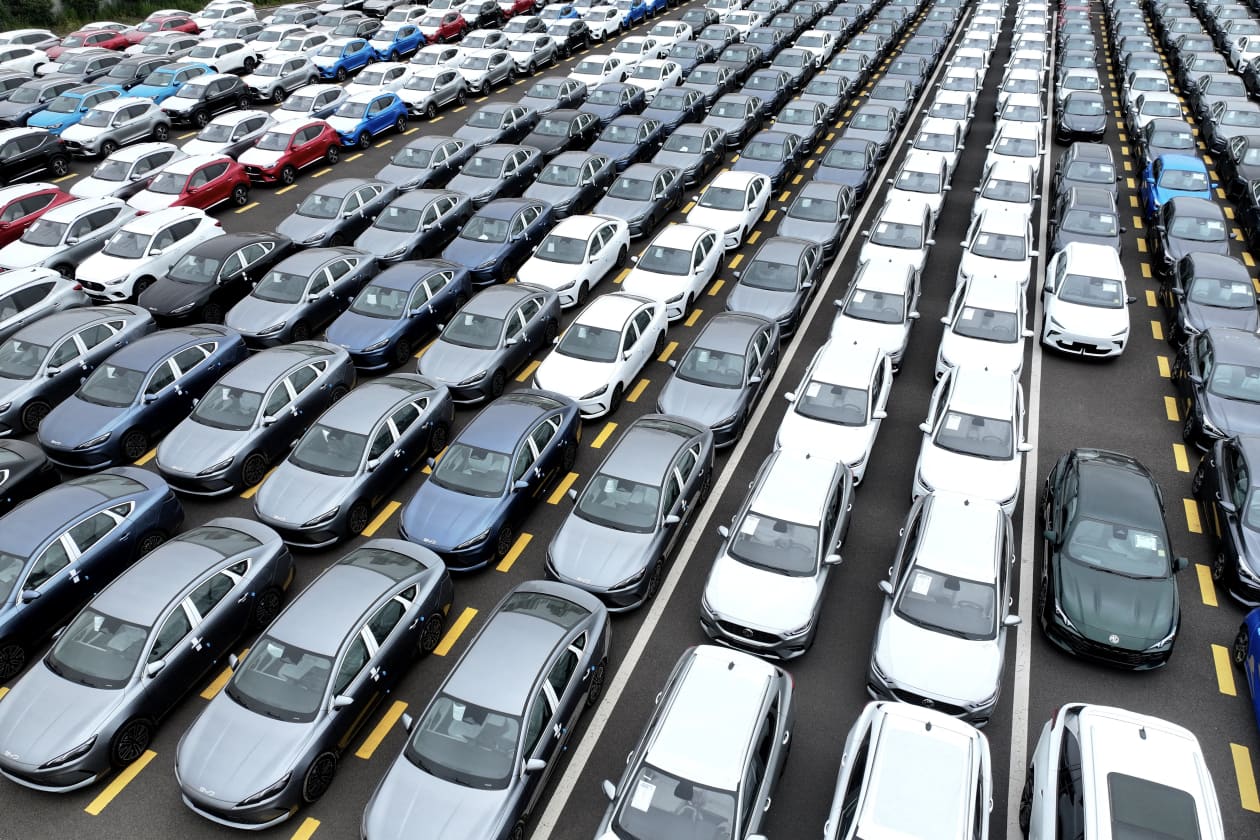
Bank of America flags a drag on global auto sales from chronically weak China demand, noting Chinese OEMs are taking European market share—especially in EVs—as domestic growth in China slows. The note suggests China’s auto companies are reallocating demand overseas due to inability to sell at home. Net impact is likely negative for European auto incumbents, with potential 1-3% stock-level volatility depending on exposure.
China’s weak domestic demand matters less as a volume story than as a price-export story: underutilized capacity almost always migrates into offshore discounting, which is where the margin damage shows up first. That is structurally negative for European OEMs and their suppliers because auto economics are fixed-cost leveraged; a modest decline in ASPs can erase a disproportionate share of EBIT before unit volumes even look disastrous.
The second-order losers are the parts of the ecosystem tied to residual values and financing, not just the assemblers. Fleet lessors, rental channels, and captive finance arms are exposed if cheaper imported EVs reset used-car prices and increase incentive intensity, while upstream battery/material names face a slower-than-advertised demand curve if export-led competition forces longer promotional cycles.
Catalyst path is three-layered: the immediate move is sentiment-driven and can fade; over 1-3 months, earnings revisions and guidance language matter more; over 6-18 months, this becomes a market-share and pricing regime shift if Europe does not erect real barriers. The contrarian miss is that Chinese weakness is not automatically bearish for all automakers — it is bearish for high-cost incumbents and bullish for low-cost exporters, but only until trade policy or retaliatory tariffs interrupt the channel.
AI-powered research, real-time alerts, and portfolio analytics for institutional investors.
Overall Sentiment
mildly negative
Sentiment Score
-0.25
Ticker Sentiment
