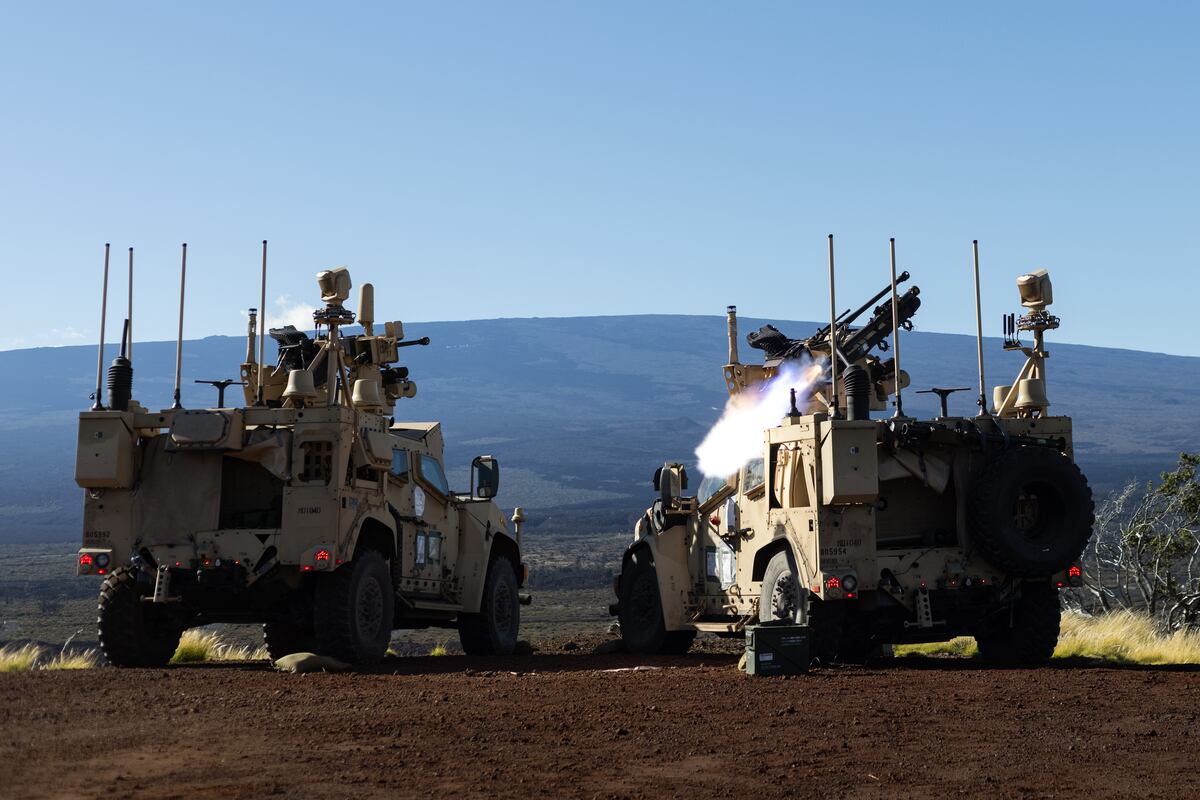
The U.S. Marines have moved the Marine Air Defense Integrated System (MADIS) into full-rate production as of September; built by Kongsberg and mounted on two Joint Light Tactical Vehicles, MADIS forms a paired short-range ground-based air-defense ‘hunter-killer’ capability to destroy unmanned aerial systems and manned aircraft, including helicopters. One vehicle is optimized for helicopters/fixed-wing threats and the other for countering drones, with engagement options using Stinger missiles or a 30mm cannon, on-the-move firing, upgraded targeting algorithms, sensors and enhanced mobility, and a design intended for future upgrades. Having completed trials and live-fire exercises (Twentynine Palms and Exercise Balikatan April 2025), MADIS replaces legacy MANPAD employment that required dismounting and will materially increase organic Marine unit survivability and counter‑UAS operational flexibility.
The U.S. Marines moved the Marine Air Defense Integrated System (MADIS) into full-rate production as of September; the system, manufactured by Kongsberg Defence & Aerospace and mounted on two Joint Light Tactical Vehicles, pairs a platform optimized for helicopters/fixed‑wing threats with one focused on countering drones and can engage with Stinger missiles or a 30mm cannon while stationary or on the move. The production decision follows trials and live-fire events, including a Twentynine Palms exercise and the first live-fire during Exercise Balikatan in April 2025, and Marines have begun formal training on the new system. Key technology upgrades cited include enhanced targeting algorithms, improved sensor capabilities and greater mobility, and the design is described as flexible for future upgrades; MADIS replaces legacy MANPAD employment that required dismounting, materially increasing organic short-range air-defense options for units. From a program and market perspective, the announcement signals a tactical capability shift that could support continued procurement and sustainment demand for Kongsberg and subsystem suppliers, but the article provides no contract values or production cadence, so near-term market impact is likely limited and dependent on follow‑on orders and operational feedback.
AI-powered research, real-time alerts, and portfolio analytics for institutional investors.
Overall Sentiment
mildly positive
Sentiment Score
0.30
