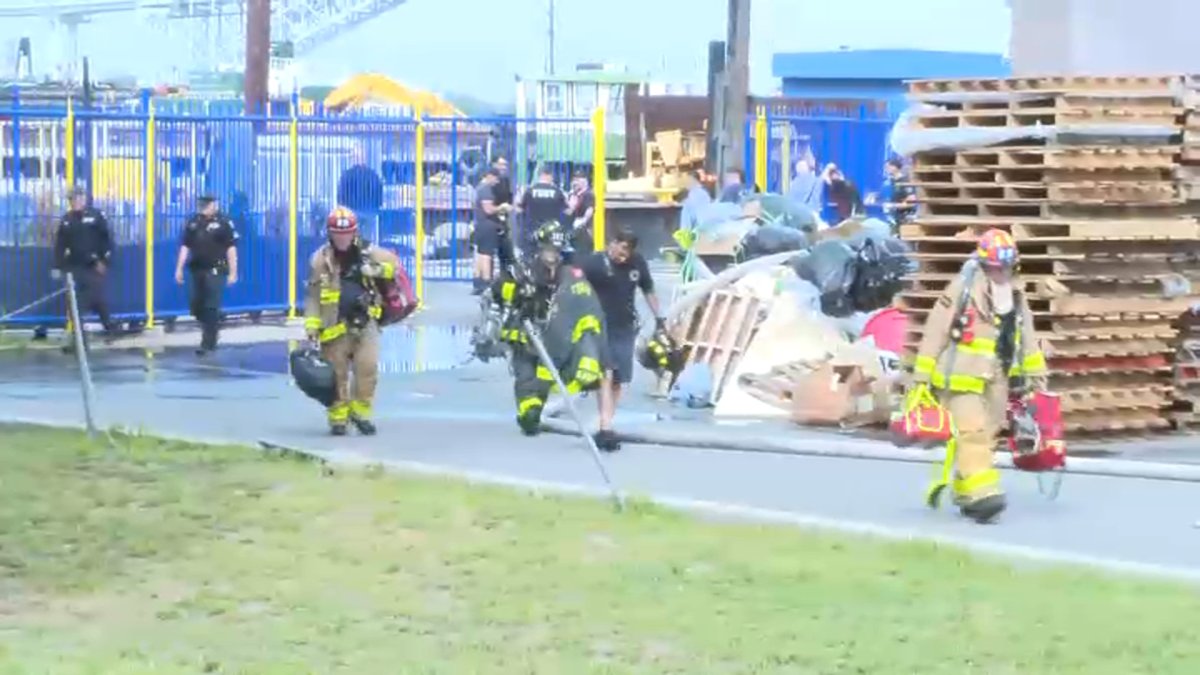
One person was killed and 35 people were injured, including 34 firefighters or EMS personnel, after a fire and explosion at a Staten Island dry dock facility. Two first responders were hospitalized, with one fire marshal in critical condition and one firefighter in serious condition, though neither was reported to have life-threatening injuries. The cause remains unknown and an investigation is ongoing.
The immediate market impact is not in the incident itself but in the downstream friction it creates for a small cluster of waterfront and industrial operators. Any prolonged shutdown of a dry-dock/repair node can create a temporary bottleneck for tug, barge, and coastal freight turnaround, which tends to benefit nearby alternative yards and larger operators with spare capacity. The first-order earnings hit is likely immaterial at a sector level, but the second-order effect is higher local insurance friction, tighter safety scrutiny, and potentially slower permitting across similar facilities.
The more interesting angle is legal and liability risk. A fatal industrial fire with multiple responder injuries increases the odds of a long tail of claims, subpoena activity, and potentially regulatory remediation costs that can stretch for quarters rather than weeks. If investigators find maintenance, storage, or ignition-control failures, expect a re-pricing of underwriting terms for niche marine and port-service businesses before any fundamental P&L effect shows up.
For transportation and logistics, the event is a reminder that low-frequency operational disruptions can cascade into schedule unreliability when capacity is already constrained. The likely winner is the broader diversified logistics complex if customers shift volumes away from smaller specialist yards toward larger terminals with stronger safety controls. The contrarian view is that the market may overestimate the economic impact: unless the facility is a meaningful regional hub, the financial damage may be confined to one-off legal reserves and higher premiums rather than a structural earnings reset.
AI-powered research, real-time alerts, and portfolio analytics for institutional investors.
Request DemoOverall Sentiment
strongly negative
Sentiment Score
-0.70
