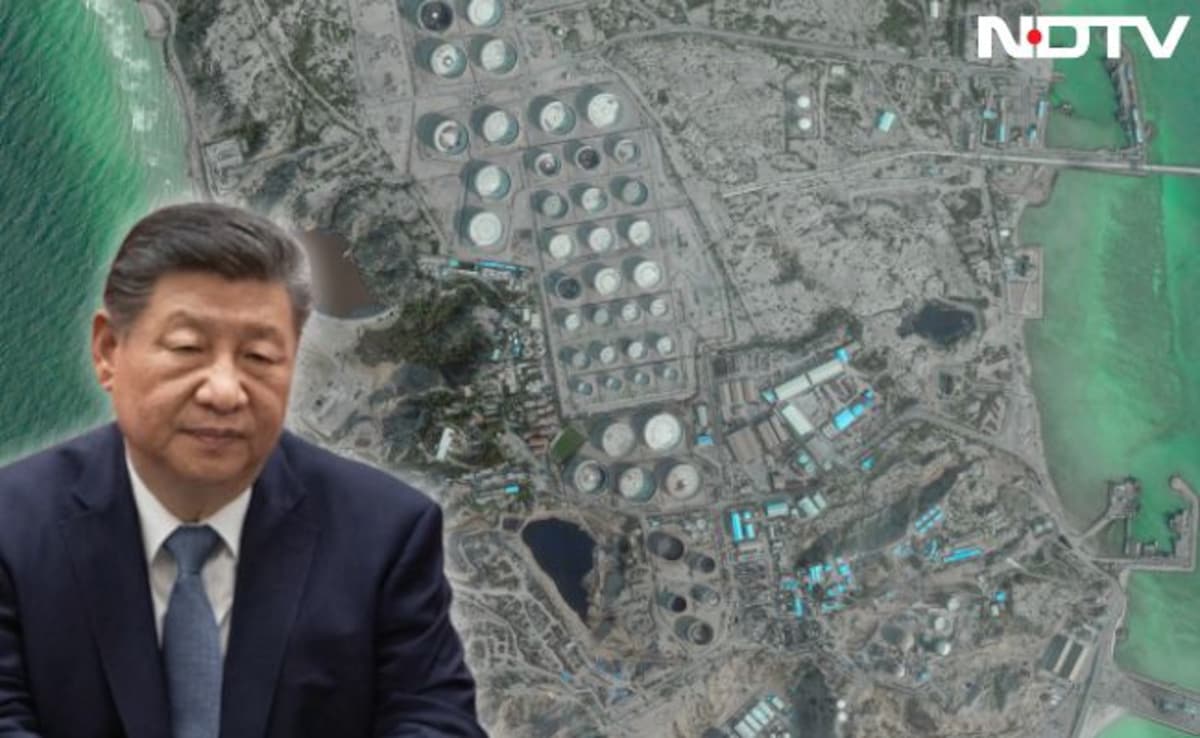
US attack on Kharg Island — the terminal handling roughly 90% of Iran's oil exports — and fresh US threats to strike again risks major disruption to flows through the Strait of Hormuz (carries ~20% of global oil). China takes ~91% of Iran's exports (~1.38 million bpd in 2024), and the shock has pushed Chinese retail fuel prices ~10% (Feb 23–Mar 9) and raised gasoline/diesel price caps by 695/670 yuan per metric ton; Beijing also banned refined fuel exports. Expect elevated crude price volatility, potential shipping disruptions through Hormuz, and watch for shifts in trade settlement (yuan pricing) and Chinese teapot refinery activity.
Immediate market mechanics will be driven more by transport/insurance friction than by permanent loss of Iranian barrels. A meaningful closure or credible attack on a major chokepoint increases tanker time-charter equivalents (TCEs) and freight-adjusted crude costs by the equivalent of $1.5–$4/bbl within days (Cape reroute adds ~10–14 extra sailing days), amplifying spot Brent moves beyond simple supply numbers. Chinese refiners that rely on discounted heavy/sour grades will see margin compression as those differentials widen and physical logistics become the binding constraint, pressuring regional gasoline/diesel availability and squeezing teapot refiners first.
Over 1–6 months the key driver is policy response: coordinated SPR releases and diplomatic de-escalation are credible and would erase most price impact within 30–90 days; persistent tit-for-tat attacks or formal closure of a strait for weeks would re-price Brent by +$15–$30 and force structural changes in invoice currency and routing. A shift toward yuan-settled crude trades — even partially — would raise FX liquidity demand in CNH and raise compliance costs for western banks, creating a slow-moving but persistent headwind for US dollar oil dominance and for banks facilitating sanctioned flows.
Second-order winners are freight owners, shipowners of VLCC/aframax capacity, and reinsurers/insurers of maritime risk; losers are small, high-cost refiners, regional trading firms reliant on physical arbitrage, and any financial intermediaries that underwrite sanction-evasion flows. Watch mean-reversion risks: markets historically overpay for short-term chokepoint risk within 2–6 weeks once alternate logistics and diplomatic signals emerge, making timing essential for directionally leveraged positions.
AI-powered research, real-time alerts, and portfolio analytics for institutional investors.
Request DemoOverall Sentiment
strongly negative
Sentiment Score
-0.70
