
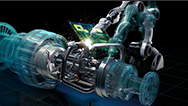
NVIDIA said TSMC is using CUDA-X libraries, Metropolis, TAO Toolkit and Omniverse to accelerate semiconductor design and manufacturing across lithography, simulation, process control and fab optimization. Reported gains include a 20-50% improvement in computational lithography cost effectiveness or cycle time, 50x faster chemistry simulations with cuEST, and better nanometer-scale defect detection. The announcement is supportive for both companies, but it is largely a technology partnership update rather than a material financial event.
This is more important for TSM than the headline suggests because it signals a shift from isolated point solutions to a broader, GPU-centered manufacturing stack. The second-order effect is that advanced-node economics become increasingly tied to AI/compute intensity: the fabs that can reduce iteration loops fastest should win more share of scarce leading-edge capacity, while laggards face widening cost and cycle-time penalties. For NVDA, the near-term financial contribution is likely modest versus data center demand, but the strategic value is larger: it deepens embeddedness in industrial workflows and creates a stickier enterprise install base with long replacement cycles.
The most underappreciated beneficiary may be the semiconductor equipment and process-control ecosystem that can integrate more quickly with accelerated simulation and vision AI. If TSM’s productivity gains scale, the competitive pressure shifts to peers that still rely on slower CPU-bound workflows and manual inspection, especially in lithography-heavy and defect-sensitive nodes. That could compress the time it takes for top-tier foundry customers to differentiate on yield, not just capacity, which is bullish for leading-edge share concentration but negative for smaller foundries and slower-moving tooling vendors.
The key risk is that these gains are highly node- and workflow-specific: benefits should accrue over quarters to years, not days, and the market may overprice immediate margin uplift. A reversal would likely come from integration friction, model drift in inspection systems, or diminishing returns once the easiest simulation and scheduling bottlenecks are removed. Contrarian angle: the market may already view AI-in-the-fab as inevitable, but the real monetization is not a step-change in TSM margins; it is a longer-duration increase in throughput and time-to-ramp, which matters more for share gains than for near-term earnings beats.
AI-powered research, real-time alerts, and portfolio analytics for institutional investors.
Request TrialOverall Sentiment
mildly positive
Sentiment Score
0.45
Ticker Sentiment
