
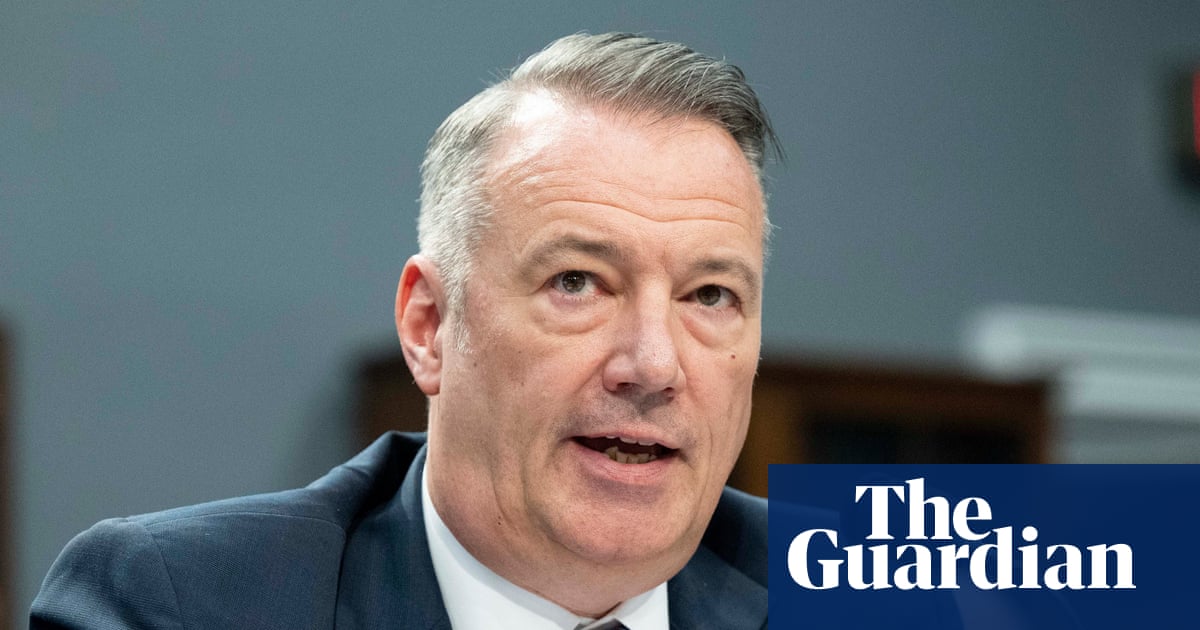
ICE acting director Todd Lyons will step down at the end of May after leading the agency since March 2025, with no successor named. The move comes amid escalating backlash over ICE tactics, court scrutiny, and concerns about detention conditions, though DHS and the White House praised Lyons' tenure. The article is primarily a political and regulatory development with limited direct market impact.
This is less about one executive leaving and more about a regime-signaling event: the market is being told the enforcement machine is still being built, but the public and courts are now raising the cost of operating it. That combination usually widens dispersion across immigration-exposed assets: government contractors and security vendors can still win on budget growth, while detention-linked operators, regional labor-intensive sectors, and companies dependent on immigrant labor face a slower, messier operating environment if enforcement becomes more politically toxic.
The key second-order effect is legal friction. When an agency leadership transition happens amid active court pressure, you often get a short-term pause in aggressive field behavior, not because policy changes, but because field supervisors become more risk-averse pending clarity from new leadership. That can reduce near-term headline risk for employers in construction, agriculture, hospitality, and logistics, but it also raises the probability of a later snapback if the successor tries to reassert credibility quickly. Over a 1-3 month window, that means volatility should stay elevated even if the day-to-day arrest tempo dips.
The bigger trade is not on ICE itself but on adjacent beneficiaries and losers. Private detention and surveillance contractors can still gain from budget momentum, yet reputational risk is rising, which can cap multiple expansion and invite ESG or procurement scrutiny. Meanwhile, companies with tight labor markets may get a tactical relief rally on any sign of enforcement moderation, but that’s likely transient unless the appointment signals a real policy recalibration rather than a personnel reset.
The consensus may be overestimating how much a single resignation changes enforcement intensity. The administration has already invested political capital in the program, so the path of least resistance is probably continuity with a softer public face, not retrenchment. That makes the asymmetry interesting: short-term headline relief is plausible, but the underlying policy risk is still intact, which argues for using any rally in immigration-sensitive labor proxies as an opportunity to fade duration rather than chase a structural reversal.
AI-powered research, real-time alerts, and portfolio analytics for institutional investors.
Request TrialOverall Sentiment
mildly negative
Sentiment Score
-0.25
Ticker Sentiment
