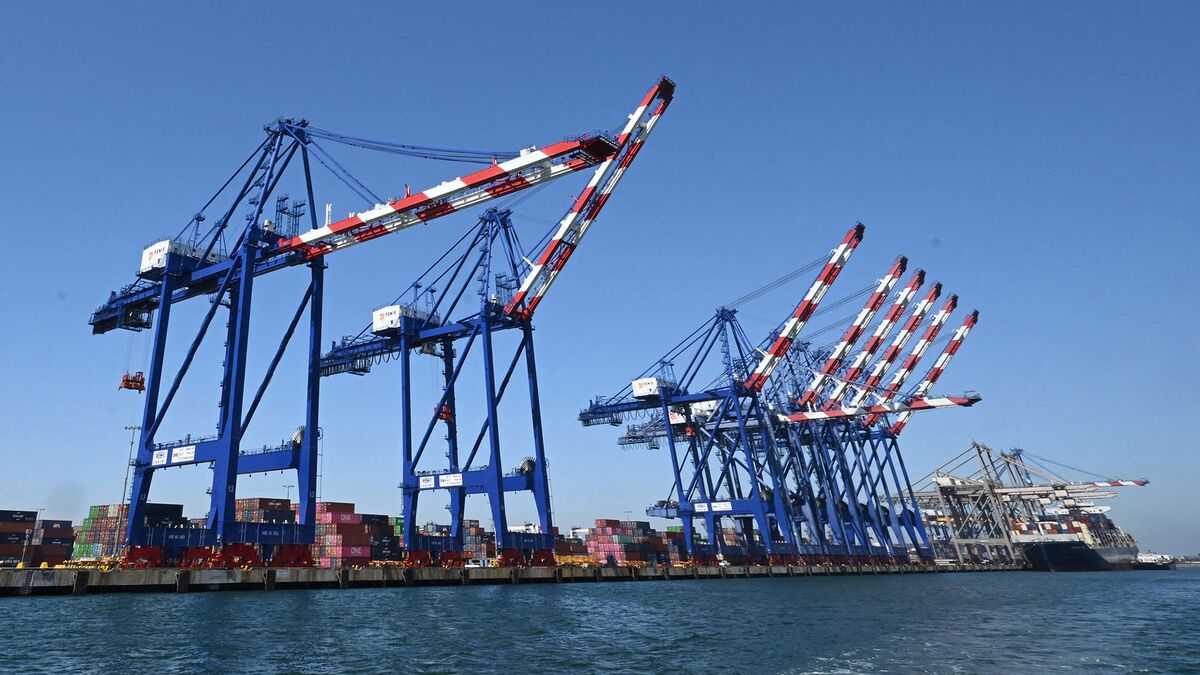
About $300 billion of goods subject to Trump-era tariffs are reportedly avoiding duties each year by being rerouted through Southeast Asia and Mexico. The findings highlight enforcement gaps in US trade policy just as the North American trade deal review approaches, potentially pressuring importers, customs enforcement, and cross-border supply chains. The article is broadly negative for tariff effectiveness and trade policy credibility, though the immediate market impact is more sector- and policy-specific than market-wide.
The market is treating tariff policy as a headline risk, but the bigger opportunity is the widening gap between statutory rates and realized collection. That gap is a direct tax on compliance and a hidden subsidy for firms with flexible routing, origin engineering, and documentation sophistication. In the near term, the beneficiaries are not the obvious exporters; they are freight forwarders, customs brokers, industrial distributors, and inventory-light importers that can reprice faster and arbitrage route optionality.
The second-order loser set is broader than apparel or electronics. Domestic producers that expected tariff shelter may see less pricing power than modeled, because the supply response is not disappearing — it is relocating through lower-friction jurisdictions. That argues for lower confidence in any “tariff equals margin expansion” thesis unless enforcement tightens materially; the more exposed names are those with long, opaque supply chains and weak country-of-origin traceability.
Catalysts are policy, not demand. The next 1-3 months matter because trade reviews and enforcement initiatives can create sudden disruptions, while a 6-12 month horizon matters for whether firms redesign sourcing networks permanently. A real crackdown would likely show up first in customs seizures, origin audits, and tighter rules of origin under USMCA, which would be negative for transshipment hubs in Mexico and Southeast Asia before it is visible in end-demand.
The contrarian read is that this is not just tariff avoidance; it is proof that industrial policy leakage is structurally high. That makes future tariff escalation less powerful than consensus expects unless paired with much better enforcement technology and data sharing. In other words, the bear case on trade friction may already be partially priced into importers, while the underappreciated upside is in logistics and compliance infrastructure that monetize complexity rather than volume.
AI-powered research, real-time alerts, and portfolio analytics for institutional investors.
Request TrialOverall Sentiment
mildly negative
Sentiment Score
-0.15
