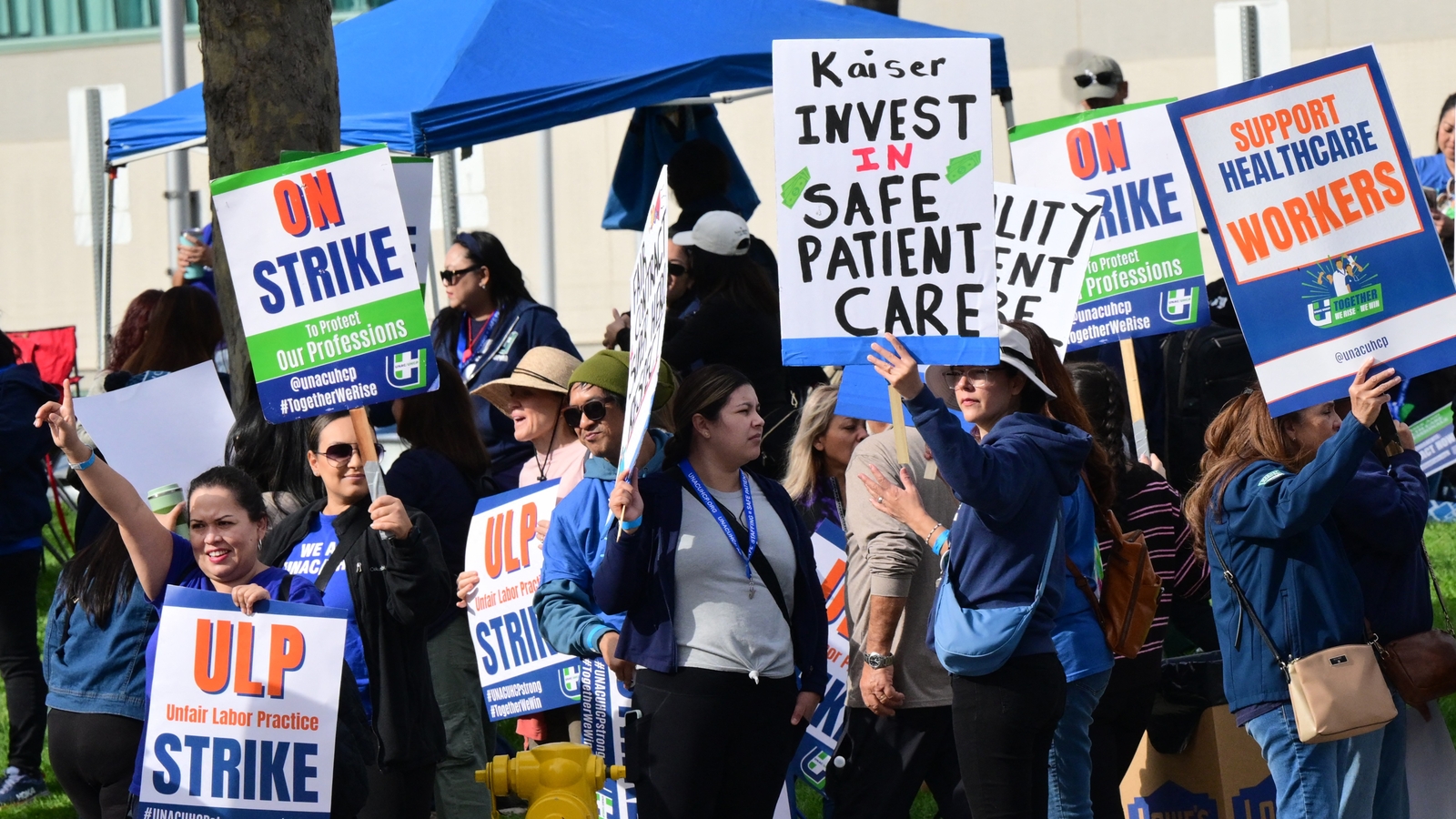
About 31,000 Kaiser Permanente health-care workers in California and Hawaii — including RNs, pharmacists, physician assistants and nurse practitioners — began a strike over safe staffing levels, pay and patient access, with pickets at multiple Los Angeles and Orange County facilities. The union, which has been bargaining with Kaiser since last May, filed an unfair labor practice charge alleging Kaiser walked away from talks; Kaiser says it has proposed a 21.5% wage increase, calling it its strongest national offer. Hospitals will remain open but some elective surgeries and pharmacies may be rescheduled or closed, creating localized operational disruption and potential upward pressure on labor costs.
Market structure: A prolonged Kaiser strike is a net positive for staffing intermediaries (e.g., AMN) and nearby non-Kaiser hospital operators that can take overflow, and a transient revenue tailwind for retail pharmacies (CVS, WBA) if Kaiser pharmacies close. The 21.5% wage number from Kaiser sets a regional comp anchor and signals likely broader wage pressure of +5–15% in high‑acuity roles over 6–24 months, shifting pricing power toward labor and staffing vendors and compressing operating margins for labor‑intensive hospitals and clinics. Risk assessment: Immediate risks (days–weeks) are operational: rescheduled electives, pharmacy closures, and local reputational damage; short‑term (1–6 months) risks include strike spillover and NLRB rulings that could force pattern bargaining nationally; tail scenarios (>6 months) include systemic wage inflation that forces higher payer rates or cuts to discretionary services, pressuring margins and credit metrics for leveraged hospital operators. Hidden dependencies include state licensing, travel‑nurse supply elasticity, and Medicare/MA reimbursement lags that mute quick pass‑through of higher costs. Trade implications: Tactical winners: staffing services (AMN) and select hospital operators with strong balance sheets (HCA); losers: smaller regional chains with weak leverage (CYH) and hospital‑focused REITs if elective volumes drop. Use directional equities sized 1–3% with option hedges: buy 3–6 month call spreads on AMN to capture immediate staffing demand and consider a relative pair (long HCA, short CYH) to play quality divergence; underweight hospital REITs and increase cash exposure to redeploy if strikes cascade. Contrarian angles: The market underestimates duration risk — one strike can reset wage anchors across large integrated systems, but it may also be over‑priced if the dispute resolves within 1–2 weeks (histor precedent). Staffing firms’ runways are finite: if Kaiser settles quickly, AMN could mean‑revert; conversely, insurers may ultimately be compensated via higher negotiated rates, so shorting large diversified payors is likely mispriced and high risk.
AI-powered research, real-time alerts, and portfolio analytics for institutional investors.
Request DemoOverall Sentiment
moderately negative
Sentiment Score
-0.35
