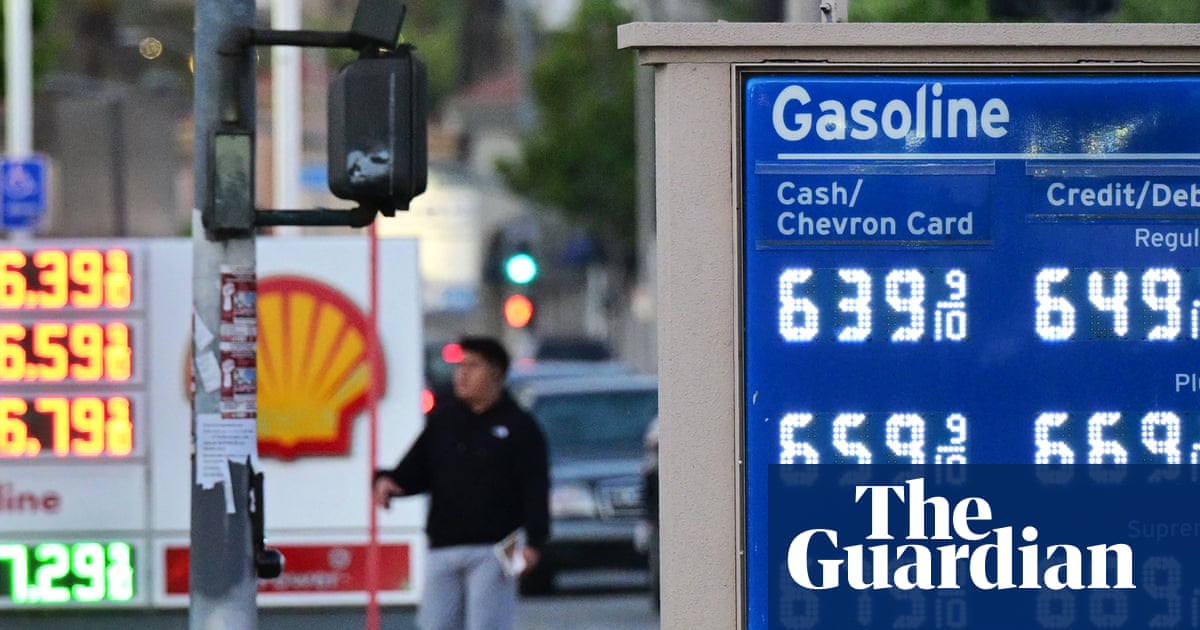
California gas prices have risen above $6 per gallon, with officials saying the state can cover fuel demand for only about six more weeks on current supply. The article also highlights ongoing Iran-related war and blockade risks, including a tanker seizure and a possible ceasefire framework that remains uncertain. Separately, the unsealed Jeffrey Epstein note, Michigan special election, and Argentina cruise ship hantavirus outbreak add legal, political, and health headlines, but the dominant market driver is geopolitical stress on energy flows.
The market is still underpricing how quickly this can flip from a regional pricing spike into a broader refining-margin event. California is effectively a marginal buyer of imported barrels when inland logistics are constrained, so the last inbound crude cargoes matter less for supply adequacy than for signaling: if diplomacy stalls, West Coast gasoline cracks can detach from Gulf benchmarks and stay elevated even if global crude retraces. That makes the first-order beneficiary less obvious than the headline suggests: refiners with West Coast exposure and traders sitting on prompt barrels can capture the squeeze, while downstream demand destruction in discretionary driving starts to show up within 2-6 weeks if $6+ retail persists.
Shell’s earnings print is a reminder that geopolitical volatility is now being monetized by integrated majors with trading arms faster than it is being transmitted to upstream production growth. But this is a brittle earnings tailwind: the incremental profit pool is highly path-dependent and can mean-revert abruptly if a ceasefire or shipping normalization reopens the Strait. The asymmetric risk is on the downside for those assuming a sustained supercycle; inventories are not yet broken, so the real price catalyst is not current scarcity but loss of confidence in near-term transit security.
The cleaner trade is to express the situation as a volatility event, not a directional oil call. The base case is a narrow window of elevated uncertainty over the next 1-3 weeks with binary headline risk; the tail risk is a diplomatic breakthrough that compresses gasoline cracks and oil vol quickly, while the opposite tail is another blockade escalation that forces emergency policy responses. The consensus likely overweights the immediate scarcity story and underweights the speed of political intervention once consumer pain shows up in California and broader US pump prices.
On the non-energy side, higher fuel is a tax on consumer discretionary and transportation-dependent small caps, but it also increases the relative appeal of EV adoption economics and efficient fleets. That creates a short-lived rotation opportunity rather than a structural thesis unless prices stay elevated for months.
AI-powered research, real-time alerts, and portfolio analytics for institutional investors.
Request DemoOverall Sentiment
moderately negative
Sentiment Score
-0.35
Ticker Sentiment
