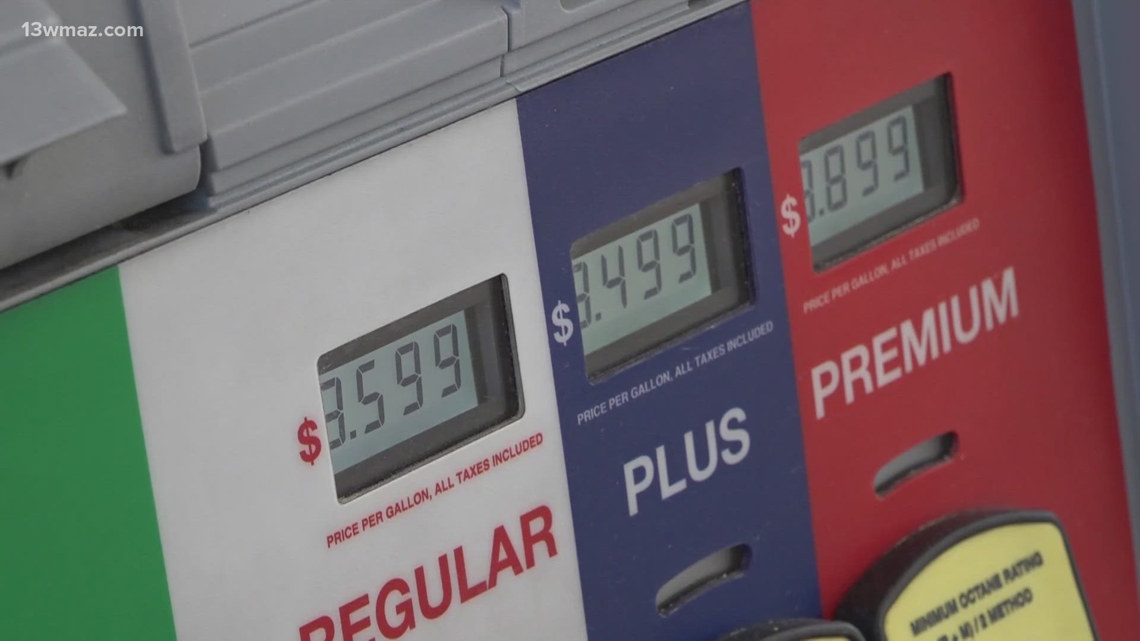
U.S. gasoline prices have eased from last week, with the national average at $4.32 versus $4.51 and Georgia at $3.833, down more than 10 cents week over week. In Central Georgia, AAA data shows Warner Robins at $3.73 and Macon at $3.90, while county-level GasBuddy readings range roughly from $3.29 to nearly $4.00 depending on location. The article links earlier price spikes to the U.S.-Iran war, but the current move is a modest pullback rather than a major market shock.
The near-term setup is more interesting for inflation breakevens than for crude outright. Retail fuel is rolling over while the geopolitical shock is still active, which suggests either refinery/distribution relief or demand destruction is already biting at the margin; in both cases, the pass-through from crude to headline CPI should slow faster than consensus expects over the next 1-2 prints. That matters because consumers don’t respond to the national average, they respond to local price dispersion, and the spread across counties implies the benefit is arriving unevenly rather than as a clean national tax cut.
The second-order winner is broad consumer discretionary and lower-income retail, but only with a lag. A 10-20 cent decline in gasoline typically shows up first as sentiment stabilization, then as improved small-ticket spend in 4-8 weeks; the bigger effect is on driving-intensive categories like convenience stores, quick-service restaurants, and regional travel. The losers are upstream energy beta and any market position predicated on a sustained war premium in crude; if fuel continues to leak lower while the conflict persists, it signals the market is pricing a limited supply disruption, not a durable shortage.
The contrarian read is that this may be less bullish for consumers than it appears if the decline is coming from collapsing demand rather than improving supply. If that’s the case, the economy is already absorbing the shock through volumes, which tends to show up later in freight, leisure, and auto usage data. The key catalyst is whether gasoline stabilizes above current levels for the next 2-3 weeks; if it does not, the market may need to reprice both energy earnings and cyclical growth expectations simultaneously.
AI-powered research, real-time alerts, and portfolio analytics for institutional investors.
Request TrialOverall Sentiment
neutral
Sentiment Score
-0.05
