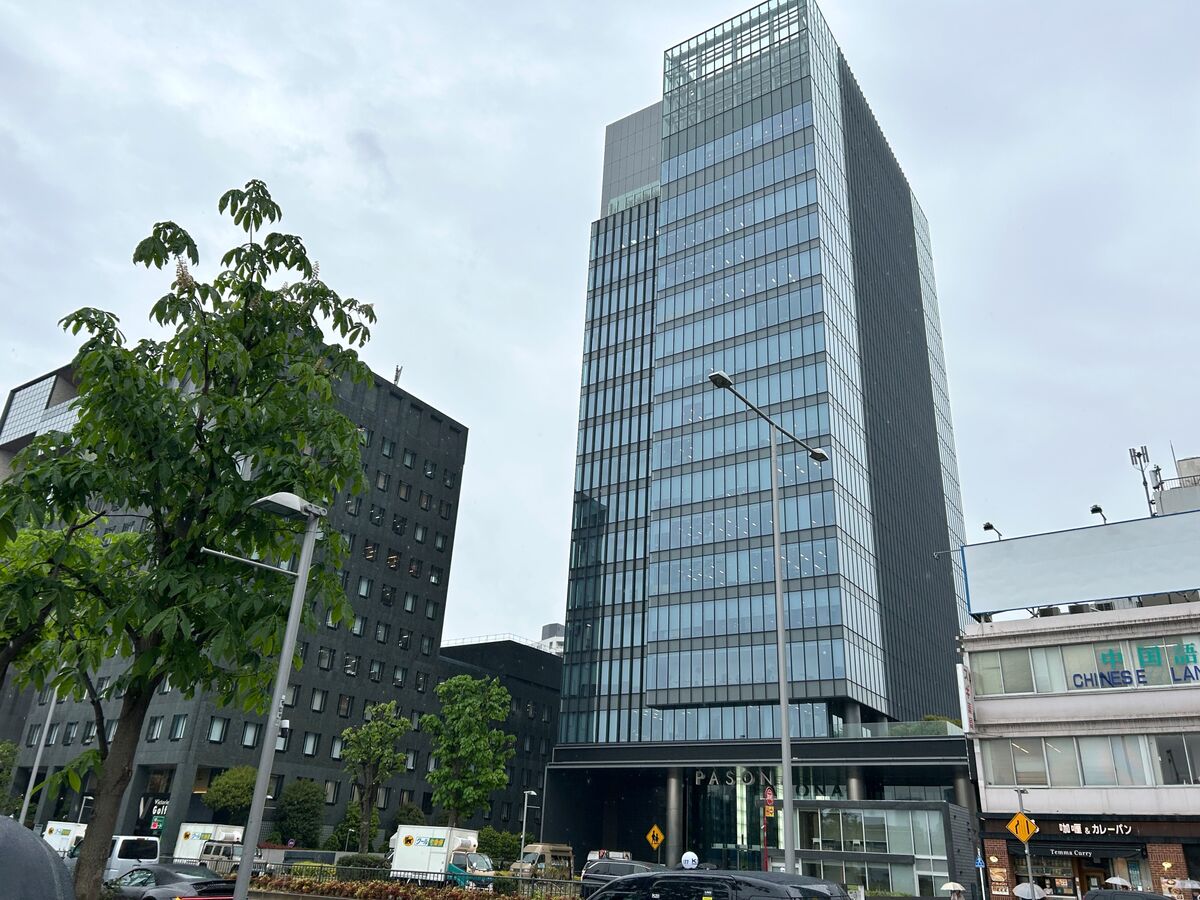
BGO sold Pasona Square in central Tokyo for about ¥100 billion ($628 million), above the roughly ¥70 billion it paid in 2021, indicating a profitable exit. Buyer Goldcrest plans to convert the 18-story office building in Aoyama into luxury apartments, reflecting continued demand from wealthy homebuyers and strength in Tokyo real estate. The deal is notable for the sector but unlikely to have broad market impact.
This is less a single-asset real estate trade than a read-through on capital migration inside Japanese property markets: global value-add capital is stepping out of core office and into residential redevelopment where income visibility is better and the exit universe is broader. The key second-order effect is that trophy office liquidity in Tokyo is still strong enough to let foreign owners monetize at a profit, but not strong enough to justify holding through a slower, cap-rate-sensitive office cycle if conversion value is available. That should keep a bid under well-located, low-vacancy urban land while pressure builds on secondary office owners to either recapitalize or reposition.
The beneficiary set is wider than the headline buyer: luxury condominium developers, select construction firms, and landlords with redevelopment optionality should gain pricing power as affluent domestic demand remains sticky. The losers are office landlords with outdated floorplates and limited alternative-use permissions, because this kind of transaction establishes a reference point for “highest-and-best-use” pricing that can make standard office valuations look stale. If Japanese wage growth and asset inflation stay firm, the marginal capital dollar will increasingly prefer redevelopment over stabilized office, which compresses future office cap rates more than current leasing data implies.
The main risk is policy and timing. Conversions in central Tokyo can face zoning, tenant displacement, and construction-cost overruns, so the economic case can vanish over a 12–24 month horizon if financing costs stay elevated or if the luxury condo absorption rate softens. A reversal would likely come from yen strength, tighter mortgage conditions, or a broader risk-off move that cools wealthy-buyer demand; those would hit redevelopment economics before they show up in transaction comps.
Consensus may be underestimating how much this signals about private-market return expectations in Japan: core office may no longer be the preferred parking place for foreign real estate capital if the path to value creation is redevelopment. The market is treating this as a one-off profitable exit, but the more important message is that asset-level optionality is being repriced upward, especially in neighborhoods with brand value and end-user scarcity. That should widen the spread between “convertible” land and pure office exposure over the next few quarters.
AI-powered research, real-time alerts, and portfolio analytics for institutional investors.
Request DemoOverall Sentiment
mildly positive
Sentiment Score
0.35
