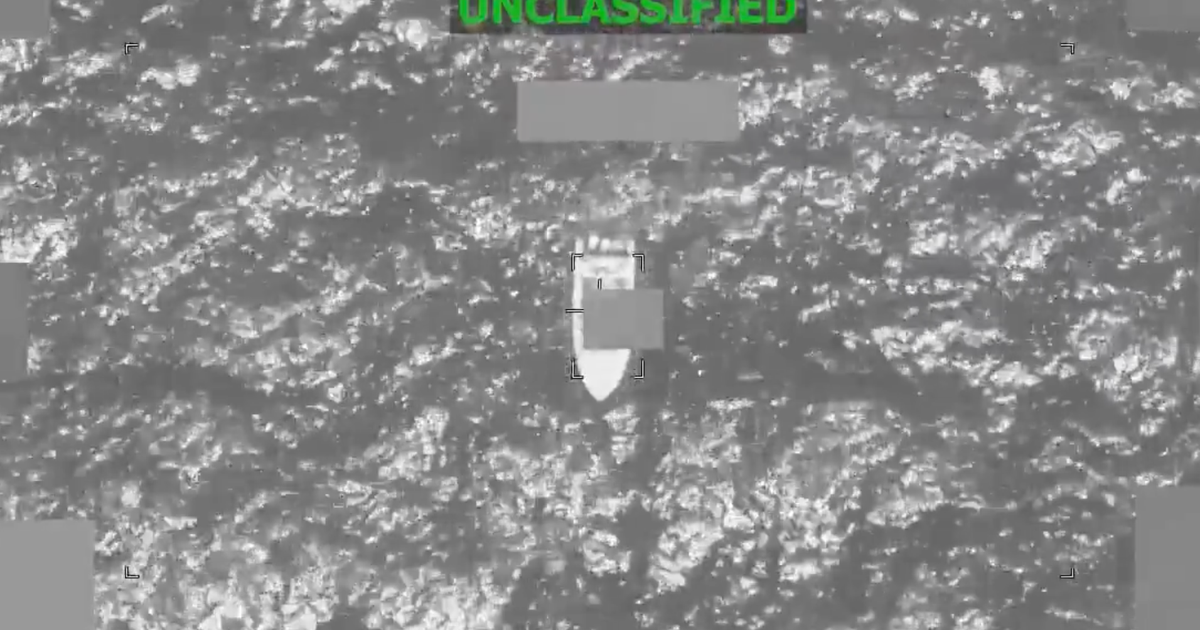
The U.S. military carried out a fourth strike on an alleged drug boat in the eastern Pacific, killing 4 people and bringing the reported death toll from the campaign to 175 since early September. The article highlights escalating U.S. anti-cartel operations, ongoing questions about legality and evidence, and at least one suspended search for a survivor. The story is geopolitically significant and could keep defense, border, and Latin America policy risk elevated, though it is not a direct company-specific market catalyst.
This is less a pure counternarcotics story than a test case for how far the U.S. will stretch military authorities in gray-zone enforcement. The market implication is not in commodity flows, but in the legal and political overhang: every additional strike raises the probability of injunctions, congressional pushback, and discovery-driven scrutiny that can constrain future operations or force a more expensive, more visible interdiction posture. That shifts optionality toward firms with surveillance, maritime domain awareness, and command-and-control exposure, while increasing headline risk for anything tied to border security contracts that could become politicized.
The second-order winner is not the platform that fires the weapon, but the broader ISR stack: persistent airborne sensors, data fusion, and cueing systems become more valuable if operators need stronger evidentiary standards to defend actions ex post. Expect procurement bias toward systems that can document target selection end-to-end, which favors defense primes with integrated sensing and secure comms over pure-play munition providers. The loser set includes companies with meaningful exposure to DHS/DoD discretionary spending that could get squeezed if oversight hearings force a reallocation toward legal review, evidence collection, and rescue assets.
Catalyst timing is bifurcated. Near term, the risk is a single bad outcome—survivors, a contested follow-on strike, or an allied casualty—which could trigger a rapid 1-2 week political shock and temporarily halt operations. Over months, the bigger issue is whether this campaign proves ineffective relative to land-based interdiction; if that narrative takes hold, the administration may double down on higher-cost enforcement or pivot to Mexico/Latin America pressure, extending volatility across defense and border-security names.
The contrarian view is that the market is underestimating how quickly enforcement can become bureaucratically sticky once it creates its own legal record. If courts or allies force stricter rules of engagement, the program becomes less lethal, more expensive, and less operationally flexible, which is bearish for tactical escalation but bullish for compliance-heavy defense contractors. The current move is therefore not to chase the headlines, but to own the companies that monetize surveillance, attribution, and lawful force documentation rather than kinetic output.
AI-powered research, real-time alerts, and portfolio analytics for institutional investors.
Request TrialOverall Sentiment
moderately negative
Sentiment Score
-0.40
