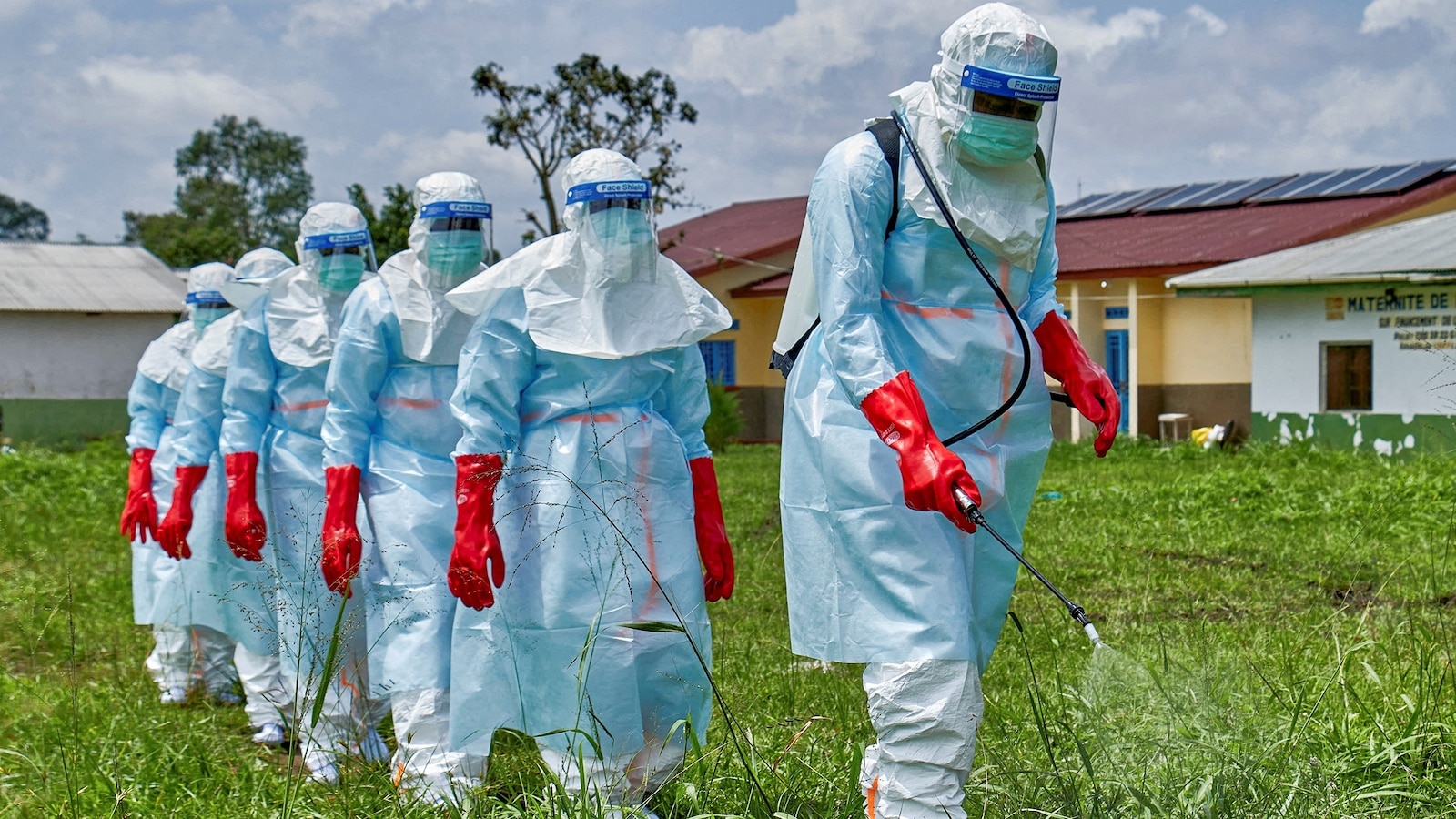
The CDC has restricted U.S. entry for travelers recently in the DRC, Uganda and South Sudan, with green card holders from those countries temporarily barred and eligible arrivals funneled through Dulles for screening. The article says the outbreak has at least 750 suspected cases and 177 suspected deaths in eastern DRC, while public health experts warn broad travel bans can backfire by impeding aid, healthcare workers and contact tracing. The immediate market impact is likely limited, but the policy adds to Ebola-related health and travel-risk concerns.
The immediate market read is not “Ebola risk up,” but “policy friction up.” HHS benefits only in a narrow reputational sense; the more important second-order effect is that tighter routing and screening raise transaction costs for airlines, airport operators, cargo handlers, and NGO logistics without materially changing the probability of an imported case. The real economic damage, if this persists, is to labor mobility and on-the-ground outbreak response: every impediment to rotating clinicians, moving specimens, or replenishing PPE increases the odds that the outbreak stays geographically sticky rather than being extinguished quickly.
The key catalyst path is time asymmetry. In days, the headline can support defensive posture and small precautionary demand for screening, testing, and medical logistics. Over weeks to months, if cases expand into transport corridors or urban centers, the policy debate shifts from border optics to operational containment, which is where screening, rapid diagnostics, and contact-tracing vendors gain budget share. Conversely, if case counts plateau and no imported cases emerge, the premium attached to restrictive policy should unwind fast because the market will conclude the measures were more symbolic than protective.
The contrarian miss is that the most crowded trade is probably the wrong one: shorting airlines or travel broadly is likely low-conviction because a single-port routing change has limited earnings impact unless the outbreak escalates sharply. A more interesting setup is long the infrastructure that makes targeted containment work and short the parts of healthcare/NGO logistics most exposed to cross-border bottlenecks. The other underappreciated risk is political contagion: if the policy becomes a template, it could slow response capacity in future outbreaks, making the next public-health shock more expensive even if this one stays contained.
AI-powered research, real-time alerts, and portfolio analytics for institutional investors.
Request DemoOverall Sentiment
mildly negative
Sentiment Score
-0.20
Ticker Sentiment
