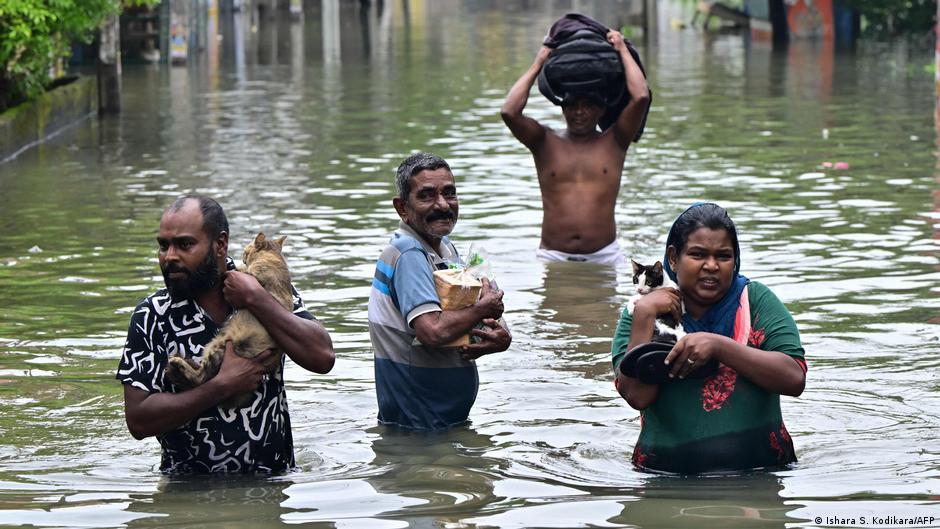
Sri Lanka has declared a state of emergency after Cyclone Ditwah-triggered floods and landslides killed at least 153 people with around 200 missing, destroyed more than 20,000 homes and displaced over 78,000 people into roughly 800 relief centers. Major infrastructure and services are disrupted — roads and railways blocked by landslides, power outages in Colombo, schools and offices closed — while large-scale rescue operations and international aid (including two Indian search-and-rescue teams) are underway. The scale of damage and ongoing rainfall pose near-term downside risks to local economic activity, infrastructure repair costs, insurance losses and sovereign/credit stress for Sri Lanka.
Market structure: Short-term losers are Sri Lankan sovereign debt, local banks, tourism and apparel exporters (disrupted logistics and lost seasonality); winners are regional construction/engineering and suppliers of cement, steel and heavy equipment, plus reinsurers that can re-price catastrophe risk. Expect a 3–12 month bump in regional infra orders (India/Sri Lanka) lifting margins for large contractors (order backlog growth +5–15% potential) and a 12–24 month hardening in reinsurance pricing that improves combined ratios. Cross-asset: anticipate LKR weakness (USD/LKR +10–30% range possible), Sri Lanka USD spread widening (+500–1500bps worst-case), EM FX/credit risk-off and modest knee-jerk commodity demand for steel/cement inputs.
Risk assessment: Tail risks include accelerated sovereign default, systemic bank runs, or another cyclone hitting India — each could knock Sri Lanka GDP growth down by 3–6% yearly and push sovereign CDS >1500bps. Immediate (days) risks: transport/logistics paralysis and power outages; short-term (weeks–months): export/tourism revenue loss, credit stress; long-term (quarters–years): reconstruction capex and potential fiscal restructuring. Hidden dependencies: IMF/creditor negotiations, remittance inflows, and donor aid timing—any delay amplifies bondholder losses. Catalysts to watch: continued heavy rain (48–72h), IMF/India aid announcements (30–90 days), sovereign yield moves >300bps in 2–4 weeks.
Trade implications: Direct tactical longs: regional infra/building names and protection: initiate 1–2% positions in large Indian contractors (NSE: LT) and 0.5–1% in ULTRACEMCO for 6–18 months, scale on >5% pullback. Credit/FX: trim Sri Lanka USD sovereign bonds by 50% or hedge with 5y CDS if yields widen >300bps; consider buying 1% allocation to reinsurance equities (RNR or SREN) to play pricing hardening, entry on >8% equity pullback. Options/structures: use put protection on EM sovereign ETFs if broader EM stress (EMB down >6% in 10 days) or buy call spreads on RNR (3–6 month expiries) to limit cost.
Contrarian angles: Consensus may overstate permanent damage — reconstruction historically (2004 tsunami) produced 12–24 month demand boosts to construction inputs, creating asymmetric upside to contractors if financing/aid arrive. Market may overshoot on sovereign spreads; if CDS overshoots >1500bps but IMF/aid glimmers appear, distressed bond recovery trades can yield >30–50% IRR if bought at >40% discount. Risk: aggressive international aid could trigger creditor haircuts and political concessions that dilute bond recoveries; entry thresholds should be strictly rule-based (CDS, IMF confirmation, or >40% market price decline).
AI-powered research, real-time alerts, and portfolio analytics for institutional investors.
Request DemoOverall Sentiment
strongly negative
Sentiment Score
-0.60
