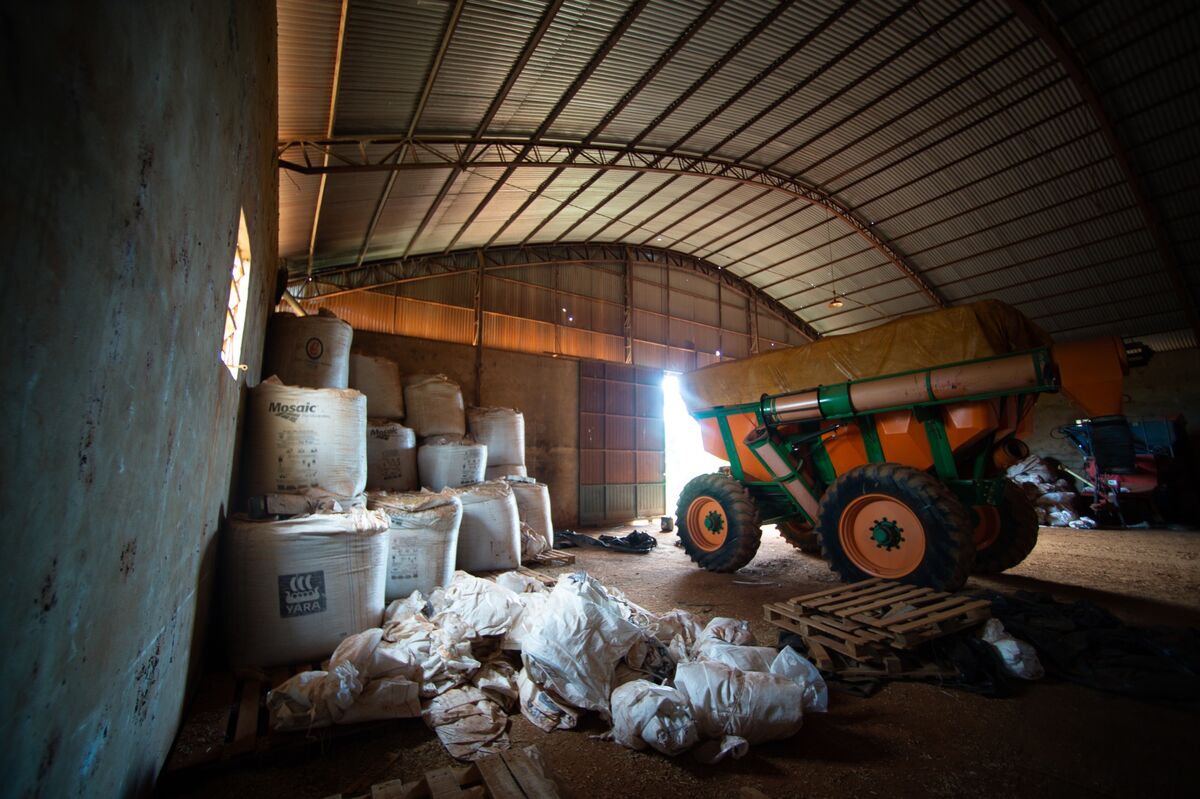
Rising fertilizer costs tied to the Iran war are pressuring Brazilian farmers at a critical point ahead of the next planting season. The article highlights a squeeze from lower commodity prices, weak credit access, high debt, unfavorable FX, and higher logistics costs, prompting growers to rethink land and input investments. The shock raises risks for Brazil’s farm economy and global food supply chains.
The immediate loser is not just Brazilian growers; it is the entire local agribusiness credit stack. When input costs jump after farms have already levered up into a weak price cycle, lenders typically tighten first, which can create a forced reduction in planted area or a shift toward lower-yield input regimes over the next 1-2 planting seasons. That is a second-order bearish setup for upstream logistics, ag-distributors, and land values, because the market tends to reprice cash flows before the production hit shows up.
The larger implication is global price asymmetry: fertilizer inflation can be deflationary for farmgate margins while still being inflationary for food. That combination is bad for emerging-market current accounts and FX, because Brazil may need more hard currency imports precisely when rural export revenues are under pressure. If the real weakens further, the input shock amplifies mechanically, making the margin squeeze self-reinforcing rather than transitory.
The key catalyst window is the next 1-3 months as pre-planting procurement decisions get locked in. If Middle East supply routes normalize or non-Russian supply is redirected, fertilizer prices can mean-revert faster than most expect; but if they stay elevated through planting, the production impact becomes a 6-12 month story. The market is likely underpricing the lagged effects on credit stress and acreage discipline, which usually matter more than the initial headline spike.
Contrarianly, this may be less bullish for broad ag inflation than consensus assumes if farmers cut application rates rather than acreage. That outcome preserves some supply but creates a yield-quality problem that is harder to see in near-term price data and can hit later, particularly for export crops. The cleaner trade is not a direct food inflation long; it is a relative-value expression against EM agribusiness margin compression and FX fragility.
AI-powered research, real-time alerts, and portfolio analytics for institutional investors.
Request DemoOverall Sentiment
strongly negative
Sentiment Score
-0.65
