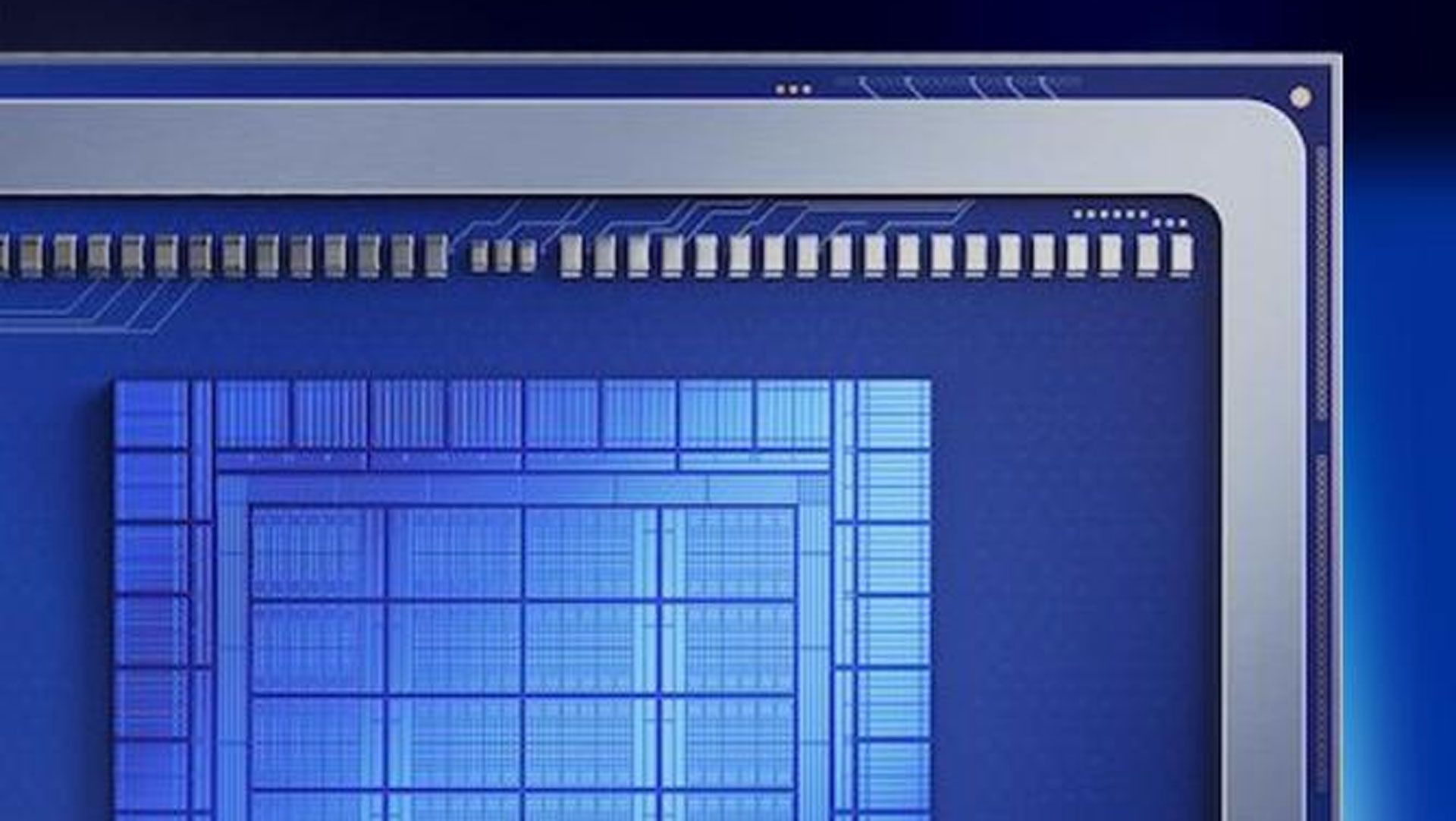
Intel provided new details on its Crescent Island AI GPU, a second-half 2026 Data Center GPU built on Xe3P architecture with a 350W power target. The standout feature is LPDDR5X memory, with 160GB on the reference design and up to 480GB for partners, which Intel says could improve inference efficiency by keeping more data close to the chip while avoiding scarce HBM supply. The update is constructive for Intel’s AI roadmap, but there were no performance specs or pricing details, limiting near-term market impact.
This is a credible strategic wedge for Intel because it attacks the hardest constraint in inference deployments: memory footprint, not peak FLOPS. By choosing a capacity-heavy, HBM-free design, Intel is effectively optimizing for model residency and concurrency, which matters more than raw throughput when customers are serving multiple agents, long-context prompts, or retrieval-heavy workloads. The second-order benefit is supply-chain de-risking: LPDDR5X should reduce exposure to HBM bottlenecks and advanced packaging scarcity, potentially improving Intel’s ability to ramp volume faster than more compute-dense competitors.
The competitive read-through is more mixed for Nvidia than the headline suggests. If Crescent Island becomes a practical “good enough” inference card for dense on-prem racks, it could pressure the low-to-mid inference tier where buyers care about memory per dollar and server fit over absolute performance. That said, the real threat is not displaced frontier training demand; it is margin erosion in enterprise inference clusters, especially where Nvidia’s software lock-in is weaker and customers are willing to tolerate ecosystem friction for lower capex and simpler air-cooled deployment.
The main risk is execution and software adoption, not silicon concept. oneAPI still has to prove that it can manage multi-GPU orchestration with enough reliability to win production inference budgets, and that battle will likely play out over quarters, not days. If Intel can demonstrate high utilization and low latency in real agentic workloads by H2 2026, the stock could re-rate on a “credible second supplier” narrative; if not, this remains a press-release story that reinforces Intel’s AI ambitions without changing share.
Consensus may be underestimating how much memory economics matter in the next phase of AI spending. The market is still anchored to accelerator math, but the more durable monetization opportunity is in systems that maximize tokens served per watt per rack, especially as customers shift inference on-prem to control cost and data locality. That makes this less about a single GPU launch and more about Intel trying to own a structurally underappreciated segment of the AI infrastructure stack.
AI-powered research, real-time alerts, and portfolio analytics for institutional investors.
Request DemoOverall Sentiment
mildly positive
Sentiment Score
0.25
Ticker Sentiment
