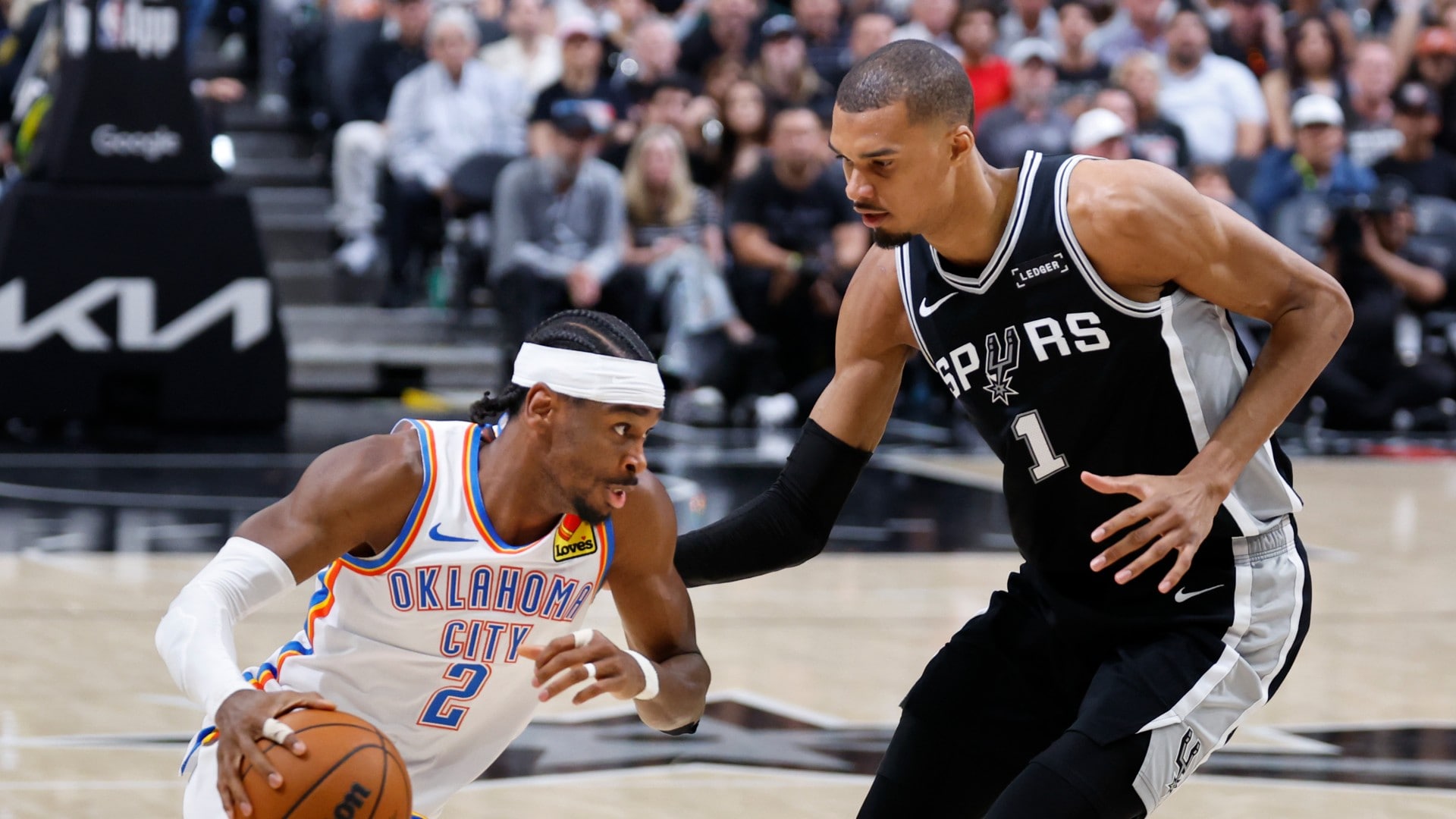
Game 7 between the Oklahoma City Thunder and San Antonio Spurs will decide the Western Conference Finals, with the winner advancing to face the New York Knicks in the NBA Finals. The Thunder are 9-0 in the game immediately following a playoff loss since the start of the 2025 playoffs, while this is Victor Wembanyama’s first Game 7 and Shai Gilgeous-Alexander’s fourth. The article is sports-focused and carries little direct market impact.
This is less a basketball note than a live test of late-cycle attention economics. Game 7s concentrate national media, betting volume, second-screen engagement, and ad pricing into a single 48-minute event; in practical terms, that means the real winners are the content distributors and live-sports monetization stack, not the teams. For NBC/Peacock, a deep playoff run with a marquee deciding game is the kind of programming that improves subscriber conversion and churn suppression for weeks, not days, especially if the Finals package follows immediately.
The second-order effect is positioning risk: a high-stakes, low-frequency event like this tends to push market participants into “must-own” live sports beneficiaries into the close, but the move often fades after the whistle unless the game produces an iconic finish. That creates asymmetric setup in the next 24-72 hours: if the outcome is close, the monetization narrative strengthens; if it is a blowout, attention decays quickly and the incremental value to the media stack is much lower than the pregame sentiment suggests. The market usually overestimates how much one game changes long-duration streaming economics.
A deeper contrarian point: the real exposure is not to the winner but to the downstream opponent effect. A Finals matchup against New York would be the cleaner ratings catalyst, but if the market has already priced in a “dream matchup” premium, any fatigue from a prolonged series or a non-competitive Game 7 could compress that enthusiasm fast. On the positioning side, this is a classic event-driven sentiment trade rather than a fundamental inflection; the edge comes from fading overreaction into the broadcast window and owning the infrastructure that captures guaranteed viewing, not the outcome itself.
AI-powered research, real-time alerts, and portfolio analytics for institutional investors.
Request DemoOverall Sentiment
neutral
Sentiment Score
0.05
