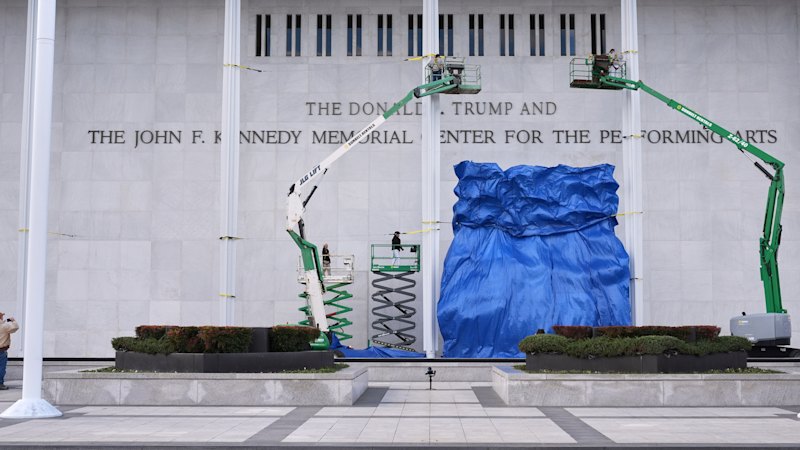
A US judge ordered Donald Trump to remove his name from the Kennedy Centre, ruling that the board exceeded its authority by renaming the institution and that only Congress can change its name. The court also criticized the board’s earlier decision to shutter the centre for a multi-year renovation, though it said the board could revisit closure if it independently reassesses its obligations. The dispute underscores governance and legal constraints around a politically sensitive cultural institution, but it is unlikely to have broad market impact.
This is less about a building name and more about the enforceability of institutional guardrails when political control collides with statutory limits. The near-term market read-through is mainly to governance-sensitive Washington assets: contractors, ticketing/cultural operators, and any entity reliant on federal board appointments now face a higher probability of procedural reversals, litigation delays, and headline-driven operating volatility. The ruling also weakens the idea that executive overreach can be normalized quickly inside federally chartered institutions, which should modestly support the discount rate investors apply to “politically captured” governance regimes.
The second-order effect is that the more the administration frames this as a safety/renovation issue, the more likely it is to invite scrutiny of deferred-capex backlogs across other public venues and quasi-public real estate. That is bearish for near-term activity at the center itself if management becomes trapped between legal constraints and operational remediation; any multi-year closure scenario would pressure adjacent hospitality, parking, transit, and event-service vendors, but the impact would be more idiosyncratic than macro. For media and entertainment names, this is a low-direct-revenue event, but it reinforces a broader theme: politically salient cultural institutions can become litigation magnets, raising reputational and execution risk for board members and donors.
The contrarian view is that the headline legal loss may actually reduce tail risk for the institution by forcing a reset toward a more durable governance structure. If Congress reasserts oversight, the asset could eventually become less politicized and more investable on a multi-year horizon, especially if renovation is handled through a cleaner capex process. The market may be overpricing the immediate operational disruption while underpricing the longer-run benefit of de-risked governance and restored donor confidence.
The real catalyst set is not the ruling itself but the next 30-90 days: appeal posture, any injunction on name changes, and whether the board makes a fresh, procedurally defensible closure decision. Those steps determine whether this remains a brief headline trade or becomes a prolonged governance overhang with practical revenue implications.
AI-powered research, real-time alerts, and portfolio analytics for institutional investors.
Request DemoOverall Sentiment
mildly negative
Sentiment Score
-0.15
