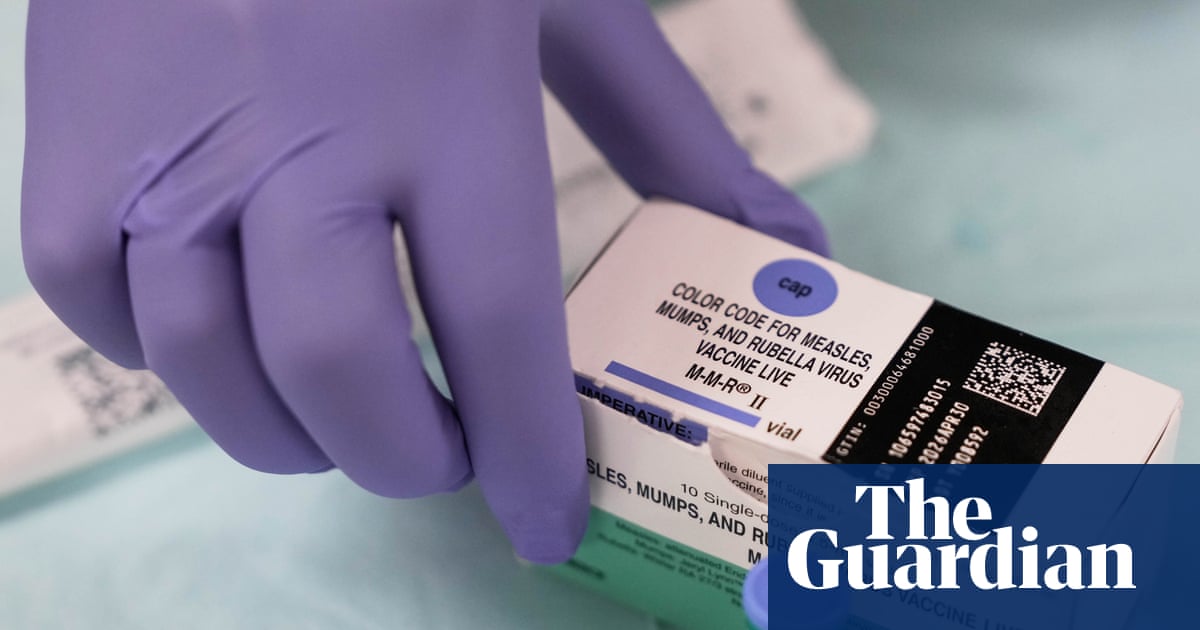
The US has recorded more than 2,000 confirmed measles cases this year, near the 2,228 seen in all of 2025, with experts warning the true count may be roughly three times higher. The outbreak is spreading in under-vaccinated communities amid reduced federal public health funding, worsening the public health response and raising summer containment risk. The article also highlights rising vitamin A exposures, a hospitalized infant in Texas, and intensifying political fallout around vaccine misinformation and HHS leadership.
The market is not going to price this as a public-health story alone; the bigger second-order read-through is an erosion of trust premium around HHS and federally sponsored preventive care. That matters for every operator whose revenue depends on vaccination campaigns, pediatric visits, diagnostic compliance, and state-federal grant flows, because the near-term effect is not just more cases but more fragmented local responses and weaker conversion from guidance into behavior. The clearest loser is HHS as a policy signal, but the economic spillover extends to hospitals, pediatric offices, and retail pharmacy channels that depend on routine immunization throughput.
The key duration risk is that the outbreak becomes self-reinforcing over the summer: more cases drive more “choice” rhetoric, which lowers uptake, which keeps the R-effective above 1 in pockets with low coverage. That creates a multi-month earnings tailwind for vaccine makers only if there is a credible public campaign; absent that, the beneficiaries shift toward urgent-care, inpatient pediatrics, lab testing, and antiviral/adjacent supportive-care spending. A less obvious loser is consumer discretionary in affected regions: parents miss work, travel plans get delayed, and school/childcare disruptions can hit local service demand even if headline national GDP impact is trivial.
Contrarian view: consensus may overstate how quickly this converts into sustained vaccine adoption. Historically, fear spikes are brief unless local leaders stay visible and operationally competent; if state-level messaging remains politicized, the outbreak can grind on with only episodic demand surges. That makes the trade less about chasing a one-week vaccine pop and more about owning the names with durable policy or utilization leverage while fading the idea that HHS credibility will rebound quickly.
The biggest catalyst reversal is a coordinated federal/state containment push plus a visible drop in case growth for 2-3 reporting cycles. Until then, expect intermittent upward revisions to true case counts, which can extend the narrative and keep the overhang on public-health credibility in place through the back-to-school season.
AI-powered research, real-time alerts, and portfolio analytics for institutional investors.
Request DemoOverall Sentiment
strongly negative
Sentiment Score
-0.75
Ticker Sentiment
