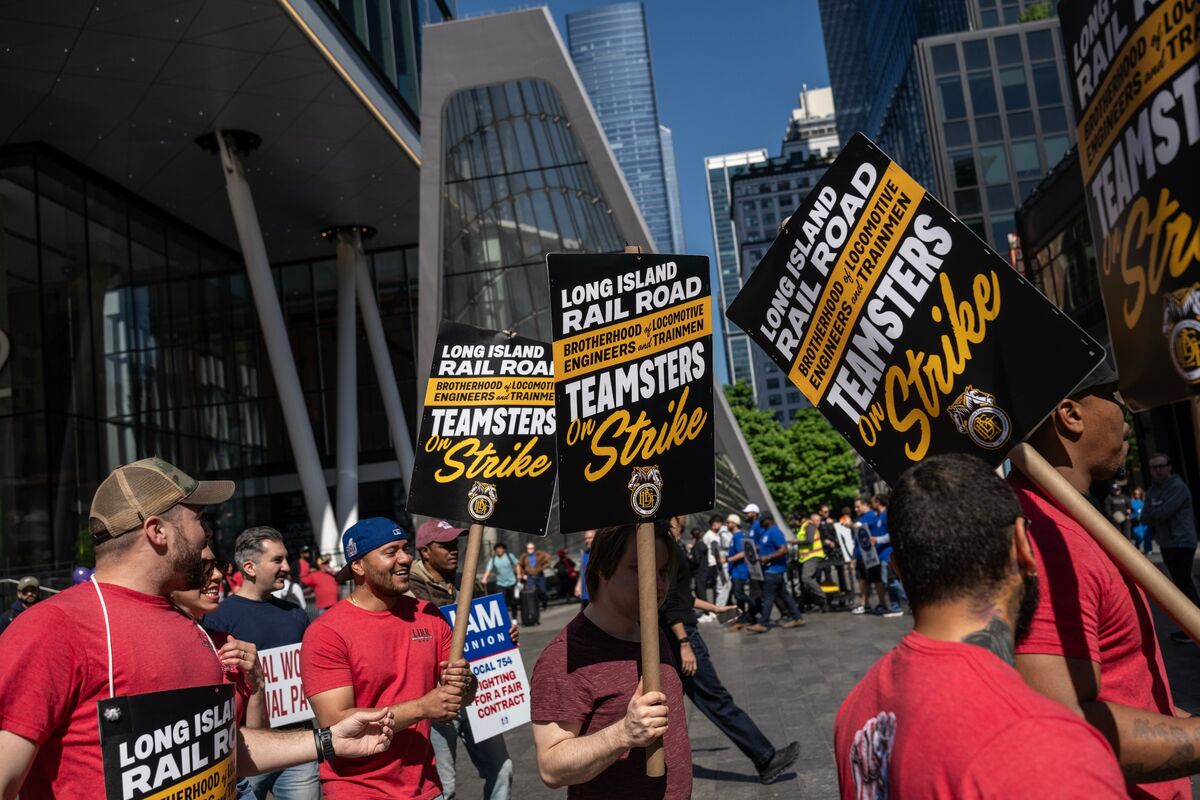
A strike by roughly 3,500 Long Island Rail Road engineers, signalmen and electrical workers has halted service, threatening major disruption for NYC-area commuters as talks resume. The shutdown is likely to push commuters onto already congested roads and buses, creating near-term travel chaos, though the article does not indicate broader financial-market implications.
The immediate market impact is not the rail line itself but the forced re-routing of commuter demand into already capacity-constrained substitutes. That creates a short-lived pricing and utilization tailwind for bus operators, rideshare, parking assets, and potentially toll-road traffic, but the bigger second-order effect is political: once disruption becomes visible, settlement incentives rise sharply because labor unrest in a dense metro area tends to be resolved on a days-to-weeks horizon, not months.
For investors, the cleanest read-through is into local mobility economics rather than transportation equities broadly. Congestion is a tax on the city’s labor supply and retail footfall, so the near-term losers are Midtown/outer-borough office users, transit-adjacent retail, and any employer dependent on in-person attendance; the longer this lasts, the more likely managers push remote flexibility, which can marginally pressure office utilization even after service resumes. That makes this more of a temporary shock to intraday/weekly patterns than a durable fundamental change unless the strike spreads or becomes a template for other public-sector labor actions.
The contrarian view is that consensus will overestimate the persistence of the disruption and underestimate the settlement probability once commuter pain is measurable. If a deal is struck quickly, any congestion premium in alternative transport could unwind just as fast, while the real alpha may come from fading panic trades rather than chasing them. The main tail risk is a multi-week strike that starts affecting payroll adherence, small-business traffic, and city tax receipts, which would shift this from a transport nuisance into a broader New York growth/headline risk.
There are no direct listed tickers here, so the best expression is through proxy baskets and event-driven timing. This is a classic buy-the-dip/mean-reversion setup in any overreacted New York-sensitive names if they sell off on strike headlines, provided the labor talks show incremental progress.
AI-powered research, real-time alerts, and portfolio analytics for institutional investors.
Request DemoOverall Sentiment
moderately negative
Sentiment Score
-0.45
