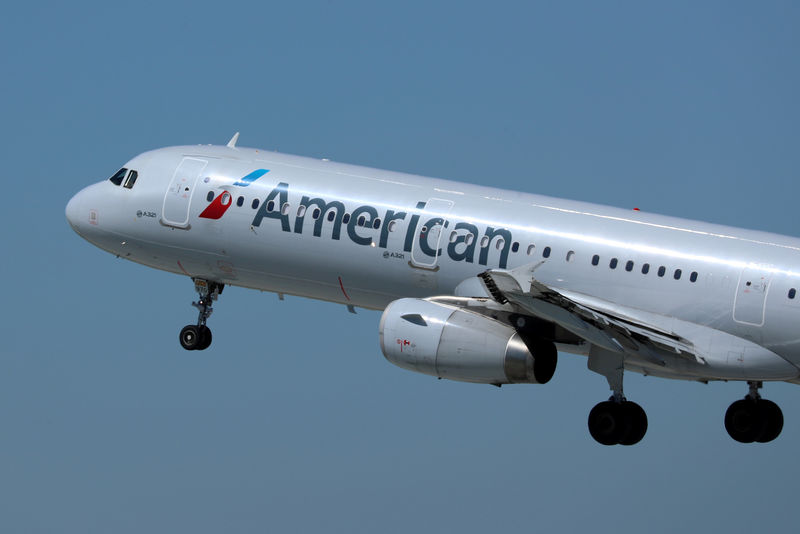
American Airlines is maintaining its full-year profit outlook despite a sharp rise in fuel prices, supported by stronger revenue, premium demand and corporate travel. The company said it is about 80% booked for Q2, with corporate travel up 13% year over year and leisure demand remaining strong. Management also noted an immediate pickup in basic economy bookings after Spirit Airlines collapsed.
The key read-through is not that AAL can absorb higher fuel; it is that industry capacity discipline is finally showing up in pricing power. If a major legacy carrier can protect guide while fuel rises, the margin baton is shifting from cost-side variables to revenue mix, which typically favors the better-networked incumbents over ULCCs that rely on price-sensitive traffic. The immediate second-order winner is likely the largest network airlines with premium and corporate exposure, while the weakest pass-through names face a double squeeze: higher fuel and less ability to reprice basic fares. The demand split matters more than the headline: premium and corporate travel tend to be stickier and less promotional, so the revenue quality is improving even if unit growth looks modest. That creates a lagging earnings effect over the next 1-2 quarters because fuel is marked immediately while fare mix and corporate share flow through with booking windows. The Spirit collapse is especially important as a structural capacity event, because displaced value travelers rarely disappear; they redistribute to legacies and the lowest-cost survivors, which can support load factors and ancillary revenue simultaneously. The contrarian risk is that this is a late-cycle resilience story, not a clean bullish setup. If macro softens, the K-shaped pattern can widen further, but that helps only on premium mix if the middle market does not deteriorate too far; once lower-income demand breaks, domestic leisure yield can roll over quickly. Also, if oil remains elevated into peak summer, investors may eventually focus more on margin compression than on revenue resilience, creating a valuation reset in the weakest airline names before the market fully credits the beneficiaries. In short, this is better expressed as a relative-value trade than a blanket long airlines view. The market may be underpricing the durability of premium and corporate demand, but it is probably overestimating the ability of weaker carriers to keep pace if fuel stays sticky. The cleanest edge is to own the carriers with the best network mix and short the ones most exposed to fare-sensitive travelers and limited fuel hedge flexibility.
AI-powered research, real-time alerts, and portfolio analytics for institutional investors.
Request DemoOverall Sentiment
mildly positive
Sentiment Score
0.25
Ticker Sentiment
