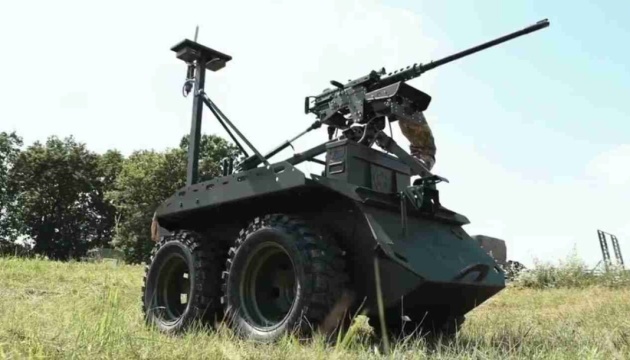
Ukraine's Defense Ministry approved the Zmiy Droid 12.7 GRS, a combat robotic platform built on the proven Zmiy chassis fitted with a remotely operated Wolly combat module armed with a 12.7 mm machine gun and AI-based automatic target locking and tracking. The armored, high-mobility system—designed to operate in difficult terrain and resistant to anti-personnel mines and some FPV drone strikes—has documented combat use (including destroying a Russian MT-LB and sustaining 45 days of firing with periodic resupply) and is intended to replace soldiers in highest-risk areas, with implications for defense procurement, autonomous systems demand and operational logistics.
Market structure: Ground robotic strike platforms shift value toward systems integrators, sensors, AI compute and battery/motors suppliers. Direct beneficiaries are large defense primes with ISR/mission‑module divisions (e.g., L3Harris LHX, RTX, LMT) and ammo/consumables makers (OLN, VSTO); losers are legacy manpower‑heavy services and low‑tech armored vehicle OEMs that don’t offer autonomy. Pricing power will rise for niche suppliers of military‑grade processors, EO/IR sensors and long‑endurance batteries as procurement demand outstrips specialized supply capacity over 6–24 months.
Risk assessment: Tail risks include export controls or AI/autonomy bans (high impact, low prob), supply‑chain shocks in high‑reliability semiconductors, and program cancellations if battlefield performance disappoints. Expect negligible market moves in days, tender and prototype wins in weeks–months, and structural capex/revenue shifts for defense/robotics suppliers over multiple quarters (3–36 months). Hidden deps include satellite comms/GNSS, Li‑ion cell supply and specialized fabs; monitor single‑supplier exposures and microcontroller availability.
Trade implications: Allocate into high‑conviction defense names and ammo suppliers now while newsflow is sparse: overweight LHX (sensors/integration) and OLN (munitions chemicals), add AI compute exposure via NVDA or via long‑dated 9–12 month call spreads to limit premium. Use 6–9 month call spreads on primes (buy ATM, sell ~15% OTM) to play contract announcements; hedge geopolitical tail risk with 0.5–1% GLD and 3‑month put protection sized to 1–2% portfolio risk.
Contrarian angles: Consensus will cluster around large primes—what’s missed is outsized near‑term profit extraction by small suppliers of rugged batteries, actuators and EO optics where valuations are still cheap; these are 6–18 month asymmetric plays but carry execution risk. Also, increased autonomy invites export controls and legal pushback that could compress multiples—avoid overpaying for pure software AI plays without defense‑grade certifications.
AI-powered research, real-time alerts, and portfolio analytics for institutional investors.
Request DemoOverall Sentiment
neutral
Sentiment Score
0.15
