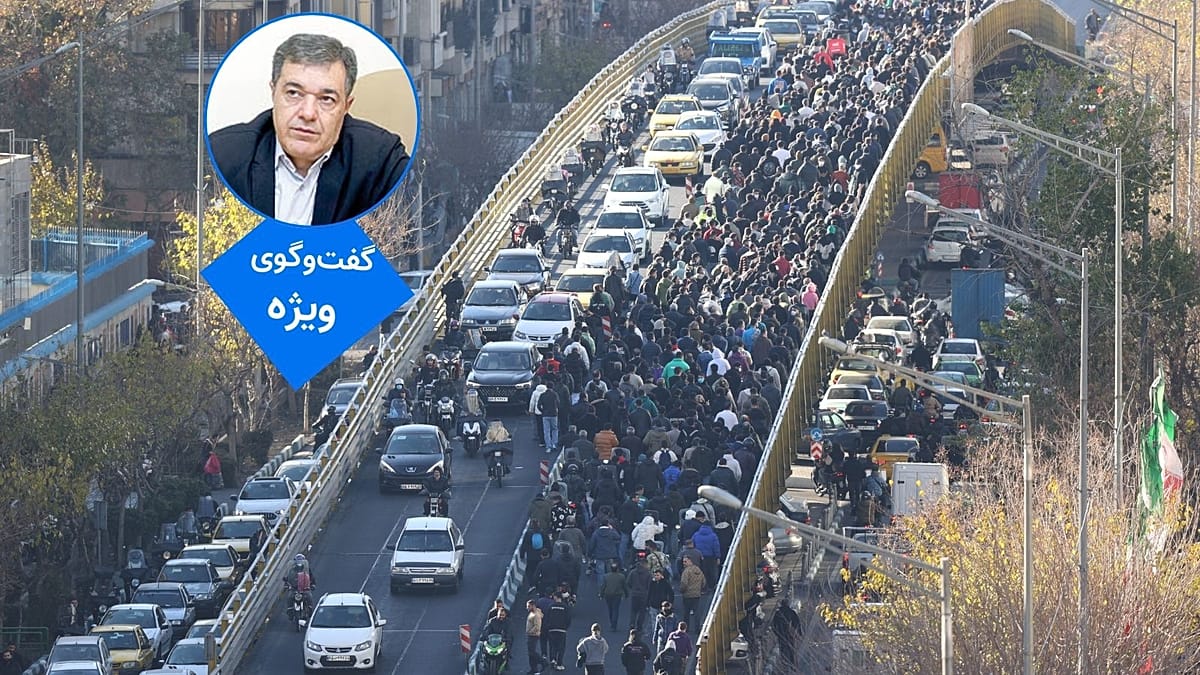
Ahmad Naghibzadeh, a retired Iranian political scientist, warns that the Islamic Republic is approaching systemic collapse and predicts an Israel–US strike on Iran before Nowruz (20 March 2026), alongside targeted attacks on military figures and escalating domestic unrest. He argues the regime’s internal corruption and lack of credible successors make a managed transition unlikely absent leadership overhaul, and he expects great‑power bargaining—particularly US concessions to neutralize Russia’s influence—to shape outcomes. For investors this raises pronounced geopolitical risk for the Middle East with potential implications for oil markets, sanctions regimes and regional stability, suggesting a near‑term shift to risk‑off positioning.
Market structure: A targeted Israeli/US strike risk ahead of Nowruz (20 Mar 2026) structurally favors defense contractors and short-duration energy transport (tankers) while penalising regional airlines, EM sovereign debt and commodity-disrupted supply chains. Expect a first-order oil shock: if Strait of Hormuz incidents rise, seaborne flows (~20% of global crude) can knock Brent/WTI +10–25% within days; EM sovereign spreads (EMB proxy) could widen +50–200bp and regional FX fall 5–20%. Risk assessment: Tail scenarios range from a contained airstrike (low probability) to a broader Gulf blockade or decapitation strike that draws in US/Russia (low-probability, high-impact). Time horizons: immediate (days–weeks) = volatility spike and flight-to-quality; short (weeks–months) = oil rerouting, higher insurance/TCEs; long (quarters–years) = potential Iranian fragmentation reducing future Iranian exports by 0.3–1.0 mbpd. Hidden dependencies: war-risk insurance, tanker capacity, and Russia/China diplomatic responses; catalysts include the Nowruz window and public US/Israeli coordination. Trade implications: Position for higher oil/gold, higher defense, wider EM spreads and weaker EM FX into Mar 20, 2026. Preferred instruments: GLD/GDX for gold, ITA or LMT/RTX for defense, tanker equities for freight upside, March-2026 WTI call spreads for crude convexity, and EMB puts or CDS protection for EM sovereign exposure; hedge with 7–10y Treasuries (IEF/TLT). Use option structures to cap cost and exploit skews. Contrarian angles: Markets may overpay for headline defence names while underpricing owners of physical transport (tankers/TLS) who capture outsized cashflows; historical analogue—1990 Gulf shock reversed over 3–6 months—so volatility is mean-reverting. If strikes are limited, a rapid reversion (oil -15% from peak within 1–3 months) is likely; plan active exits and size hedges to defined triggers to avoid being trapped by a mean-reversion snapback.
AI-powered research, real-time alerts, and portfolio analytics for institutional investors.
Request DemoOverall Sentiment
strongly negative
Sentiment Score
-0.70
